
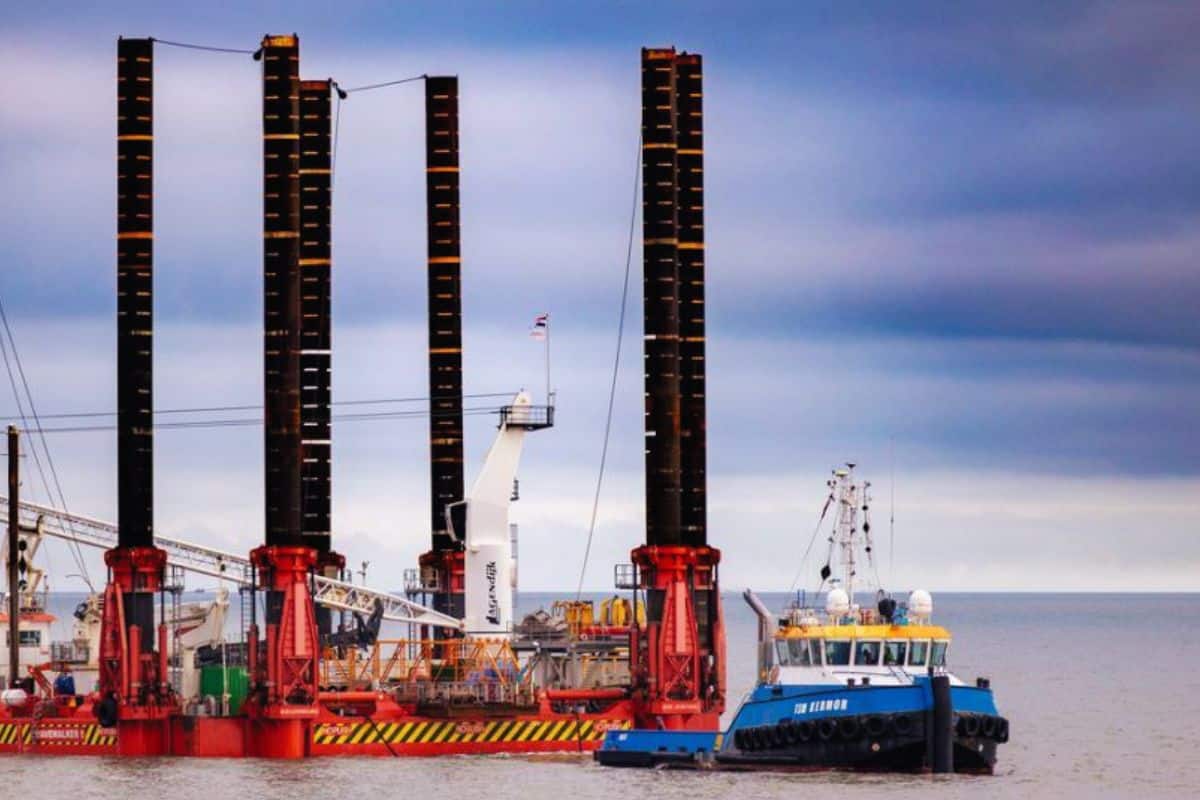
In an exciting development for the maritime industry, France is set to modernize a fundamental aspect of its navigation systems that has remained unchanged for centuries. The technology behind this transformation is a digital innovation that promises to revolutionize ship operations.
Amazon co-founder MacKenzie Scott has donated over $19 billion to charity in just five years
Diamond batteries powered by nuclear waste promise 28,000 years of clean energy
The Historic Shift in Maritime Navigation
For centuries, maritime navigation has relied on traditional methods, including detailed logbooks and manual tracking of voyages. This practice dates back to the 15th century when explorers like Christopher Columbus used hand-written journals to document their journeys, recording everything from weather conditions to encounters with other ships. These logs served not only as vital records for future expeditions but also as a significant part of maritime history.
However, the age of paper logs and manual reports is coming to an end. Today, cutting-edge digital sensors and high-frequency data capture are replacing these old-fashioned methods. This shift marks a critical moment in the evolution of maritime operations, as real-time data collection becomes the new standard for managing and optimizing fleets.
A Partnership That Will Change the Maritime Industry
In a groundbreaking agreement, the French maritime group TMS has teamed up with Ascenz Marorka, a subsidiary of the global leader GTT (Gaztransport & Technigaz), to create a digital transformation in maritime shipping. With this deal, 130 ships in the TMS fleet—from container vessels to massive LNG carriers—will be connected to an advanced platform designed to optimize everything from energy performance to fleet management.
Ascenz Marorka’s technology provides a comprehensive digital cockpit, where ship operators can monitor and manage the performance of their entire fleet in one unified interface. This innovation will drastically reduce the time spent on administrative tasks, allowing crews to focus more on navigation and less on paperwork, all while ensuring compliance with complex international regulations.
The Role of Advanced Digital Tools in Optimizing Fleet Performance
Ascenz Marorka’s system doesn’t just collect data—it analyzes and optimizes it in real time. The platform uses advanced algorithms to predict potential issues and suggest adjustments before problems arise, making ship operations more efficient and cost-effective. This predictive technology ensures that every vessel in the fleet operates at peak efficiency, with minimal human intervention.
For vessels carrying liquefied natural gas (LNG), Ascenz Marorka offers two specialized tools that enhance fuel and cargo management. The LNG Optim module calculates the ideal speed and pressure settings for LNG tanks, ensuring maximum efficiency during transport. Meanwhile, the Heel Management tool minimizes LNG wastage, optimizing the return leg of the journey and ensuring the safe cooling of tanks during ballast voyages.
These technological advancements aim to reduce invisible losses that, over time, can result in significant financial costs. By improving these operations, TMS and its partners are paving the way for a more sustainable and profitable maritime industry.
NASA warns China could slow Earth’s rotation with one simple move
This dog endured 27 hours of labor and gave birth to a record-breaking number of puppies
Technology Supporting, Not Replacing, the Human Element
While digital innovation takes center stage, TMS emphasizes that technology should never replace human expertise. The goal is to support the crew with data-driven decision-making that enhances their capabilities rather than replacing them. The company believes that a collaborative approach, where human input and digital tools work in tandem, is key to success. The transition to a digital maritime world is not just about efficiency but also about maintaining the human touch in operations, ensuring that the workforce is empowered and not overshadowed by machines.
Shaping the Future of Maritime Transport
This partnership not only strengthens Ascenz Marorka’s position as a leader in digital fleet management but also marks a significant step toward the decarbonization of maritime transport. For TMS, the investment in state-of-the-art vessels and technology reflects a long-term vision where sustainability and optimization are essential for both economic and ecological survival. Every small improvement in fleet performance translates into tangible environmental and financial benefits, making this collaboration a model for future maritime operations.
As France replaces a key maritime navigation element that has been in place for over six centuries, this innovative leap forward shows how technology is reshaping industries and driving progress. With this new digital framework, the future of maritime transport is smarter, more sustainable, and more efficient than ever before.