
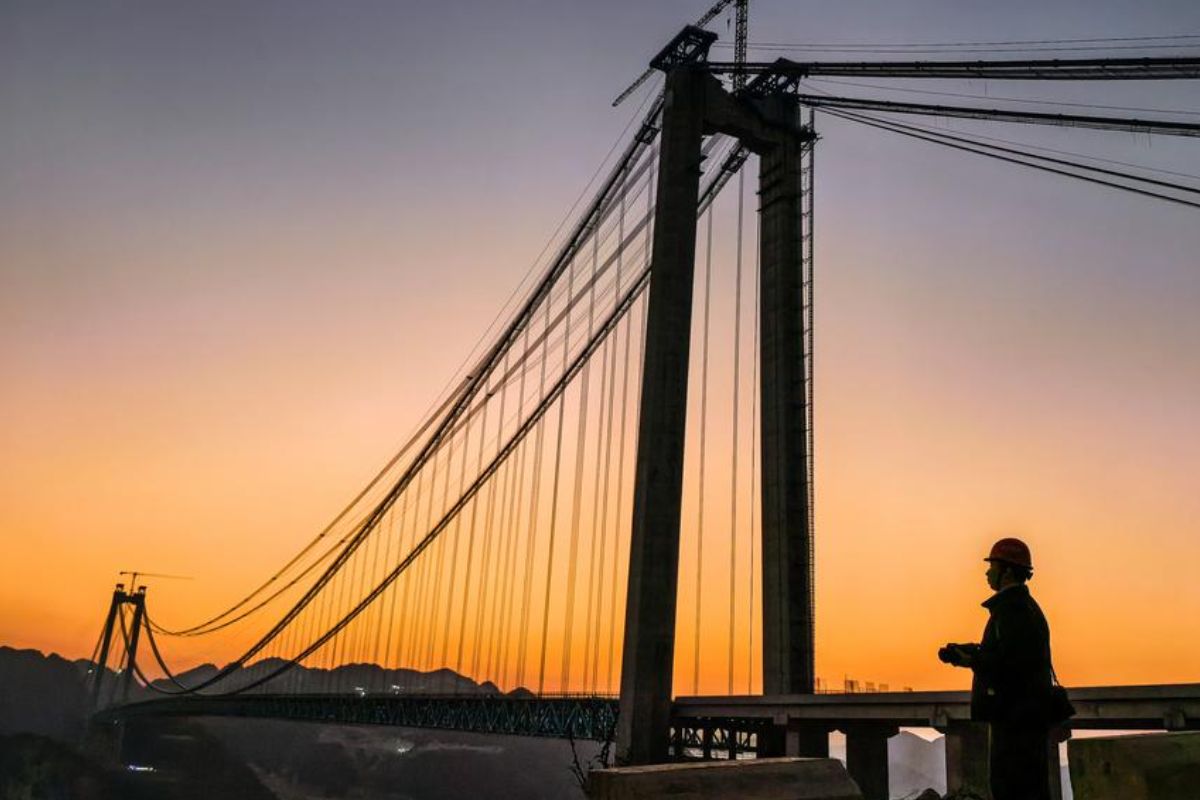
Deep in the Guizhou province of China, a record-breaking structure is taking shape. By 2025, the Huajiang Grand Canyon Bridge will rise an astonishing 625 meters (2,051 feet) above the valley floor, making it the tallest bridge in the world. To put that into perspective, it will stand nearly twice as high as France’s Millau Viaduct, whose tallest pylon reaches 343 meters (1,125 feet).
Amazon co-founder MacKenzie Scott has donated over $19 billion to charity in just five years
Diamond batteries powered by nuclear waste promise 28,000 years of clean energy
This ambitious engineering marvel is set to surpass the Beipanjiang Bridge, China’s current record-holder at 565 meters (1,854 feet). But beyond its breathtaking height, this bridge is more than just an architectural feat—it’s a game-changer for transportation, commerce, and tourism in the region.
A Monument to China’s Bold Infrastructure Vision
The Huajiang Grand Canyon Bridge is part of China’s larger push to develop modern infrastructure in historically isolated regions. The Guizhou province, known for its steep mountains and deep valleys, has long been a logistical challenge for transportation. By building one of the most daring suspension bridges in history, China is not only connecting remote areas but also boosting economic growth, increasing tourism, and solidifying its reputation as a global leader in engineering innovation.
With this bridge, Guizhou is poised to attract international attention, drawing visitors eager to witness a structure that defies expectations. The project also aims to bring in new investments, positioning the region as a hub for modern infrastructure development.
Overcoming Extreme Engineering Challenges
Constructing a bridge at such extreme heights comes with a unique set of challenges. Engineers have had to contend with steep cliffs, strong winds, and unpredictable weather, requiring cutting-edge technology to ensure safety and durability.
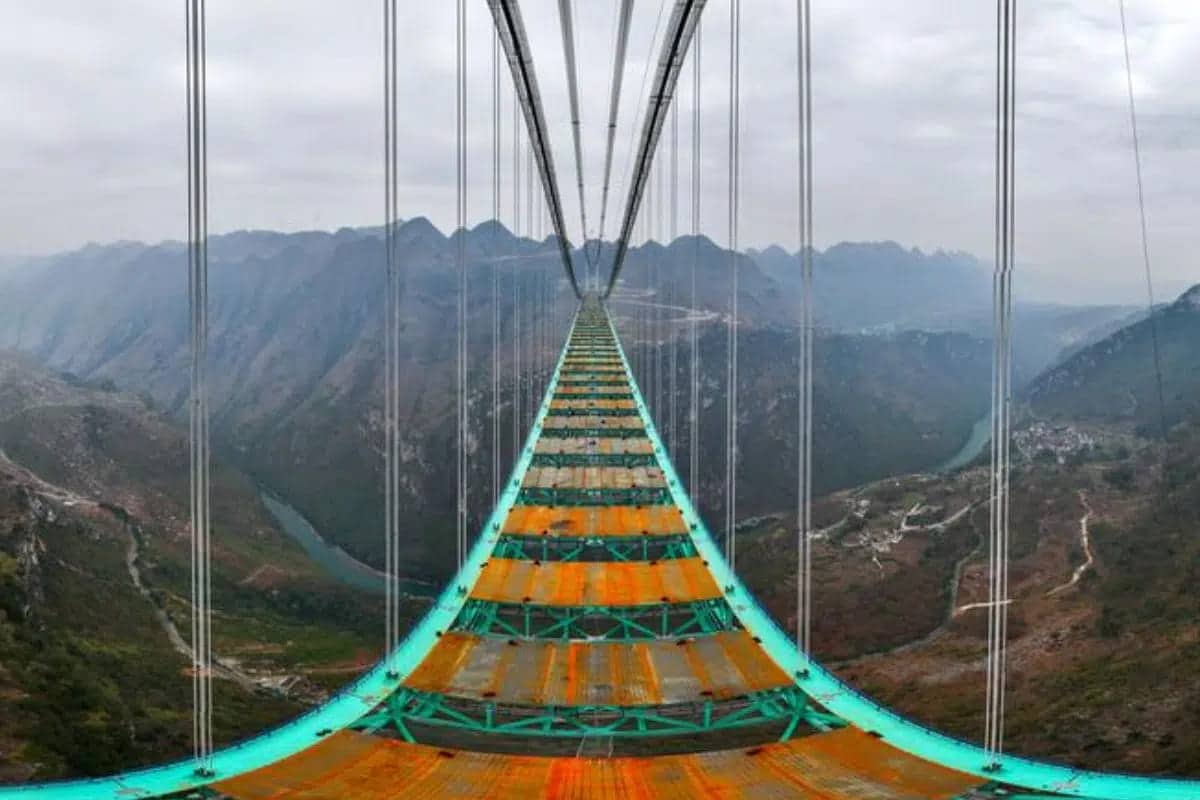
The bridge, spanning an impressive 1,380 meters (4,528 feet), incorporates high-performance steel cables capable of withstanding enormous weight and harsh environmental conditions. One of the key players in this engineering feat is Alimak, a company specializing in vertical access systems. Their custom-designed construction elevators allow workers to operate safely at dizzying heights while also streamlining the transport of materials, reducing costs and construction time.
Technology plays a vital role in every phase of the project. Smart sensors continuously monitor the bridge’s structural integrity, while drones map out difficult-to-access sections, ensuring precision in construction. These innovations allow engineers to tackle challenges in real time, making the Huajiang Grand Canyon Bridge one of the most technologically advanced bridges ever built.
A Global Collaboration of Innovation
Though a Chinese project at its core, the Huajiang Grand Canyon Bridge is a testament to international cooperation. Engineers and experts from around the world have contributed their expertise in materials science, aerodynamics, and construction technology.
One of the most impressive innovations is the use of high-performance steel suspension cables, designed to endure extreme weight and environmental stress while resisting corrosion. Additionally, the construction site relies on renewable energy, including solar-powered generators, to reduce the project’s carbon footprint.
NASA warns China could slow Earth’s rotation with one simple move
This dog endured 27 hours of labor and gave birth to a record-breaking number of puppies
Even the local workforce has played a crucial role. Skilled laborers have undergone training in advanced construction techniques, gaining experience in one of the most challenging bridge-building projects in history. As one supervisor put it, “Working at such heights and in such difficult conditions has been an ongoing learning experience. We take great pride in what we are building.”
Economic and Environmental Impact
The economic ripple effect of this bridge will be profound. Once completed, it will significantly reduce travel times between regions, facilitating the transport of goods and people while lowering logistics costs. The impact on tourism is also expected to be substantial, with the bridge likely to become an iconic landmark, drawing visitors eager to witness one of the world’s most daring structures.
However, as with any massive infrastructure project, environmental concerns remain. Authorities have implemented conservation measures to minimize disruptions to local ecosystems, including the temporary relocation of wildlife and habitat restoration efforts. While the long-term impact of the bridge remains to be seen, efforts are being made to ensure that economic progress does not come at the cost of biodiversity loss.
The Bridge That Redefines Possibilities
By 2025, the Huajiang Grand Canyon Bridge will not only claim the title of the world’s highest bridge, but it will also stand as a symbol of human ingenuity and ambition. With cutting-edge engineering, global collaboration, and a vision for a more connected future, this monumental project is poised to leave a lasting mark on the world.
For China, it’s another bold step in pushing the limits of infrastructure, proving once again that when it comes to building the impossible, few can rival its ambition.