
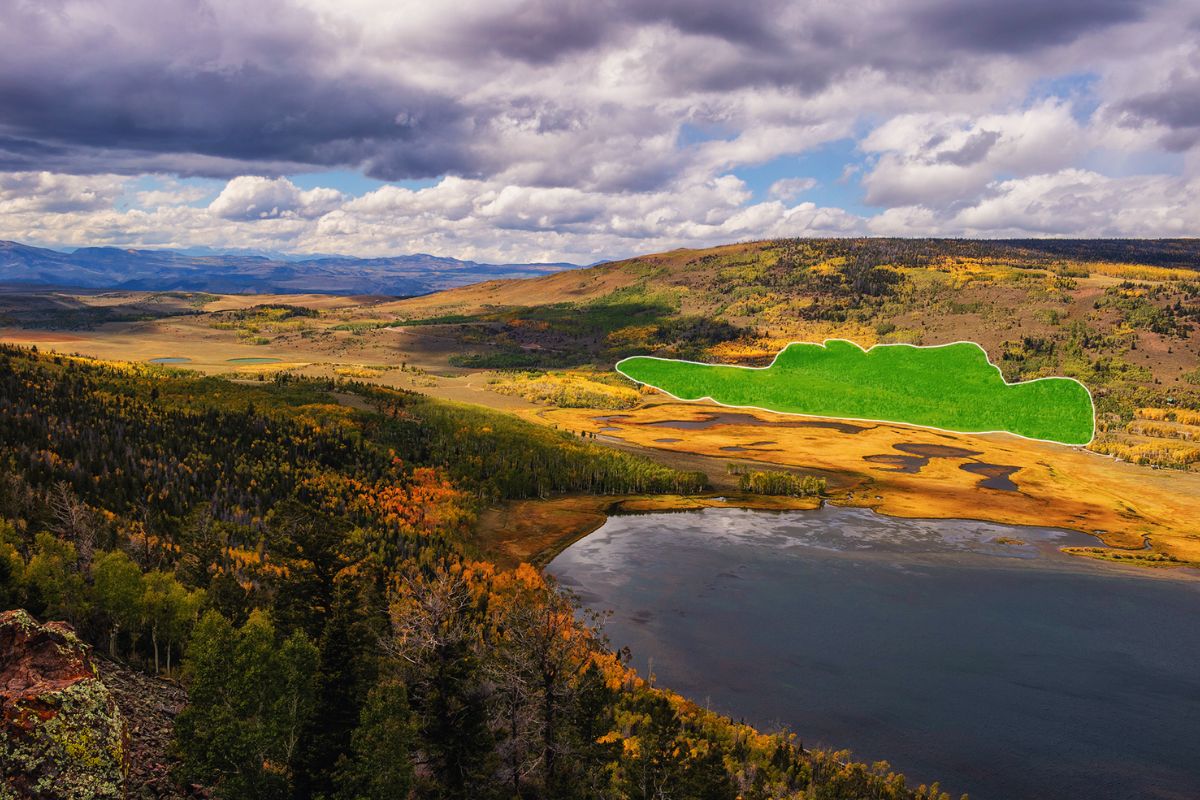
Every fall, the forests of Utah come alive with vibrant colors as Pando, a vast grove of aspens, turns shades of red, yellow, and orange. Located in the Fishlake National Forest, Pando is not just a spectacular natural display, but also one of the most fascinating living organisms on Earth. Stretching across 106 acres (42.6 hectares), Pando consists of nearly 50,000 genetically identical tree trunks connected by a single, sprawling root system. This remarkable organism, which shares the Latin name “Pando” meaning “I spread,” has captivated scientists and nature lovers alike.
Amazon co-founder MacKenzie Scott has donated over $19 billion to charity in just five years
Diamond batteries powered by nuclear waste promise 28,000 years of clean energy
Pando: The Cloning Tree and World’s Oldest Living Organism
Recent genetic studies have revealed something truly remarkable about Pando: it could be as old as 16,000 to 80,000 years. This makes Pando one of the oldest known living organisms on Earth, potentially 17 times older than the Great Pyramid of Giza, which is about 4,600 years old. These findings challenge our understanding of life itself, offering a glimpse into the survival strategies of an organism that has withstood the test of time. Over the course of its existence, Pando has adapted and protected its genome, passing down the same genetic code through millennia.
An Extraordinary Reproductive Model
Pando’s unique genetics play a significant role in its survival. Unlike most trees, Pando is triploid, meaning it has three copies of each chromosome instead of the usual two. This genetic anomaly prevents Pando from reproducing sexually. Instead, it clones itself, creating genetically identical copies of its parent tree. While the clones are identical at first, they gradually accumulate small genetic mutations as the cells divide over time. This process of clonal reproduction has fascinated biologists, who study the way these subtle genetic changes contribute to Pando’s resilience and longevity.
Exploring Genetic Variants
To gain a deeper understanding of how Pando thrives, scientists have studied genetic samples from various parts of the organism—its roots, bark, leaves, and branches. This research revealed about 4,000 genetic variants that have emerged over thousands of years of clonal reproduction. These variants offer valuable insights into the dynamics of mutation in clonal organisms and how they evolve over time without sexual reproduction. The study of these mutations helps scientists understand the processes behind genetic variation and how Pando has adapted to survive for such an extended period.
A Surprising Genetic Mix
Perhaps one of the most intriguing findings from these genetic studies is how the genetic information is distributed across Pando’s vast root system. Researchers discovered that trees that are physically closer together share more genetic similarities than those farther apart. However, the genetic correlation was weaker than expected, suggesting that the genetic information in Pando is much more mixed than anticipated. Even within short distances—just 1 to 15 meters—the genetic variations are more diverse, which may help Pando adapt to changing environmental conditions.
Hypotheses on Pando’s Longevity
The triploid nature of Pando could be key to its exceptional longevity. By producing larger cells and more robust organisms, triploidy might allow Pando’s clones to be stronger and more resistant than those produced through sexual reproduction. This genetic characteristic may give Pando a significant adaptive advantage, allowing it to thrive in a variety of environments over tens of thousands of years. In fact, this could explain how Pando has managed to survive for such a long time, despite the challenges posed by climate change and natural disasters.
Conclusion
Pando, the ancient aspen grove in Utah, is much more than just a cluster of trees. It is a living testament to the resilience of nature, offering a rare glimpse into how an organism can persist for millennia through clonal reproduction and genetic adaptation. Its ability to survive and evolve over such a long period of time speaks volumes about the complexity of life on Earth and the power of genetic variation. With each passing year, Pando continues to grow and adapt, proving that even the oldest and largest organisms are still capable of remarkable feats of survival.