
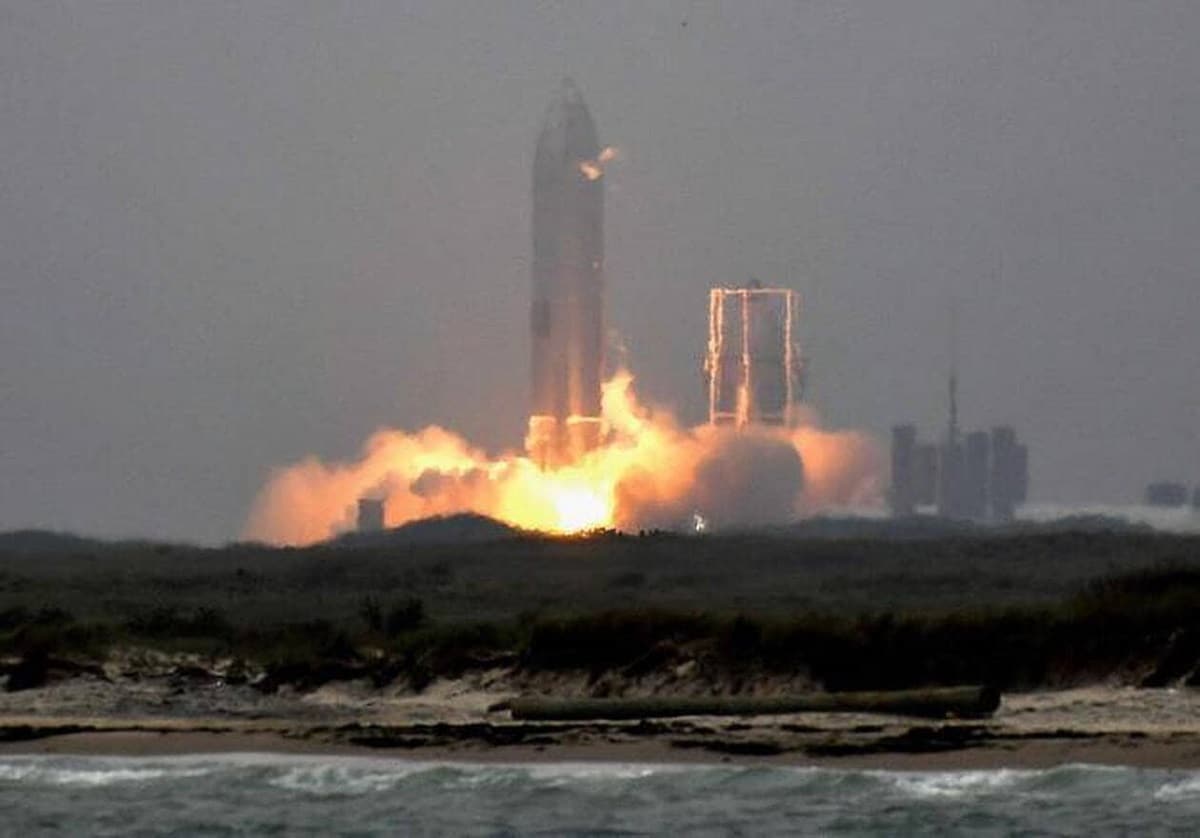
Elon Musk is no stranger to ambitious projects, but his latest idea might just be his most audacious yet. On June 5, 2024, SpaceX is scheduled to conduct another test flight of its massive Starship rocket, bringing Musk one step closer to his ultimate goal: colonizing Mars. But this isn’t just about sending astronauts to the red planet. Musk has a grander vision, one that’s driven by his concerns about the future of Earth—and potentially the survival of humanity itself.
Amazon co-founder MacKenzie Scott has donated over $19 billion to charity in just five years
Diamond batteries powered by nuclear waste promise 28,000 years of clean energy
A Colony Before World War III
In a recent press conference at Starbase, SpaceX’s launch facility in Texas, Musk revealed his plans to create a space ark that would carry humanity to Mars before the outbreak of what he described as “World War III.” The idea is nothing short of groundbreaking. While SpaceX’s Starship was initially designed to support NASA’s Artemis III mission, which aims to return astronauts to the moon by 2026, Musk has shifted his focus to something far more ambitious: creating a sustainable colony on Mars as a backup plan for humanity.
“I want to extend life to another planet in a sustainable way, ideally before World War III,” Musk said. His words reflect a growing concern about the planet’s future and the possibility of global conflict. Musk is clear that the goal isn’t to abandon Earth, but rather to secure humanity’s future in the face of unpredictable events, such as nuclear war. He pointed out that Mars, unlike the moon, is far enough from Earth to avoid becoming a target for nuclear fallout. As he put it, “The moon is too close to Earth, and if things go south, some nuclear bombs might end up there.”
A Million-Person Colony on Mars
Musk’s vision doesn’t stop at a small team of astronauts. His goal is nothing less than a self-sustaining city on Mars, home to a million inhabitants. The plan is to send fleets of Starships, each carrying about 100 settlers, on up to 10,000 trips to build a robust, autonomous colony on the red planet. This ambitious timeline could see the first Mars city take shape within the next 20 years.
The technical challenges are vast, ranging from landing sites to supply chains and technologies that will ensure survival on Mars. Musk has hinted at the need for long-duration life support systems, as well as technology for extracting water from Martian ice, but the specifics are still in the planning stages. And while the Starship hasn’t yet completed a successful orbital flight, Musk is pushing ahead with more tests. The most recent launch, in March, was a success until the spacecraft disintegrated in the upper atmosphere, but SpaceX plans to make a new attempt on June 5.
Is Life on Mars Really Possible?
Musk’s plans might sound like science fiction to some, but they are grounded in a fascinating reality. Mars has long been the subject of fascination for scientists and space enthusiasts alike. Its geological similarities to Earth make it a prime candidate for human exploration and habitation.
NASA is already working on a Moon to Mars program, aimed at sending humans to the red planet in the coming decades. As part of this initiative, the space agency is conducting simulated Mars missions. In April 2025, four volunteers will spend a year in a simulated Mars habitat, where they will face many of the same challenges astronauts will encounter: limited resources, technical problems, and long delays in communication with Earth.
While Musk’s plans may seem far-fetched to some, he’s not the only one thinking about how humanity could survive beyond Earth. The Moon to Mars program, along with Musk’s space ark vision, demonstrates that Mars colonization is a serious pursuit. And whether or not we’ll see a million-person city on Mars in our lifetime, it’s clear that the idea of space as humanity’s backup plan is gaining momentum.
NASA warns China could slow Earth’s rotation with one simple move
This dog endured 27 hours of labor and gave birth to a record-breaking number of puppies
As Musk pushes forward with SpaceX’s ambitious missions, his dream of turning Mars into a second home for humans may not be as far off as it seems. And in a world where global instability and nuclear threats loom large, his vision for a “space ark” could offer a beacon of hope for the future of our species.