
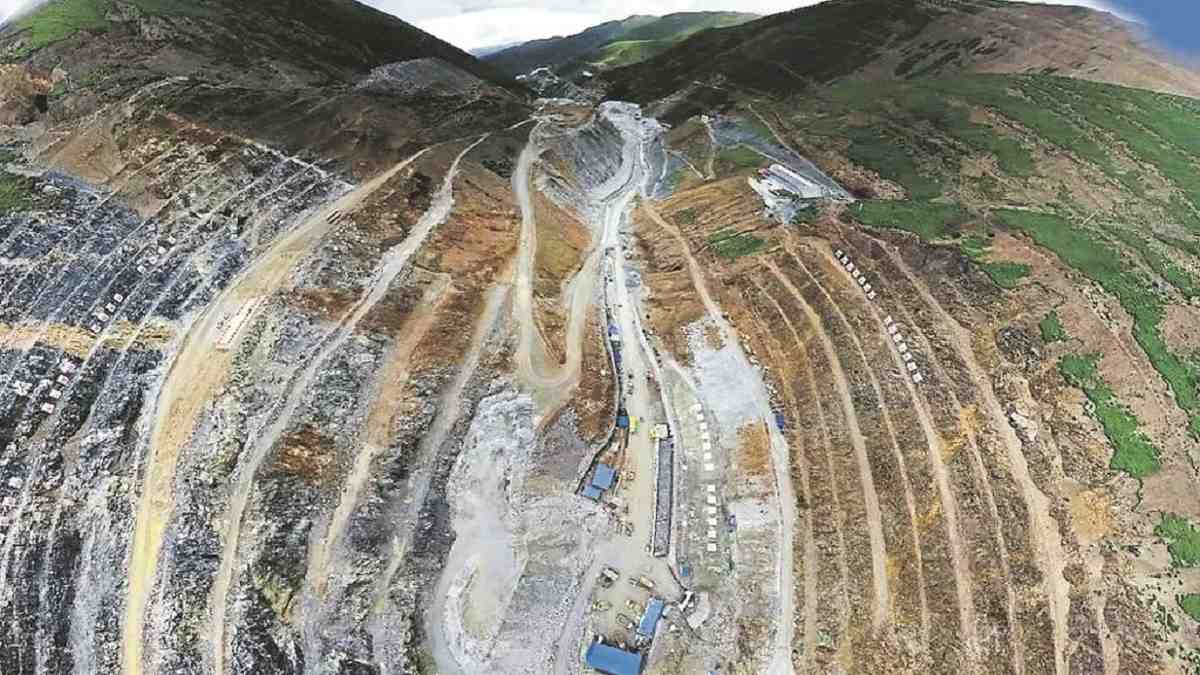
In early January, news emerged from China that sent ripples across the global copper market: a massive deposit of nearly 20 million tons of copper had been discovered in the Tibet region. This discovery has raised significant concerns in Chile, the world’s largest copper producer, where copper represents over half of the country’s total exports. The potential impact of this new find in China could significantly alter the copper landscape, leaving Chile to wonder how this could affect its dominance in the market.
Amazon co-founder MacKenzie Scott has donated over $19 billion to charity in just five years
Diamond batteries powered by nuclear waste promise 28,000 years of clean energy
The Discovery: A Game Changer for Copper Production?
The discovery of a gigantic copper deposit on the Tibetan Plateau could be a game changer. According to China‘s Ministry of Natural Resources and the National Geological Bureau, the deposit could potentially rank as the largest copper mine in the world. While the full scope of the discovery is still under investigation, the news has already begun to stir up a range of reactions from experts and industry leaders. The find is particularly significant because it could offer China a chance to greatly reduce its dependency on copper imports and possibly reshape the global supply chain.
For a country like Chile, whose economy is deeply tied to copper production, the stakes are high. Chile has been a copper powerhouse for decades, and this new Chinese discovery threatens to alter the balance of power in the global copper market. The economic implications for Chile are not just about competition in pricing, but also about potential disruptions in its mining sector, which could see both investment and demand shifting away as China positions itself as a new player in the industry.
The Chilean Copper Market: A Delicate Balance
Chile has long been the undisputed leader in copper production, and its mines, such as Escondida, continue to produce millions of tons of the metal each year. Copper is so integral to the Chilean economy that it represents more than half of the country’s exports, which makes any threat to its copper industry particularly sensitive.
Chile’s mining industry is a well-oiled machine, with years of infrastructure, expertise, and investment fueling its operations. The country’s geopolitical position and long-standing trade agreements have given it a unique edge. However, this newfound competition from China’s potential mining giant could force Chile to rethink its strategy in the coming years.
For now, the primary concern for Chile is the future pricing of copper. As China ramps up its own production, it could flood the market with copper, pushing prices down and potentially lowering the revenue Chile generates from its copper exports. Chile’s mining companies, which already face operational challenges such as declining ore grades and increasing energy costs, could find themselves squeezed by these changes.
A Shift in Global Copper Dynamics
What makes this discovery even more troubling for Chile is that it could shift the global copper dynamics. The metal is critical to many industries, particularly in the production of electric vehicles (EVs) and renewable energy technologies, which have seen a surge in demand. If China, with its vast domestic demand and newfound copper reserves, becomes self-sufficient in its copper production, it could alter the supply chain for countries relying on Chilean exports.
This also raises concerns about supply security. China has already made substantial investments in global mining projects, securing copper supplies from other countries such as Peru and Australia. With this new discovery, the country could accelerate its push for self-sufficiency, which could potentially lower its reliance on imports from countries like Chile. For Chile, this would not only represent a financial blow but could also lead to the loss of international clout in the global mining sector.
NASA warns China could slow Earth’s rotation with one simple move
This dog endured 27 hours of labor and gave birth to a record-breaking number of puppies
The Future of Chile’s Copper Industry: Will It Adapt?
The reaction from Chile’s mining leaders has been one of cautious optimism mixed with concern. While the Chinese discovery is significant, experts believe that Chile’s competitive advantage still lies in its ability to produce high-quality copper at scale. Moreover, the country has made strides in improving mining technologies and sustainability practices, which could help it weather any potential storm caused by the new Chinese reserves.
Still, the reality is that competition is becoming fiercer. Chile will need to invest in further innovation, technological advancements, and sustainable mining practices to maintain its leadership position. The pressure is on to not only sustain copper production but to do so in a way that continues to appeal to global markets.
For now, the copper industry in Chile faces a period of uncertainty. While the new discovery in China is a cause for concern, it also presents an opportunity for Chile to diversify its approach and strengthen its global partnerships in mining and beyond. Only time will tell how these dynamics play out, but one thing is certain: the copper market is about to get much more competitive.
The discovery of this massive copper deposit in China has undoubtedly added a new layer of complexity to the global mining landscape, and its effects will likely be felt in both market pricing and geopolitical relations for years to come. For Chile, it’s a reminder of the need to evolve, innovate, and adapt to the shifting tides of global industry.