
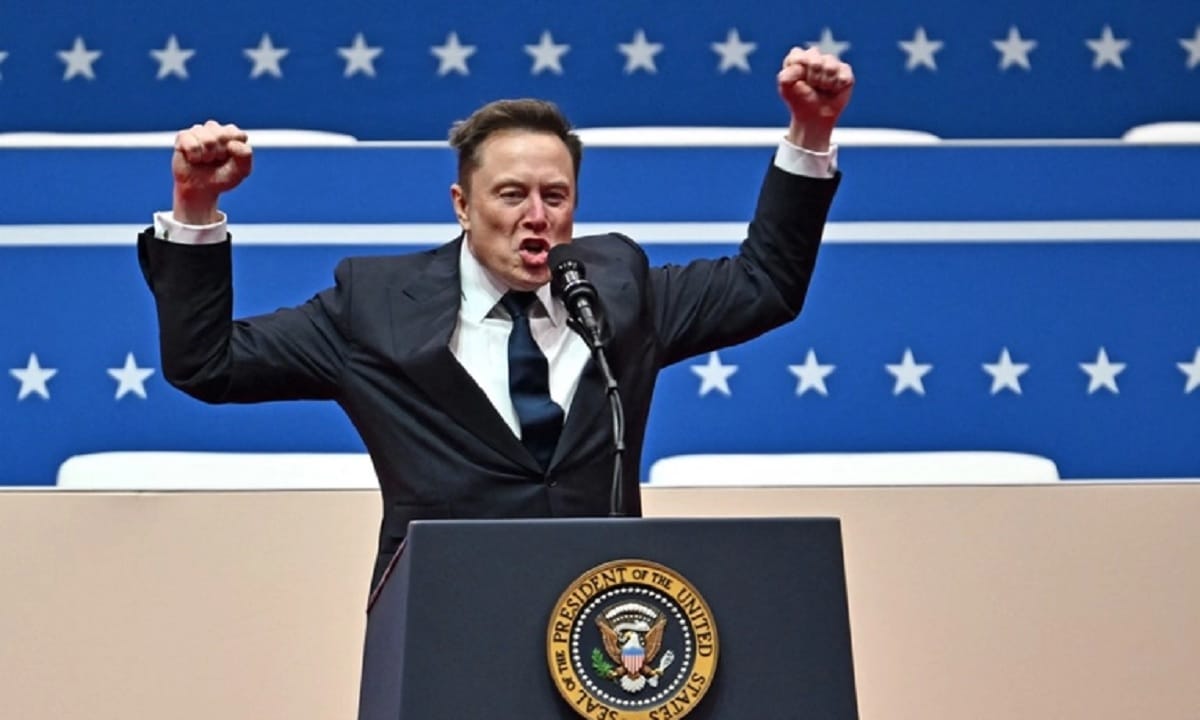
When Elon Musk speaks about “wokeism”, it often sounds as though he sees it as an issue to be vanquished, a cultural ailment plaguing society. Musk, the tech mogul behind SpaceX, Tesla, and Neuralink, has positioned himself as a defender of free speech and a critic of what he perceives as the excesses of progressive ideologies. In fact, he has made it a mission to dismantle what he describes as the “woke culture” that, according to him, is running rampant across the United States. However, in many ways, Musk’s own creations and beliefs are intricately tied to the very forces he claims to oppose.
Amazon co-founder MacKenzie Scott has donated over $19 billion to charity in just five years
Diamond batteries powered by nuclear waste promise 28,000 years of clean energy
Fighting Against His Own Creation
Musk’s approach to fighting wokeism often centers around his belief in technological progress as a means of solving society’s problems. He has made headlines for speaking out against “left-wing ideological nonsense” in schools and critiquing the limits on free speech in mainstream media. Musk argues that these cultural trends need to be reined in to prevent them from eroding individual freedoms. But, as much as he condemns wokeism, Musk’s own role in creating the digital age has, ironically, helped lay the groundwork for the very ideology he criticizes.
The rise of virtual spaces, algorithm-driven content, and the increasing divide between the physical and digital realms are all products of the technological systems Musk has helped advance. Social media platforms, in particular, have become a breeding ground for the kind of abstraction Musk opposes. These spaces allow for the rise of new social dynamics that can, at times, prioritize identity politics over tangible, real-world issues. Wokeism, as Musk defines it, has grown within these virtual spaces where reality itself has been transformed and mediated by technology.
The Technological Foundations of Wokeism
In his critique of wokeism, Musk often overlooks the role of technology in shaping modern society. Slavoj Žižek, a philosopher, refers to this era as one where we live under the “reign of absolute abstraction.” The virtual world, powered by algorithms, often supersedes reality, leaving individuals to engage with ideologies that, while abstract and idealistic, become increasingly disconnected from their physical and social environments.
Musk’s approach to capitalism, particularly through his companies, promotes a world where the body, physicality, and the very nature of human experience are increasingly sidelined. In this system, the individual becomes less tied to their physical existence and more connected to a digital or algorithmic identity. It’s a development that, perhaps unknowingly, aligns with the very ideals that undergird much of woke thought—namely, the transcendence of gender and sexuality as fixed categories.
Musk’s insistence on pushing for a future where technology allows for the possibility of a disembodied mind—think of his ambitions with Neuralink—reflects an understanding of humanity as a creature that could be liberated from the limits of its physical form. This is eerily similar to the ideals of techno-libertarianism and the kind of gender fluidity that some woke advocates champion. Musk’s vision for the future, where the boundaries of the self are increasingly malleable, feeds directly into the very technological and ideological forces that have allowed wokeism to flourish.
A Paradoxical Stance on Technological Freedom
Musk’s belief in technological freedom is another point where he directly contributes to the dynamics of wokeism while simultaneously fighting against it. Musk is a staunch advocate of free-market liberalism and believes that reducing state intervention is crucial for fostering innovation. However, this belief in technological liberation often leads to the erosion of the physical, social, and ethical boundaries that society once relied upon to maintain cohesion.
Karl Polanyi, an economist, argued that the push for a “laissez-faire” economic system—promoted by figures like Musk—inevitably leads to the growth of bureaucratic structures that are harder to escape. While Musk advocates for less governmental control, the rise of algorithmic governance (through companies like Tesla, Neuralink, and others) actually increases state-like influence, albeit in a more invisible and less regulated form. The bureaucracy of the digital age is not one that adheres to traditional governmental structures, but it is one that still exerts control over individuals, subtly shaping their interactions, choices, and even their identities.
NASA warns China could slow Earth’s rotation with one simple move
This dog endured 27 hours of labor and gave birth to a record-breaking number of puppies
The Future of Wokeism and Technology
As Musk continues to advocate for a world where technology is the solution to all problems, it’s important to understand the implications of this vision. The wokeism Musk criticizes isn’t just an ideological stance; it’s a reflection of a broader shift toward a society where identity, truth, and even morality are increasingly determined by algorithmic systems. The very technologies that Musk champions, from AI to social media, are the breeding grounds for the abstract, idealized versions of reality that define the woke worldview.
In this sense, Musk’s efforts to dismantle wokeism are both paradoxical and inevitable. He is, in many ways, fighting against a system he helped build. The challenge, then, is not just about whether wokeism can be stopped, but whether the technological systems that allow such ideologies to thrive can ever be fully controlled. Musk’s vision of a future shaped by technology is inextricably linked to the very forces he claims to oppose, making his battle against wokeism a deeply ironic one.
Ultimately, Musk’s story highlights the complexities of modern technological society, where the creators of these systems may find themselves entangled in the very ideologies they sought to resist. Whether or not he realizes it, Musk is one of the founding fathers of the very technological framework that supports the rise of wokeism, and in many ways, his critique of it only underscores the tangled relationship between technology and culture in the 21st century.