
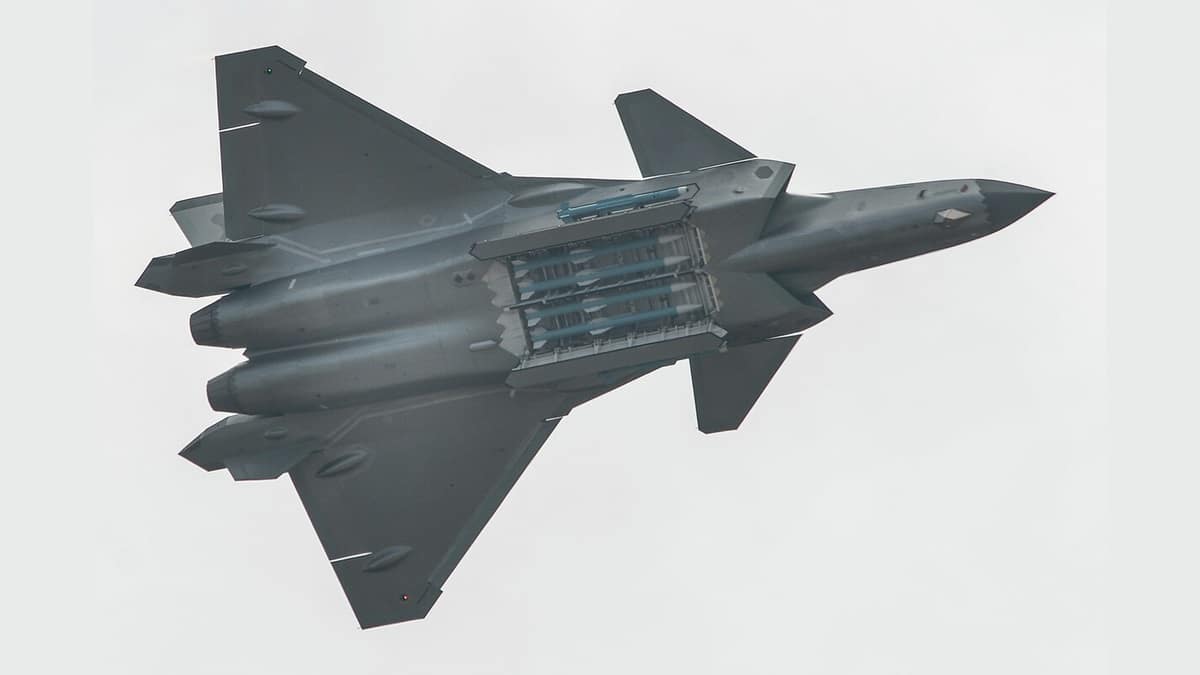
In a remarkable display of innovation and engineering expertise, China has achieved a breakthrough in hypersonic missile development, overcoming major hurdles by utilizing stainless steel. This material, long considered too weak for such high-stakes applications, has now become the centerpiece of a new generation of military technology, demonstrating not only China’s technological advancement but also its ability to adapt and innovate in the face of challenging circumstances.
Amazon co-founder MacKenzie Scott has donated over $19 billion to charity in just five years
Diamond batteries powered by nuclear waste promise 28,000 years of clean energy
A Breakthrough in Material Science
When developing complex military technology, the choice of materials can make or break a project. This is particularly true for hypersonic missiles, where components must withstand extreme heat while maintaining structural integrity. For years, materials like tungsten alloys have been the gold standard for parts exposed to intense heat, thanks to their impressive melting point of 3,422°C. However, their scarcity and astronomical costs posed a significant problem for manufacturers worldwide.
That’s where Professor Huang Fenglei and his team at the Beijing Institute of Technology stepped in. Faced with this daunting challenge, they set out to find an alternative that was more affordable and readily available without sacrificing performance. Their answer? Stainless steel—a material traditionally dismissed for such high-temperature uses due to its lower melting point.
Overcoming Extreme Temperatures
The critical task in this project was to develop a missile nose cone capable of enduring temperatures above 3,000°C during hypersonic flight. Stainless steel, which typically starts to lose its strength at 1,200°C, seemed an unlikely candidate. Yet, with a bit of creativity and engineering brilliance, the research team developed a solution that was nothing short of groundbreaking.
The team used a multi-layered thermal protection system that incorporated ultra-high-temperature ceramics and a 5mm layer of aerogel thermal insulator. This cutting-edge combination provided the necessary heat resistance to protect the stainless steel from melting or warping, ensuring the missile could operate effectively at Mach 8 speeds—an incredible feat of material science. Not only did this ensure the missile components could survive the most extreme conditions, but it also resulted in a cost-effective solution compared to traditional materials like tungsten.
A Strategic Move for China’s Defense
This achievement holds significant strategic value for China’s military capabilities. By utilizing a more affordable material, China can now produce hypersonic missiles more efficiently, reducing reliance on rare and expensive metals. This could lead to a more sustainable and cost-effective missile program, giving China a potential edge in global defense.
NASA warns China could slow Earth’s rotation with one simple move
This dog endured 27 hours of labor and gave birth to a record-breaking number of puppies
The People’s Liberation Army (PLA) has already begun incorporating these stainless steel components into their missile designs, marking a shift in how advanced weaponry is produced. This development could reshape the landscape of global defense, as more nations grapple with the high costs associated with hypersonic technologies.
Real-World Applications and Future Prospects
While the immediate applications of this technology are military-focused, its implications stretch far beyond defense. The principles behind the thermal protection system could inspire new breakthroughs in industries that deal with extreme temperatures, such as aerospace and energy production. For example, reusable space vehicles and high-efficiency power plants could benefit from similar innovations in materials science, allowing for better durability and efficiency in harsh environments.
This success marks just the beginning of a broader research agenda, with Chinese scientists exploring ways to further enhance the durability and performance of stainless steel in extreme conditions. As they continue their work, it is likely that we will see even more advanced materials emerge from China’s cutting-edge research facilities.
Conclusion
China’s achievement in using stainless steel for hypersonic missile components is a prime example of innovation and resourcefulness in the face of adversity. By overcoming the limitations of traditional materials and developing a sophisticated thermal protection system, Chinese researchers have not only reduced production costs but also set a new standard for missile technology. As this breakthrough reverberates through the global defense community, it highlights China’s growing influence in the field of cutting-edge technology and its ability to tackle challenges with incredible ingenuity.