
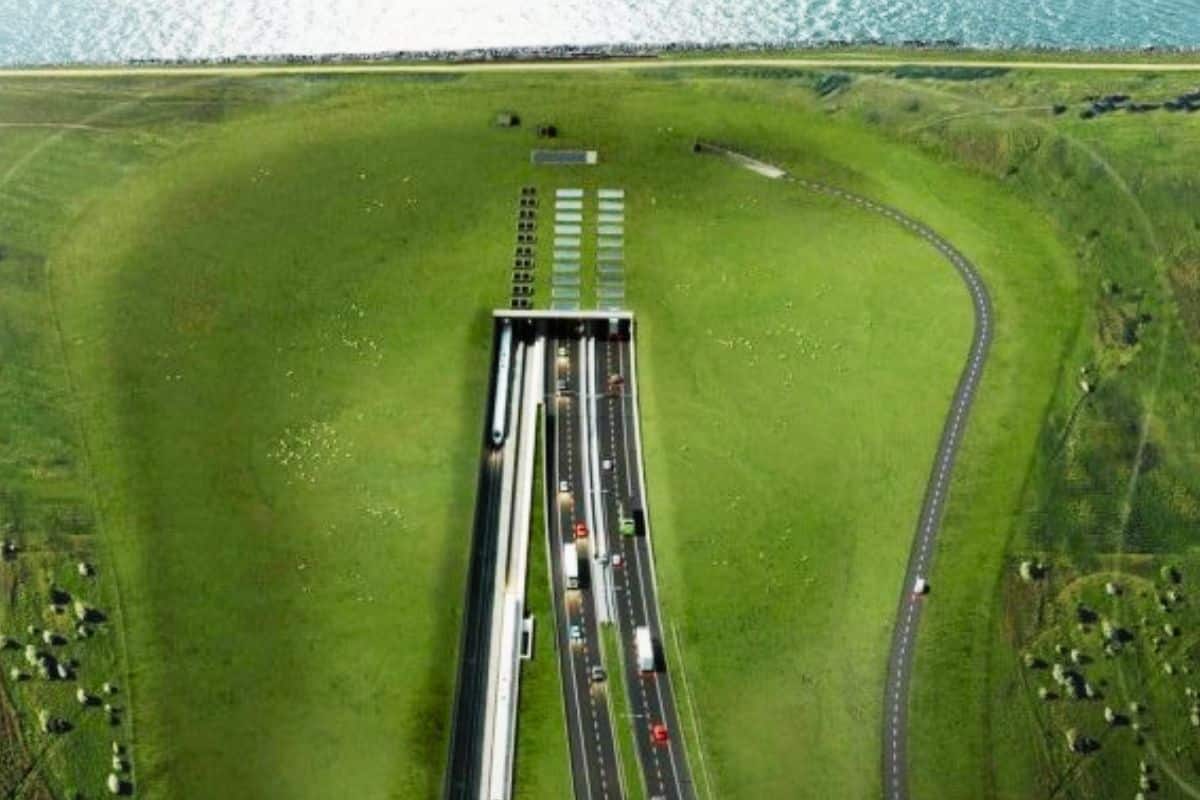
Imagine slashing your travel time or revolutionizing the way goods move across Europe—all thanks to a monumental engineering feat beneath the Baltic Sea. The Fehmarnbelt Tunnel, linking Denmark and Germany, is not only a marvel of modern construction but also a shining example of European collaboration and innovative engineering.
Amazon co-founder MacKenzie Scott has donated over $19 billion to charity in just five years
Diamond batteries powered by nuclear waste promise 28,000 years of clean energy
A Technical and Logistical Marvel
I still remember the first time I heard about this project—it felt like discovering something out of a futuristic novel. Spanning roughly 19 kilometers, the Fehmarnbelt Tunnel is poised to become the longest immersed tunnel in the world that accommodates both rail and road traffic. Built as deep as 40 meters below sea level, each of its massive 73,000-tonne concrete sections is prefabricated on land before being carefully lowered into place. Picture giant Lego blocks assembled underwater; it’s a process that showcases both human ingenuity and precise coordination. Experts at EuroConstruct have noted that these cutting-edge methods could redefine industry benchmarks for future infrastructure projects.
Transforming Transport and Boosting the Economy
For many commuters and businesses, the tunnel promises a transformative impact. Currently, ferry crossings can take up to 45 minutes, but with the tunnel, a train ride will be trimmed down to just seven minutes, and car journeys will only last around ten minutes. I can vividly recall a colleague’s excitement about the prospect of quick weekend trips between Copenhagen and Hamburg—a convenience that could soon become the norm. Economists, including Dr. Lena Mikkelsen of the European Transport Institute, predict that this project will not only enhance passenger travel but also streamline freight logistics, fostering stronger economic ties between Northern and Central Europe.
Meeting Environmental and Economic Needs
One of the most appealing aspects of the Fehmarnbelt Tunnel is its commitment to sustainability. By shifting a significant amount of freight transport from trucks to trains, the tunnel is expected to cut down on CO2 emissions substantially—a key objective in line with the European Union’s climate goals. On a recent visit to a local port, I chatted with an environmental advocate who explained how planned artificial reefs around the construction area could turn the site into a thriving underwater habitat. Initiatives like these have been applauded by organizations such as GreenTech Europe, which values projects that balance infrastructure development with environmental care.
Bridging Scandinavia and Central Europe
Beyond its technical and ecological merits, the tunnel is set to serve as a critical link between cultures and economies. By reducing travel times, it will enhance connections between Scandinavia and Central Europe, opening up new markets and tourism opportunities. I spoke with a small business owner in Aarhus who expressed optimism about how easier access to Central European consumers could invigorate local trade. In a similar vein, smoother travel will encourage cultural exchange and economic growth along the corridor, creating a dynamic new axis of connectivity in the region.
Behind the Scenes : Impressive Logistics of Construction
The sheer scale of the logistics involved in constructing the tunnel is astounding. At Rødbyhaven, a temporary port that doubles as a vast manufacturing hub spanning an area equivalent to 140 football fields, teams are working on six production lines to fabricate 79 standard sections and 10 special modules equipped with technical basements. Each 217-meter-long section is then transported by tugboats to the construction site beneath the sea. A site manager likened the operation to “a dance of precision and timing,” a sentiment echoed by MarineLogistics International, which has hailed Rødbyhaven as a model of large-scale project execution.
Excavating Millions of Cubic Meters of Sediment
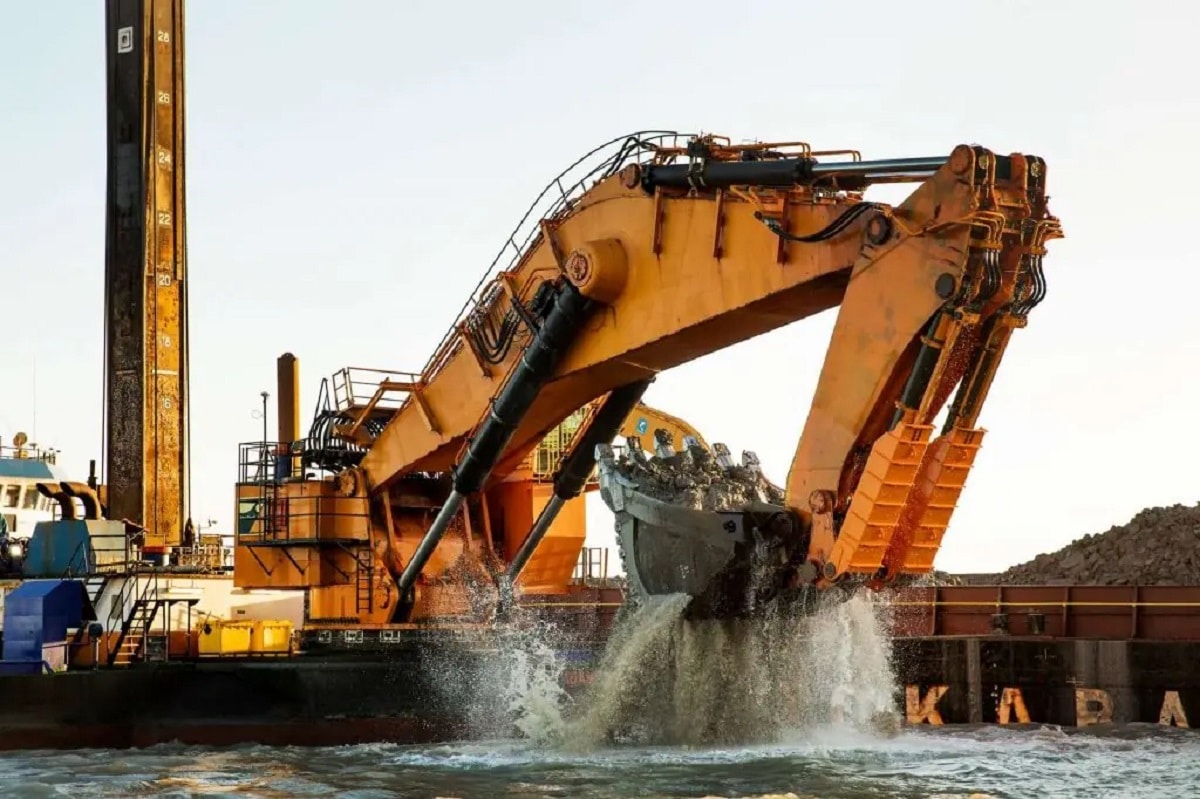
On the German side, preparations are in full swing at Puttgarden. Here, a fleet of dredgers and barges is busy excavating a trench 12 meters deep, removing a staggering 19 million cubic meters of sediment. This foundational work is crucial for ensuring the tunnel’s precise alignment and long-term stability. GeoEngineering Europe has pointed out that such massive excavation efforts underscore the advanced engineering techniques required to see a project of this magnitude to completion.
NASA warns China could slow Earth’s rotation with one simple move
This dog endured 27 hours of labor and gave birth to a record-breaking number of puppies
Navigating Challenges : Environmental and Competitive Pressures
Every project of this scale faces its share of hurdles. Environmental concerns—such as the impact on local wildlife like Baltic porpoises—are under continuous review, with strict measures in place to minimize ecological disruption. Simultaneously, the project must navigate the pressures of staying on schedule and within its €6.6 billion budget, all while setting a high standard for future projects. Global Infrastructure Watch has praised the management team for their ability to maintain steady progress amid these challenges.
Key Figures of the Fehmarnbelt Tunnel Project
To put the scale of this endeavor into perspective, consider these impressive numbers:
- Completion Year: 2029
- Project Budget: €6.6 billion
- Volume of Sediment Excavated: 19 million m³
- Reinforcement Bars Used: 360,000 tonnes
- Concrete Required: 3.2 million m³
- Sand for Concrete: 2 million m³
- Tunnel Composition: 79 standard sections plus 10 special modules with equipment basements
- Standard Element Dimensions:
- Weight: 73,000 tonnes
- Length: 217 meters
- Width: 42 meters
- Height: 10 meters
These figures highlight not only the tunnel’s ambitious scope but also the meticulous planning and execution that it demands.
The Fehmarnbelt Tunnel stands as a testament to European vision and collaboration. As this project moves forward, it could very well re-establish Europe at the forefront of construction innovation, setting new global standards and transforming the way we think about connectivity and infrastructure.