
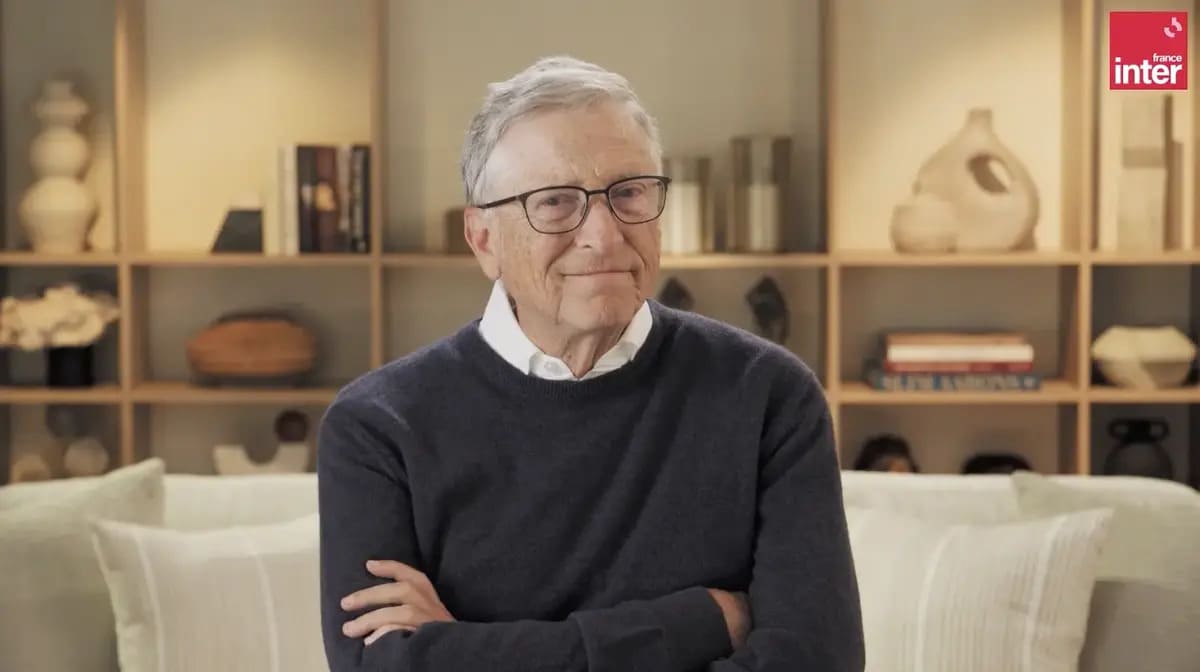
Bill Gates, the co-founder of Microsoft, has never been one to shy away from discussing the future of technology. During a recent appearance on France Inter’s show with Léa Salamé, Gates shared his candid thoughts on the topic of artificial intelligence (AI), admitting that the rapid development of AI both excites and scares him. As the technology continues to advance, Gates’s reflections highlight the delicate balance between embracing innovation and safeguarding humanity’s future.
Amazon co-founder MacKenzie Scott has donated over $19 billion to charity in just five years
Diamond batteries powered by nuclear waste promise 28,000 years of clean energy
A Glimpse Into His Early Years
Born in 1955 in Seattle, Gates grew up in a family that valued both intellectual curiosity and hard work. His parents, who held professional careers in law and business, instilled in him the importance of education. Reflecting on his childhood, Gates often recalls the influence of his grandmother, whom he affectionately calls Gami. “She never let me win at card games,” Gates laughs, describing how these moments of playful competition shaped his mindset. “She really stimulated my brain.”
It wasn’t just his grandmother’s games that shaped Gates, though. He describes himself as a precocious child, one who was often labeled as difficult or arrogant. Yet, this intensity, he believes, was rooted in a deep fear of failure—a fear that would drive him later in life, particularly when he encountered computers. At age 13, the world of programming opened up to him, and by 14, Gates was already sneaking out to his school’s computer lab to code late into the night. This passion for technology, combined with his competitive spirit, would eventually lead him to co-found Microsoft with Paul Allen, paving the way for the personal computing revolution.
Bill Gates on AI: A Double-Edged Sword
Fast forward to today, and Gates, now approaching his 70th birthday, reflects on a lifetime of innovation. However, when asked about artificial intelligence, his tone shifts. While he recognizes the immense potential AI holds, particularly in fields like medical research and personalized education, he also acknowledges the fears it invokes. “I’m scared too,” Gates admits, referencing the possibilities AI presents for productivity and the prospect of freeing up time for individuals. “It’s an amazing promise… but we must tread carefully.”
The power of AI to revolutionize industries is undeniable. Gates is particularly optimistic about its ability to enhance productivity, potentially offering people more leisure time while contributing to advancements in fields that can improve lives. However, he is cautious about its potential to evolve in ways that might not align with societal values or needs. As he points out, AI’s development must be managed with great care to ensure it serves humanity’s best interests.
The Need for Regulation and Ethical Oversight
One of the central themes of Gates’s discussion on AI is the urgent need for regulation. He strongly believes that governments have a crucial role to play in overseeing the responsible development of this technology. AI, while transformative, presents a unique set of risks—particularly around issues like data privacy, bias, and its impact on jobs. Gates emphasizes that a collaboration between the public and private sectors is essential to create ethical frameworks and policies that ensure AI is developed and used responsibly.
Reflecting on his own experiences with technology, Gates also acknowledges the lessons learned from past mistakes, particularly in the realm of social media. “I think we were a bit naive about the impact of social media,” he says, underscoring the importance of a more critical and informed approach when it comes to emerging technologies. This admission reflects the broader concern that technology, while designed to improve lives, can also have unintended consequences if left unchecked.
A Final Reflection on Technological Leadership
Throughout his career, Gates has been at the forefront of technological change, alongside figures like Steve Jobs. While Gates focuses on the engineering aspects of technology, he recognizes that Jobs’s intuitive genius in design played a crucial role in the success of their ventures. Gates reflects, “Steve and I both led the technological revolution. We both worked very hard, motivated people. But he was a design genius. He had an intuition for things. I am an engineer.”
NASA warns China could slow Earth’s rotation with one simple move
This dog endured 27 hours of labor and gave birth to a record-breaking number of puppies
This distinction is key: Gates’s engineering mindset drives him to focus on the technical details and regulatory oversight necessary to guide AI’s evolution. While he recognizes the immense potential of AI, his focus on caution and ethical responsibility highlights why he—and many others—are concerned about its future.
In conclusion, Bill Gates’s reflections on AI are a sobering reminder that even the most forward-thinking innovators must carefully consider the long-term impacts of new technologies. As AI continues to develop, it will be crucial to balance its enormous potential with the safeguards that protect both individuals and society at large. Gates’s concerns about AI might scare him, but they also provide us with the opportunity to steer the technology toward a future that benefits all.