
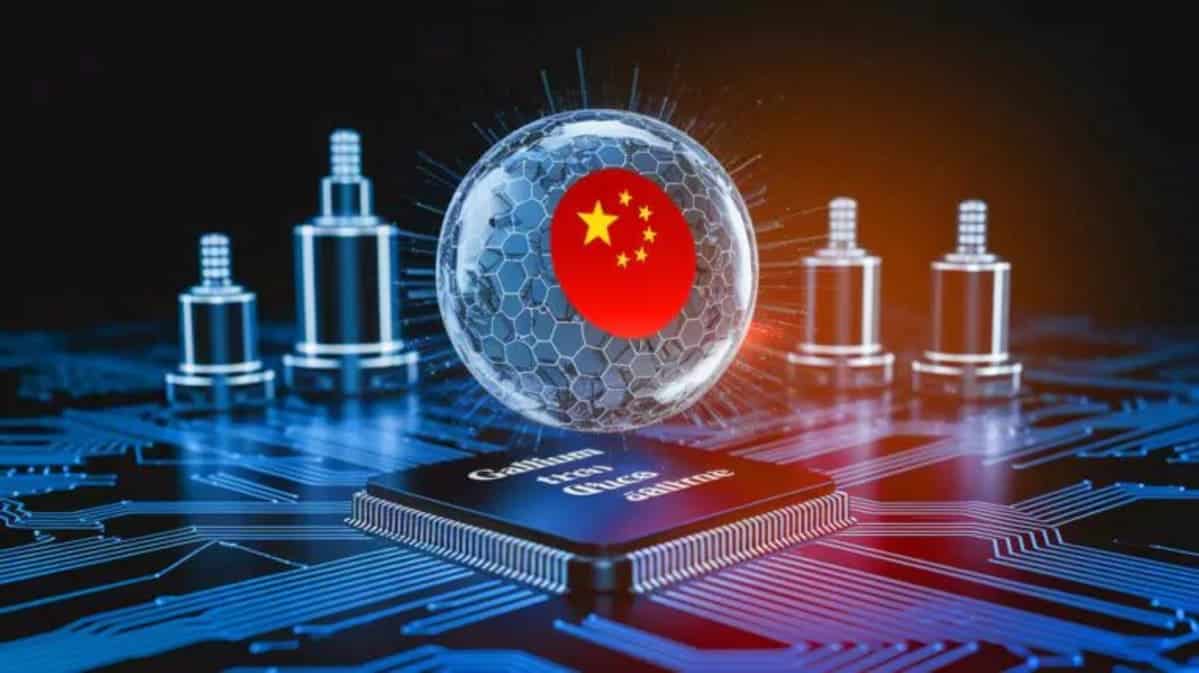
In a world increasingly reliant on advanced technology, raw materials that once flew under the radar are now commanding global attention. At the center of a growing geopolitical storm is gallium, a soft, silvery metal that’s suddenly become a strategic battleground. As China consolidates its dominance over this critical resource, Japan is sounding the alarm, warning of ripple effects that could shake everything from smartphones to electric vehicles. This is more than just an economic tug-of-war — it’s a test of resilience in a fragile, interconnected supply chain.
Amazon co-founder MacKenzie Scott has donated over $19 billion to charity in just five years
Diamond batteries powered by nuclear waste promise 28,000 years of clean energy
A Silent War Over Strategic Minerals
The crisis began with a bold move from Washington. On December 2, the Biden administration expanded its sanctions on China, blacklisting 140 new Chinese firms — many of them tied to the semiconductor sector. The goal? To curb Beijing’s advances in cutting-edge chipmaking technologies, particularly in lithography equipment that powers the most advanced microchips.
But China, long known for its strategic patience, didn’t hesitate. The very next day, it announced new export controls on critical minerals, including gallium, germanium, and antimony. While these names might not mean much to the average consumer, they’re absolutely essential to producing semiconductors, batteries, and even military-grade technologies.
Japan’s Wake-Up Call
For Japan, these restrictions hit close to home. It’s the world’s top consumer of gallium — used in laser diodes, solar panels, and high-performance chips. Industry leaders in Tokyo have watched nervously as imports from China collapsed by almost 85% between August 2023 and August 2024. The sharp drop isn’t just a supply hiccup; it’s a signal that Japan’s technological independence is at risk.
Executives at major Japanese firms now fear tighter regulations could follow. There are growing concerns that China might soon demand a full accounting of how gallium-based products are being used — particularly those destined for the U.S. market. Non-compliance could trigger even more restrictions, plunging Japanese manufacturers into uncharted waters.
Global Supply Chains Under Strain
These export controls are already reverberating through global supply chains. From Apple’s iPhones to Tesla’s electric drivetrains, gallium and germanium are quietly working behind the scenes. At Broadcom, for instance, gallium arsenide lasers are crucial for optical communication systems — a component that now feels far less secure.
According to Jack Bedder, co-founder of Project Blue, a market intelligence firm specializing in raw materials, the latest developments are “amplifying existing tensions.” Peter Arkell of the Global Mining Association of China called the standoff a “commercial war without winners” — a sentiment echoed by supply chain analysts worldwide.
From Local Decisions to Global Shockwaves
Japan’s concern isn’t only about numbers — it’s about leverage. In a world where so many products depend on a few essential inputs, control over resources like gallium becomes a powerful geopolitical tool. China currently produces over 90% of the world’s gallium. That’s not just market dominance — that’s strategic influence.
NASA warns China could slow Earth’s rotation with one simple move
This dog endured 27 hours of labor and gave birth to a record-breaking number of puppies
For me, this reminds me of the early 2020s when the world scrambled for face masks and semiconductors during the pandemic. Back then, we learned the hard way how fragile supply chains could be. Now, the lesson repeats itself — only this time, it’s not toilet paper or chips, but the raw materials that power the technologies of tomorrow.
The Stakes for the Future
This escalating confrontation between two global giants — the U.S. and China — is more than just a diplomatic skirmish. It’s a reshaping of how technology and resources intertwine. Nations like Japan find themselves caught in the middle, forced to rethink their strategies and diversify their suppliers, or risk being left behind.
As the race for technological dominance accelerates, gallium has become a symbol of the broader struggle — not only for innovation, but for control over the future. Whether it’s chips in our phones or batteries in our cars, the materials powering our lives are no longer guaranteed.
And as Japan raises its voice, the world might do well to listen.