
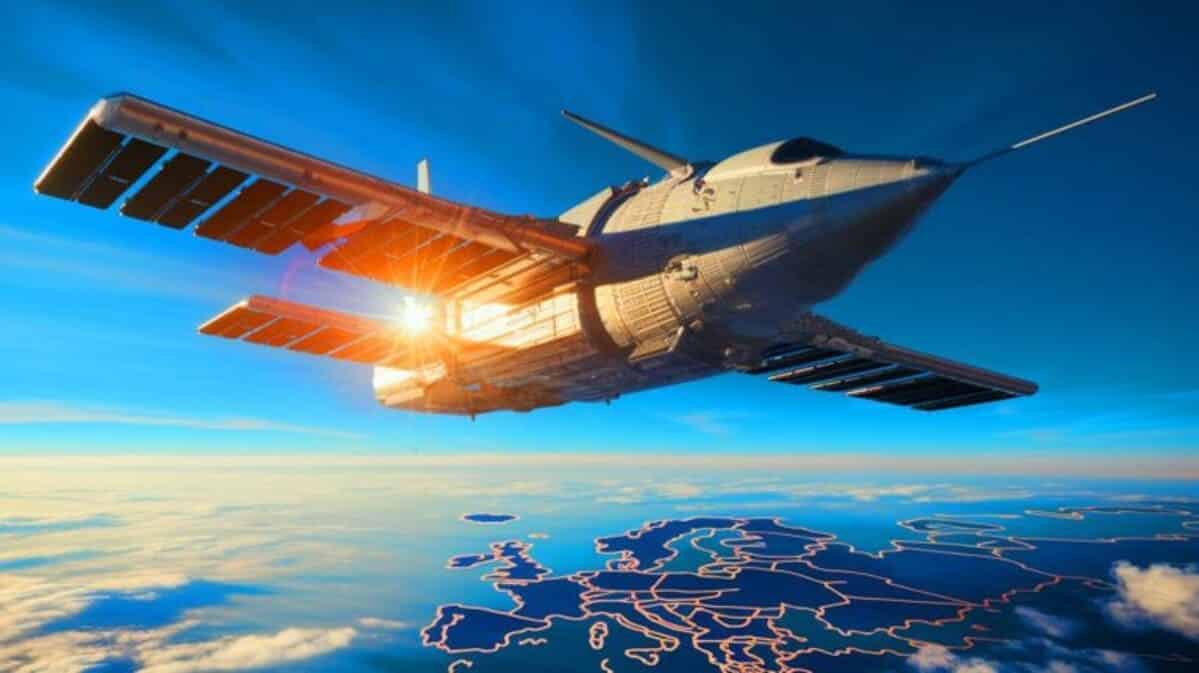
In a surprising intersection of amateur astronomy and global intrigue, an Austrian astronomer has revealed previously unseen details of China’s secretive Shenlong spaceplane. Captured over Europe, these images provide rare insights into the aircraft’s advanced technology and the growing strategic importance of space exploration.
Amazon co-founder MacKenzie Scott has donated over $19 billion to charity in just five years
Diamond batteries powered by nuclear waste promise 28,000 years of clean energy
The Unexpected Discovery by Felix Schöfbänker
Felix Schöfbänker, an amateur astronomer from Austria, has made an extraordinary contribution to the world of space observation. Using a modified telescope, Schöfbänker was able to capture rare images of China’s Shenlong spaceplane as it flew across the European skies. This unexpected discovery brings new attention to a previously enigmatic craft that has fascinated space enthusiasts and experts alike.
Schöfbänker’s photographs revealed unusual structures at the rear of the spaceplane—likely solar panels or antennas—which hint at the vehicle’s potential for advanced autonomous operations. These findings are significant as they provide a rare glimpse into the technology that China uses for its covert space missions, which have long been shrouded in secrecy.
Features and Missions of Shenlong
The Shenlong, or “Divine Dragon,” is a cutting-edge spaceplane designed by China for long-duration orbital missions. At approximately 33 feet long, the Shenlong is slightly larger than its American counterpart, the X-37B, which has captured the imagination of space experts due to its mysterious nature.
While Shenlong’s specific functions remain unknown, recent missions have fueled speculation about its purpose. During a particularly intriguing mission, the craft deployed an object into orbit before performing complex maneuvers to approach it once more. Such actions suggest that China could be testing technologies related to satellite inspection or even capture, pushing the boundaries of space exploration and military strategy.
The Shenlong’s design and capabilities raise important questions about the future of autonomous space vehicles. Its ability to operate without human intervention, paired with the mystery surrounding its missions, indicates a new frontier in space-based technology.
Geopolitical and Military Implications
The Shenlong’s secretive missions have not gone unnoticed in the West, where analysts are keenly observing the craft’s movements. Given its advanced capabilities and the complex maneuvers it has demonstrated, there is growing concern that the Shenlong could be used for espionage purposes or even to neutralize enemy satellites. These possibilities have led to fears that space could become a new arena for a technological arms race.
The geopolitical implications of Shenlong’s activities are far-reaching. Much like the Cold War-era race to dominate space, the development of such advanced space technology could spark a new chapter in global competition, with China and the United States vying for supremacy in this increasingly critical domain. Schöfbänker’s discovery adds another layer to the growing tension between the two powers, each seeking to assert its dominance in space.
NASA warns China could slow Earth’s rotation with one simple move
This dog endured 27 hours of labor and gave birth to a record-breaking number of puppies
As the mystery of the Shenlong deepens, experts are left to wonder: what role will this spaceplane play in the evolving landscape of international space relations? What impact will these covert missions have on future space policies and military strategies across the globe?
The implications of this discovery extend far beyond the realm of amateur astronomy. It signals a shift in the strategic value of space and raises important questions about the future of global space diplomacy and security. As countries invest more in their space programs, the world watches closely to see how these new revelations will shape the next phase of space exploration.