
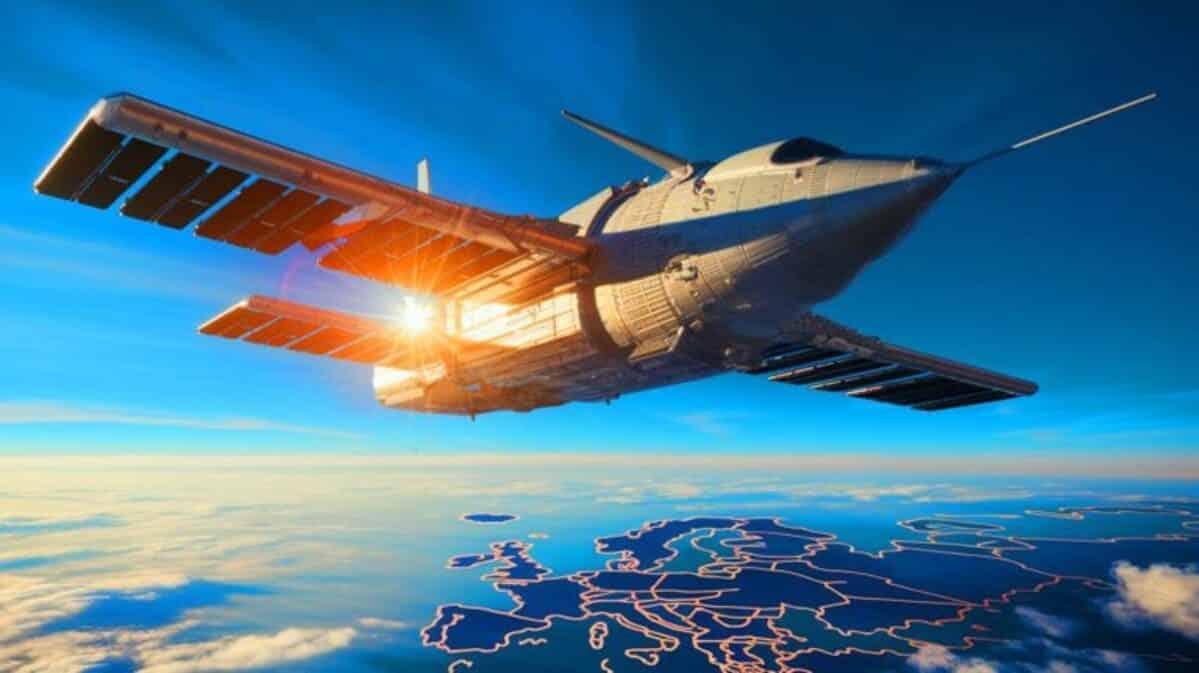
In an unexpected turn of events, an amateur astronomer from Austria has uncovered crucial details about China’s covert Shenlong spaceplane, offering rare insights into the country’s evolving space strategy.
Amazon co-founder MacKenzie Scott has donated over $19 billion to charity in just five years
Diamond batteries powered by nuclear waste promise 28,000 years of clean energy
The Unexpected Discovery by Felix Schöfbänker
Felix Schöfbänker, an amateur astronomer from Austria, made a stunning contribution to the field of space observation. Armed with a modified telescope, Schöfbänker captured unprecedented images of China’s Shenlong spaceplane as it flew through the skies over Europe. This accidental discovery has since brought attention to the secretive aircraft, which had remained largely hidden from public view.
Schöfbänker’s photos revealed intricate details about the craft, including unusual structures at the rear, which are suspected to be solar panels or antennas. These observations suggest the spaceplane’s advanced technology and potential for autonomous operations, offering a rare glimpse into China’s space missions—missions that have previously been shrouded in mystery and speculation.
Features and Missions of Shenlong
The Shenlong (or “Divine Dragon”) is an advanced spaceplane developed by China for long-duration orbital missions. Measuring about 33 feet in length, it’s slightly larger than the American X-37B, a similar craft that has also sparked intrigue for its covert nature.
Though the full scope of Shenlong’s functions remains unclear, its missions have raised eyebrows. During a particularly compelling mission, the spaceplane deployed an object into orbit before performing complex maneuvers to return to it. These actions hint at the possibility that the Shenlong could be testing satellite inspection or even capture technologies, pushing the boundaries of both space exploration and military capabilities.
The design and functions of the Shenlong point to a future where autonomous space vehicles may become the norm. The ability for such a craft to operate independently, paired with its mysterious missions, marks a significant leap in space technology.
Geopolitical and Military Implications
The secretive nature of Shenlong’s missions hasn’t gone unnoticed, particularly in the West, where analysts are closely monitoring the spaceplane’s movements. The advanced capabilities and sophisticated maneuvers exhibited by the Shenlong have led to concerns that it could be used for espionage or to neutralize enemy satellites, raising the stakes in the race for space supremacy.
The geopolitical implications of Shenlong’s activities are profound. Much like the Cold War-era space race, the development of such advanced technologies signals the potential for a new chapter in global competition. With the United States and China vying for dominance in space, the Shenlong represents a significant step forward in China’s efforts to assert its power in this critical domain.
NASA warns China could slow Earth’s rotation with one simple move
This dog endured 27 hours of labor and gave birth to a record-breaking number of puppies
Experts are now left wondering what role the Shenlong will play in shaping the future of international space relations. Will these covert missions set the stage for a new arms race in space? How will they impact global military strategies and space diplomacy in the years to come?
A Turning Point in Space Exploration
Schöfbänker’s discovery, though a product of amateur astronomy, carries profound consequences for how we understand and approach space exploration. It underscores the growing strategic value of space and raises important questions about the future of global security. As nations invest heavily in their space programs, the unfolding mystery of the Shenlong is a reminder of the high stakes involved in the pursuit of space dominance.
As this technological race heats up, the world will undoubtedly be watching closely to see how these revelations reshape space policies and military objectives. What we’ve learned from Schöfbänker’s unexpected discovery could be just the beginning of a new era in space exploration.