
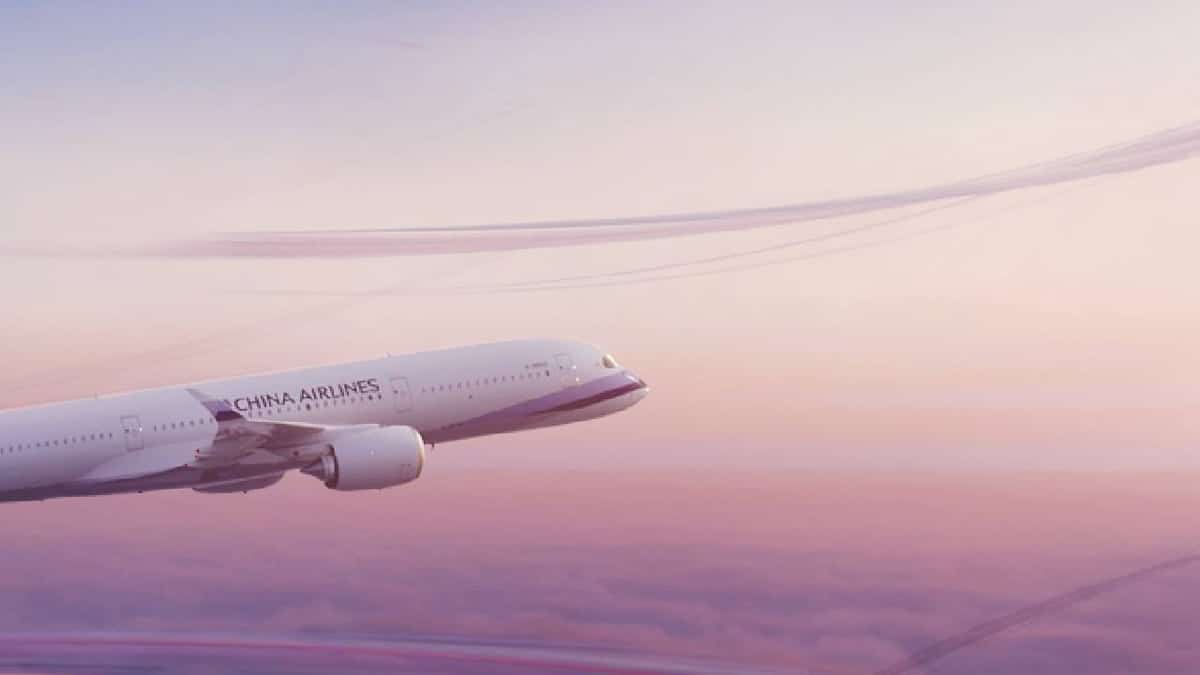
In a fascinating feat of aviation, a China Airlines Boeing 777-200LR recently reached a speed typically reserved for fighter jets, surpassing the speed of sound. However, this wasn’t your typical supersonic flight, and passengers experienced no disturbance or safety issues. Instead, the impressive speed was the result of a unique combination of natural forces and expert piloting. Here’s how it all came together.
Amazon co-founder MacKenzie Scott has donated over $19 billion to charity in just five years
Diamond batteries powered by nuclear waste promise 28,000 years of clean energy
A Remarkably Fast Flight
While the idea of a commercial airliner surpassing Mach 1—the speed of sound—sounds like a scene from a futuristic sci-fi movie, this particular flight proved that it’s possible without breaking any aviation rules or compromising safety. The Boeing 777-200LR, which typically cruises at a top speed of 950 km/h (Mach 0.89), reached a shocking 1,329.3 km/h (825 mph), comfortably surpassing Mach 1.
You might think that this type of speed could only be achieved by military jets or supersonic planes like the Concorde, but this time, the culprit wasn’t a new technological breakthrough. Rather, it was the powerful jet stream, a fast-moving air current that can dramatically impact a plane’s speed.
Why Wasn’t There a Sonic Boom?
Despite exceeding Mach 1 in ground speed, the plane never actually broke the sound barrier in the air. This is a key distinction: in aviation, the relevant speed is airspeed, or the speed of the aircraft relative to the surrounding air, not its ground speed. The plane’s airspeed remained well below supersonic levels, meaning that passengers weren’t subjected to the deafening sonic boom typically associated with such speeds.
To put it simply, imagine riding a bike with a headwind pushing against you. Even though your pedaling speed might be fast, the ground speed would be slower because the wind is holding you back. But if the wind pushes from behind, you can glide along much faster without any extra effort. In this case, the jet stream acted like a tailwind, boosting the aircraft’s ground speed without affecting the airspeed that dictates the flight’s behavior.
The Power of the Jet Stream
Jet streams are an invaluable tool for airlines. These high-altitude air currents can help planes save fuel, reduce travel times, and—on rare occasions—set unexpected speed records. Pilots often seek out these jet streams, especially for flights that align with the wind’s direction. The result can be a smoother, faster journey.
However, jet streams aren’t always a traveler’s best friend. When a plane is flying against the current, it can lead to increased travel time and higher fuel consumption. But for this particular China Airlines flight, the jet stream’s power propelled the aircraft to an extraordinary speed, helping it arrive 58 minutes ahead of schedule. It’s not the first time that jet streams have played a role in breaking speed records—numerous transatlantic flights have benefitted from this natural phenomenon.

NASA warns China could slow Earth’s rotation with one simple move
This dog endured 27 hours of labor and gave birth to a record-breaking number of puppies
Speed Records Without Breaking the Rules
While the sight of commercial planes breaking into supersonic territory might seem like the beginning of a new era, this record-breaking flight didn’t rely on radical new technologies. Instead, it was all about smart utilization of natural forces. The aircraft remained within its design limits, and passengers likely didn’t even notice that they were traveling at a record pace.
This event highlights an exciting reality: aviation innovation can happen without pushing the boundaries of technology. By better understanding and leveraging forces like the jet stream, airlines can achieve remarkable results in speed and efficiency, all while ensuring safety and compliance with aviation standards.
A Reminder of Aviation’s Possibilities
While this achievement doesn’t signal the dawn of supersonic commercial travel, it is a testament to the ingenuity and adaptability of the aviation industry. It’s a reminder that even in the absence of major technological leaps, there are still ways to enhance the flying experience. The forces of nature and the potential for creative innovation in aviation continue to surprise and inspire, showing us that the sky’s the limit when it comes to improving air travel.