
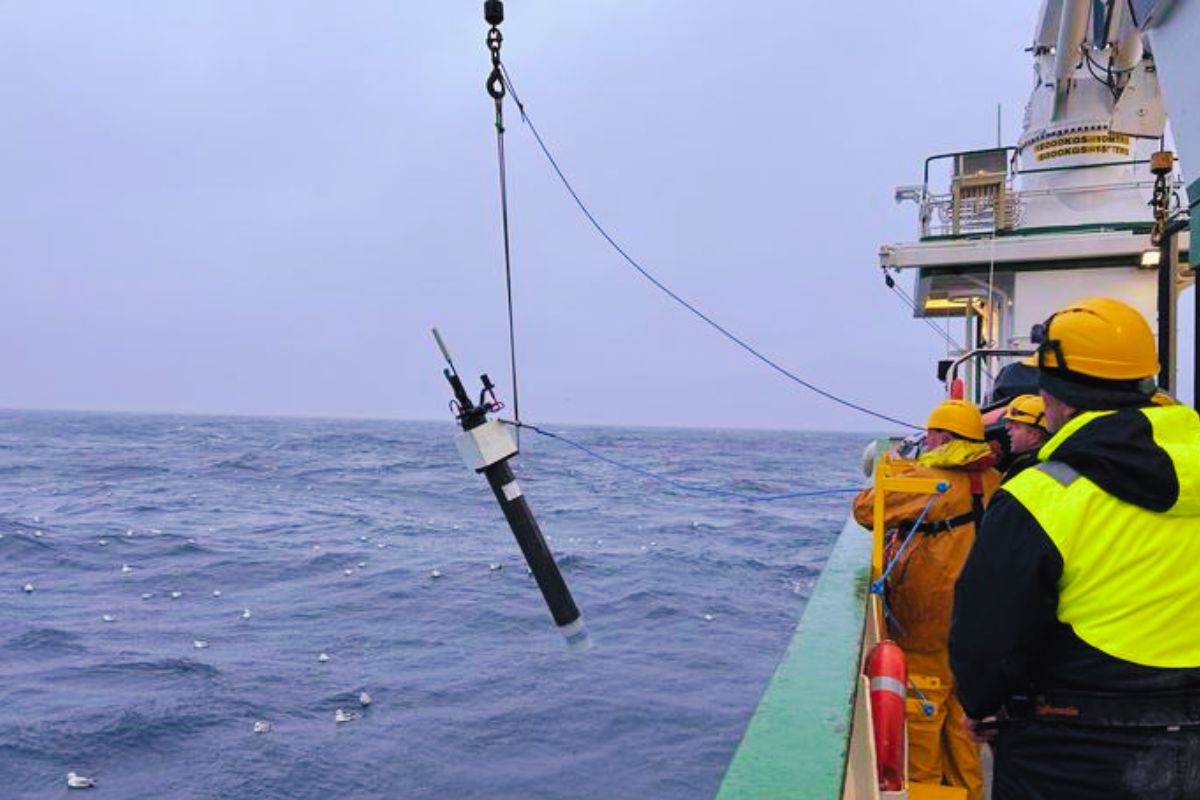
A recent breakthrough in oceanographic research has revealed something truly mind-boggling: the discovery of an immense and previously hidden mass of life beneath the ocean, equivalent to the weight of 250 million elephants. This finding, made possible by the power of robotic technology, is reshaping how we understand marine ecosystems and their role in regulating our planet’s climate. Here’s what scientists have uncovered, and why it matters.
Amazon co-founder MacKenzie Scott has donated over $19 billion to charity in just five years
Diamond batteries powered by nuclear waste promise 28,000 years of clean energy
Unveiling Hidden Phytoplankton Biomass
Imagine diving deep beneath the surface of the ocean, surrounded by nothing but blue, with little idea of the extraordinary life thriving just out of sight. Thanks to the work of Canadian researchers, we now have an unprecedented understanding of the ocean’s microscopic inhabitants, specifically phytoplankton. These tiny plants form the foundation of marine life, but they’re almost invisible to the naked eye.
Using a sophisticated network of 903 robotic floats, part of the Biogeochemical-Argo (BGC-Argo) program, scientists have been able to measure the global biomass of phytoplankton with remarkable precision. What they found was staggering: these organisms account for an estimated 314 teragrams (roughly 346 million tons) of organic matter. For perspective, that’s as heavy as 250 million elephants combined. A marine biologist once told me that this discovery was akin to “a silent revolution,” opening our eyes to the scale of life hidden within our oceans. This finding has been widely praised by institutions like the International Oceanographic Commission, which sees it as a pivotal moment in marine research.
The Role of Phytoplankton in Climate Regulation
Although these organisms are minuscule, their impact on our world is immense. Phytoplankton aren’t just the base of the ocean’s food web—they also play a crucial role in the Earth’s climate regulation. Through photosynthesis, they produce approximately 50% of the planet’s oxygen. Even more importantly, they absorb vast amounts of carbon dioxide, acting as natural carbon sinks.
I remember watching a documentary that referred to phytoplankton as “the lungs of the sea.” It’s a fitting metaphor, one that highlights their vital role in buffering climate change—a viewpoint shared by climate experts at organizations like the National Oceanic and Atmospheric Administration (NOAA). As climate change accelerates, understanding and protecting these microscopic life forms could be critical in our efforts to stabilize the planet’s ecosystems.
Implications for Climate Change Monitoring
This revelation has far-reaching consequences for how we monitor and predict climate change. Traditional methods, such as satellites, have been essential tools for environmental monitoring, but they have limitations. Particularly, satellites struggle to detect life in the deeper layers of the ocean. That’s where the robotic floats come in. By diving deeper than satellites can reach, these robots are filling the gaps in our understanding, providing valuable data on the ocean’s carbon cycle.
By integrating this new data with satellite observations, scientists are creating more accurate models of how the ocean captures and stores carbon. This improved understanding will help policymakers design better strategies for addressing global warming, as they now have a more comprehensive picture of the planet’s natural carbon absorption systems.
NASA warns China could slow Earth’s rotation with one simple move
This dog endured 27 hours of labor and gave birth to a record-breaking number of puppies
Advancements in Oceanographic Research
The BGC-Argo floats represent a leap forward in oceanographic research, moving beyond the surface-level data we’ve traditionally collected. These floats allow scientists to dive deeper into the ocean’s ecosystem, capturing rich data on the distribution and biomass of phytoplankton. It’s a fascinating realization that technology, initially designed for industrial purposes, is now playing a pivotal role in environmental science.
What’s especially exciting is how this technology is being used to protect our oceans. By providing insights into the health of marine ecosystems, these robotic devices help governments and conservation organizations take proactive steps to preserve our oceans for future generations.
Conclusion
Thanks to the Canadian robotic floats, scientists have uncovered a hidden world beneath the waves, with a weight equivalent to 250 million elephants. This discovery is not just a scientific achievement—it’s a testament to the power of human innovation and our relentless pursuit of knowledge to protect our planet. As the challenges of climate change grow, breakthroughs like these remind us that every tool we develop can play a crucial role in ensuring a sustainable future for Earth.