
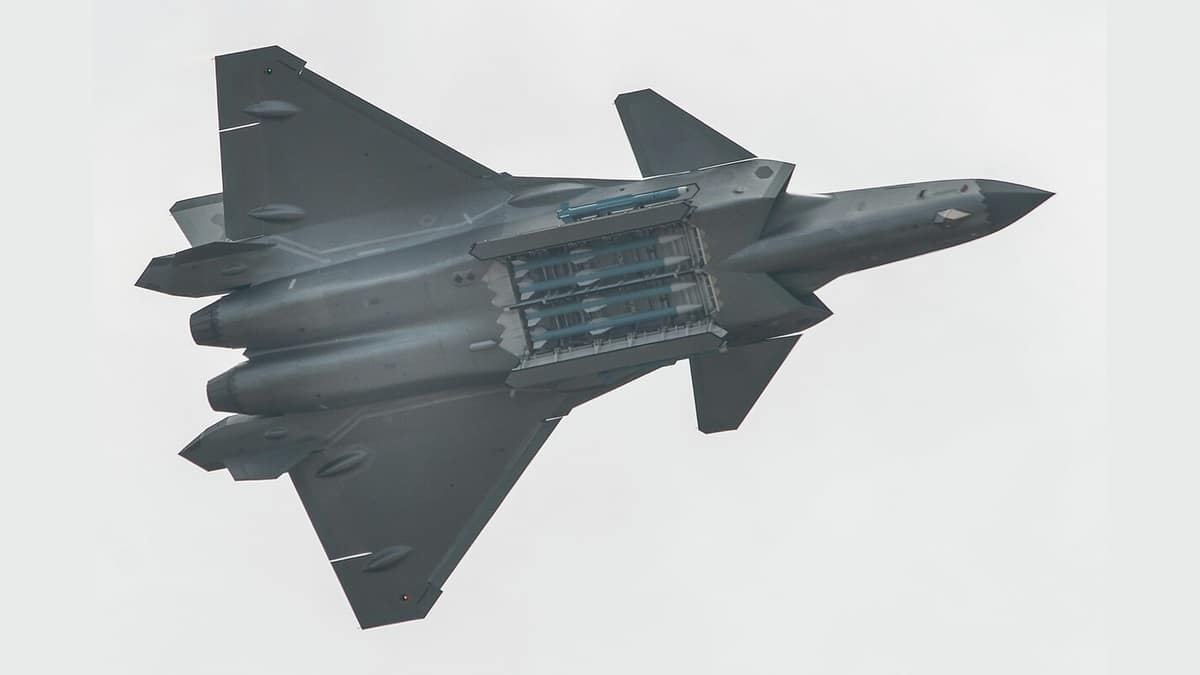
In a remarkable leap forward in materials science, Chinese scientists have defied expectations and achieved what was once thought impossible—developing a hypersonic missile component using stainless steel. Traditionally, high-performance materials like tungsten were the go-to for such applications due to their ability to withstand extreme heat. But China’s latest innovation promises not only to disrupt this status quo but also to significantly cut costs, showcasing the country’s growing prowess in defense technology¹.
Amazon co-founder MacKenzie Scott has donated over $19 billion to charity in just five years
Diamond batteries powered by nuclear waste promise 28,000 years of clean energy
A Breakthrough in Material Science
When developing cutting-edge technology, especially in high-stakes fields like aerospace and defense, finding the right materials is crucial. In the case of hypersonic missiles, materials need to endure extreme conditions, with temperatures often reaching well over 3,000°C. For years, tungsten alloys have been the preferred material due to their incredibly high melting point—3,422°C. However, tungsten is not only expensive but also rare, making it a challenging choice for mass production.
I can relate to the frustration that comes with dealing with material limitations. I once worked on a project where the cost and availability of materials made innovation feel like a distant dream. But then, a breakthrough came out of the Beijing Institute of Technology, led by Professor Huang Fenglei. Instead of sticking with traditional materials, the team decided to experiment with stainless steel, a material used in everyday items but never before considered viable for hypersonic missile components. Their successful adaptation of stainless steel has turned conventional wisdom on its head and opened up new possibilities in materials science.
Overcoming Extreme Temperatures
The real challenge for the scientists was ensuring the stainless steel could withstand the intense heat generated by hypersonic speeds. Normally, stainless steel begins to deform around 1,200°C—far lower than the temperatures experienced during hypersonic flight, where temperatures can exceed 3,000°C. But the team didn’t back down. They engineered a thermal protection system that used ultra-high-temperature ceramics and a thin aerogel thermal insulator to protect the stainless steel from the heat.
By layering these materials, they created a solution that not only shielded the steel from extreme temperatures but also preserved its structural integrity even when reaching speeds as fast as Mach 8. The outcome was a missile component that performed exceptionally well under high heat while dramatically reducing production costs—a huge step forward for missile technology².
A Strategic Move for China’s Defense
This development is much more than just a technical achievement—it has significant implications for China’s defense capabilities. By using stainless steel instead of more expensive materials like tungsten, China can now produce hypersonic missiles more cost-effectively. This breakthrough gives China a strategic edge, strengthening its military without the heavy financial burden typically associated with cutting-edge defense technologies.
The People’s Liberation Army (PLA) has already begun integrating these stainless steel components into their missile designs. This marks the beginning of a new chapter in defense technology, where powerful yet affordable weaponry could shift global defense dynamics. As the costs of hypersonic technology continue to rise worldwide, this development places China in a unique position to lead the way with innovative, cost-effective solutions.
NASA warns China could slow Earth’s rotation with one simple move
This dog endured 27 hours of labor and gave birth to a record-breaking number of puppies
Real-World Applications and Future Prospects
While the primary application of this technology is in military defense, the potential benefits extend far beyond that. The thermal protection system developed for these hypersonic missiles could be used in aerospace, energy, and other industries where extreme temperatures are a factor. For instance, reusable space vehicles and more efficient power plants could benefit from similar materials and methods, helping to drive advancements across multiple sectors.
Looking ahead, Chinese researchers are already working on ways to further enhance the performance of stainless steel under extreme conditions. This initial success has paved the way for future breakthroughs in materials science, opening doors to even more robust and adaptable solutions. As the technology continues to develop, the possibilities are vast, and we may be on the brink of an exciting new era of technological innovation.
Conclusion
China’s innovative use of stainless steel in hypersonic missile technology is a landmark achievement that challenges previous assumptions about what’s possible in materials science. By overcoming the limitations of traditional materials and creating a cutting-edge thermal protection system, Chinese scientists have set a new standard for missile technology. This breakthrough is not only poised to reduce costs but also positions China as a key player in the global defense race. With this development, China has demonstrated that even the most daunting challenges can be overcome with ingenuity and determination, making this an exciting time for the future of aerospace and defense technology.
Footnotes:
-
“China’s Hypersonic Technology: Innovations and Impacts on Global Defense” –. https://nationalsecurityjournal.org/chinas-hypersonic-weapons-a-clear-threat-to-the-u-s-military/
-
“The Role of Stainless Steel in Hypersonic Missile Technology” –. https://www.scmp.com/news/china/science/article/3277127/chinas-hypersonic-missiles-can-be-made-steel-scientists