
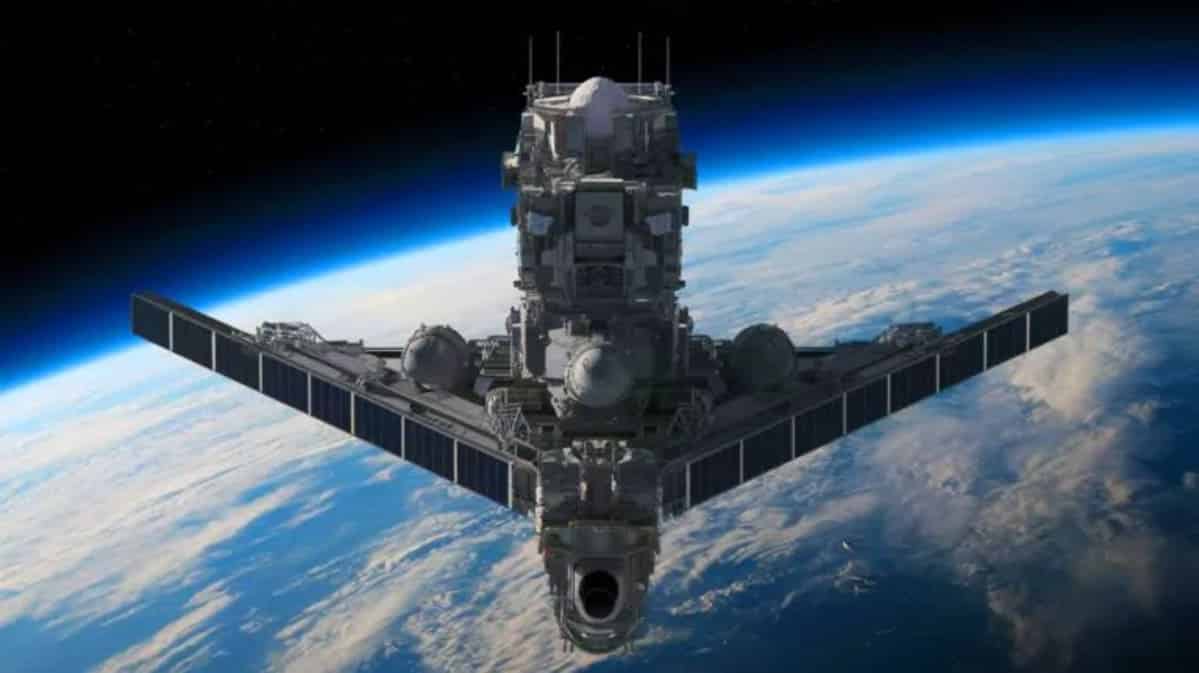
The race to maintain dominance in space has taken a significant leap forward with the United States unveiling a groundbreaking project that could drastically change the way space defense is conducted. The U.S. Space Force is investing heavily in a revolutionary new concept: the orbital carrier. This ambitious project promises to transform how satellites and other space assets are deployed and defended, giving the U.S. and its allies an unprecedented tactical advantage in the face of growing threats in orbit.
Amazon co-founder MacKenzie Scott has donated over $19 billion to charity in just five years
Diamond batteries powered by nuclear waste promise 28,000 years of clean energy
Revolutionizing Space Deployment with Orbital Carriers
At the heart of this innovation is the orbital carrier, a mobile space platform that functions like a giant “mothership” in orbit. Developed by Gravitics, Inc., the orbital carrier is designed to deploy fleets of space vehicles on demand, offering a strategic advantage previously seen only in science fiction. By bypassing the traditional constraints of earthbound launches, this system allows for on-demand deployments, enabling the rapid launch of missions whenever threats arise.
The orbital carrier will be equipped to carry a variety of spacecraft, which can be deployed from the carrier at a moment’s notice. This gives the U.S. Space Force unparalleled flexibility and the ability to rapidly respond to emerging challenges. With substantial funding from SpaceWERX, a key player in advancing military space capabilities, Gravitics is poised to make this vision a reality, with the first demonstrations expected within the next year.
On-Demand Launches: A New Era in Space Strategy
The orbital carrier concept is designed to allow the Space Force to carry out missions more efficiently and effectively than ever before. Traditionally, space operations have relied on isolated satellite launches, which can be slow and inflexible. The orbital carrier, however, functions like a mobile launch pad, where spacecraft are stored and ready for immediate deployment. This cohesive, on-demand launch system will ensure a rapid and decisive response to any threats that may emerge in orbit.
Drawing comparisons to naval carrier groups that ensure maritime security, the orbital carrier would function similarly in space. With advanced space-based weaponry from rivals like China and Russia, this capability becomes crucial. The ability to launch multiple missions from a centralized platform provides a new level of strategic agility, offering both defense and deterrence against any potential adversaries in space.
Addressing Threats in Orbit
The space environment is no longer a peaceful frontier—it’s become a high-stakes battleground. Nations are developing increasingly sophisticated space-based weaponry, ranging from radio jammers to advanced kinetic missiles and even nuclear warheads. As the threat landscape in orbit grows, the U.S. Space Force must stay ahead with the capability to defend critical satellite networks and other space assets.
The orbital carrier is designed to address this evolving threat by offering rapid-response capabilities. In many ways, it represents a new chapter in space warfare, where the speed of deployment and operational flexibility are essential for maintaining space superiority. Much like naval carriers project power across the seas, the orbital carrier will project U.S. space power across the skies.
STRATFI: Accelerating Innovation and Deployment
The Strategic Funding Increase (STRATFI) program, which supports the rapid development of key military technologies, is playing a central role in advancing the orbital carrier project. Gravitics, Inc.’s selection for this program signifies a major step in accelerating the transition of this technology from concept to operational reality. With the support of STRATFI, Gravitics is able to fast-track the development of the orbital carrier, ensuring that it can be tested and deployed as quickly as possible.
NASA warns China could slow Earth’s rotation with one simple move
This dog endured 27 hours of labor and gave birth to a record-breaking number of puppies
As the U.S. Space Force moves forward with this initiative, the STRATFI funding ensures that the project has the necessary resources to succeed. In the increasingly contested space domain, having the ability to rapidly deploy space assets is becoming not just advantageous, but essential. The investment in these cutting-edge technologies signals the U.S. Space Force’s commitment to maintaining its edge in space defense.
A New Era of Space Defense: Questions and Challenges Ahead
As the orbital carrier moves closer to reality, it raises important questions about the future of space conflict. Will this new technology be enough to deter adversaries from escalating the arms race in space? Or will it spark a new phase of competition, where nations rush to develop similar technologies? While the answers remain unclear, one thing is certain: the development of the orbital carrier marks a significant shift in how space defense will be executed in the years to come.
In the face of growing threats from space-based weapons, the U.S. Space Force’s orbital carrier could well be the game-changing asset that ensures U.S. dominance in space for decades to come. As space becomes an increasingly critical domain for both security and technological advancement, having the ability to deploy assets on demand is a step into a new era of military strategy.