
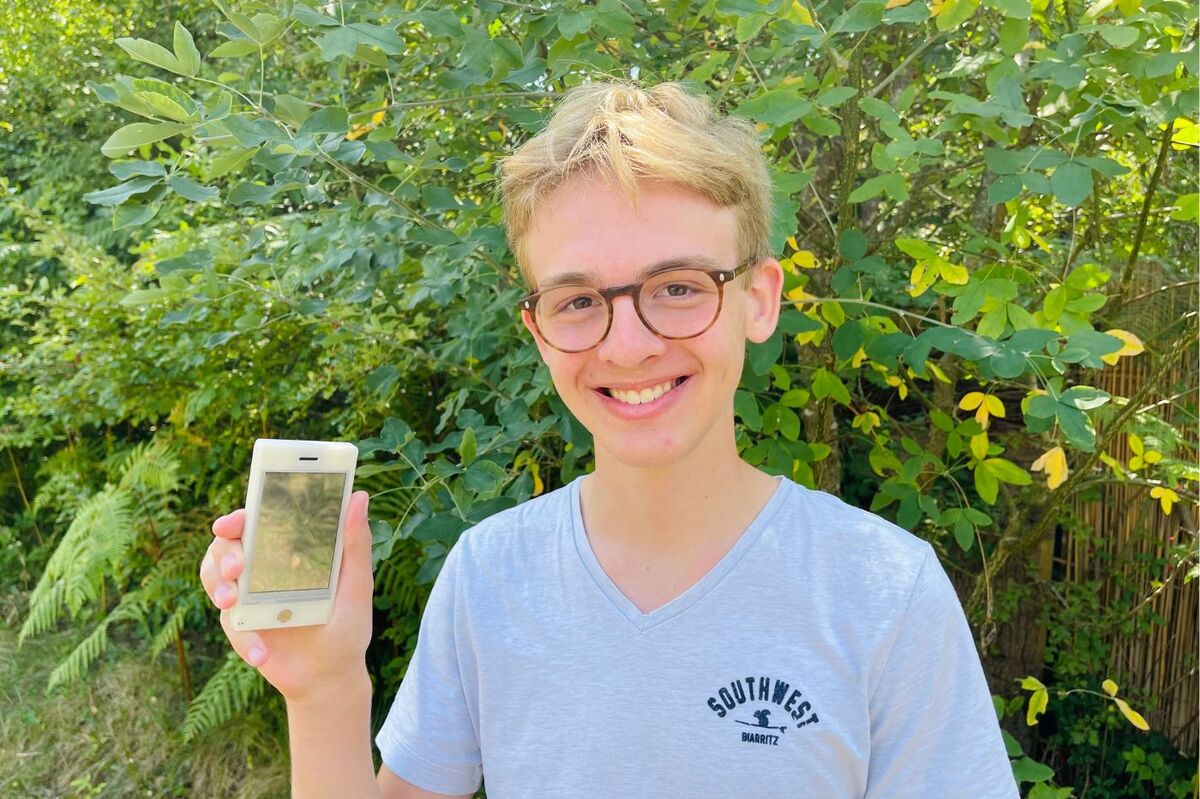
At just 16, Gabriel Rochet has defied expectations by building a fully functional mobile phone from scratch—proof that youthful curiosity and determination can challenge the tech status quo. His €30 handset, born in a 3D-printed bedroom workshop, shows that innovation doesn’t require a Silicon Valley budget.
Amazon co-founder MacKenzie Scott has donated over $19 billion to charity in just five years
Diamond batteries powered by nuclear waste promise 28,000 years of clean energy
A Self-Made Challenge
When Gabriel Rochet was 13, he made himself a promise: he would build a working mobile phone from scratch. “Everyone carries a smartphone, yet nobody understands what’s inside,” he says with a grin. From his bedroom in suburban Paris, Gabriel has spent the last three years teaching himself electronics and programming, armed with little more than salvaged parts and a 3D printer his parents eventually bought to support his dream. His goal? A simple, affordable device that makes calls and sends texts for under €30.
From Shoe Box to Prototype
Gabriel’s first attempts were humble—literally housed in a shoebox with a screen that wouldn’t even light up. “That first year, I achieved nothing,” he recalls, laughing at how he barely managed to power an LCD. But persistence paid off: he cobbled together nine failed prototypes before hitting success. “When the display finally came on, I couldn’t believe it,” he admits. Today’s fourth-generation model, dubbed Paxo, is razor-thin compared to his family’s smartphones, and it reliably dials and texts, plus plays classic games like Snake and 2048.
Open-Source Ethos
True to his belief in shared knowledge, Gabriel has published all his circuit diagrams, code, and 3D-print files online. He even runs a Discord server for collaborators. “I never paid for courses—I learned from open-source projects on the web,” he explains. His mother smiles, noting how Gabriel’s room often resembles a mini-hackathon, with friends dropping by to tinker on side projects—everything from a heat lamp to a classroom cloud platform.
Did you know? The global maker movement has grown dramatically, with over 2,000 Fab Labs worldwide offering community access to 3D printers and electronics workshops¹.
Beyond the Lab—Everyday Maker
Despite his technical prowess, Gabriel doesn’t see himself as a recluse. He plays piano, socializes with a tight-knit circle, and jokes that he “gets bored scrolling social apps”—even on his Fairphone 4, which he describes as “Paxo on steroids.” Looking ahead, he dreams of sustainable, low-cost tech solutions that challenge the big brands’ cycle of planned obsolescence. His hero? Limor Fried of Adafruit Industries, who pioneered accessible electronics kits. “If my journey inspires others to build projects they love—and maybe greener gadgets—it’ll be worth it,” he says, eyes sparkling with the next big idea.
Footnotes
-
MIT Center for Bits and Atoms, “The Rise of Global Fab Labs,” 2023; https://news.mit.edu/2023/how-mits-fab-labs-scaled-around-world-0605
-
Pew Research Center, “Smartphone Ownership in Advanced Economies,”; https://www.pewresearch.org/global/2019/02/05/smartphone-ownership-is-growing-rapidly-around-the-world-but-not-always-equally/
-
Adafruit Industries, “About Us”; https://www.adafruit.com/about