
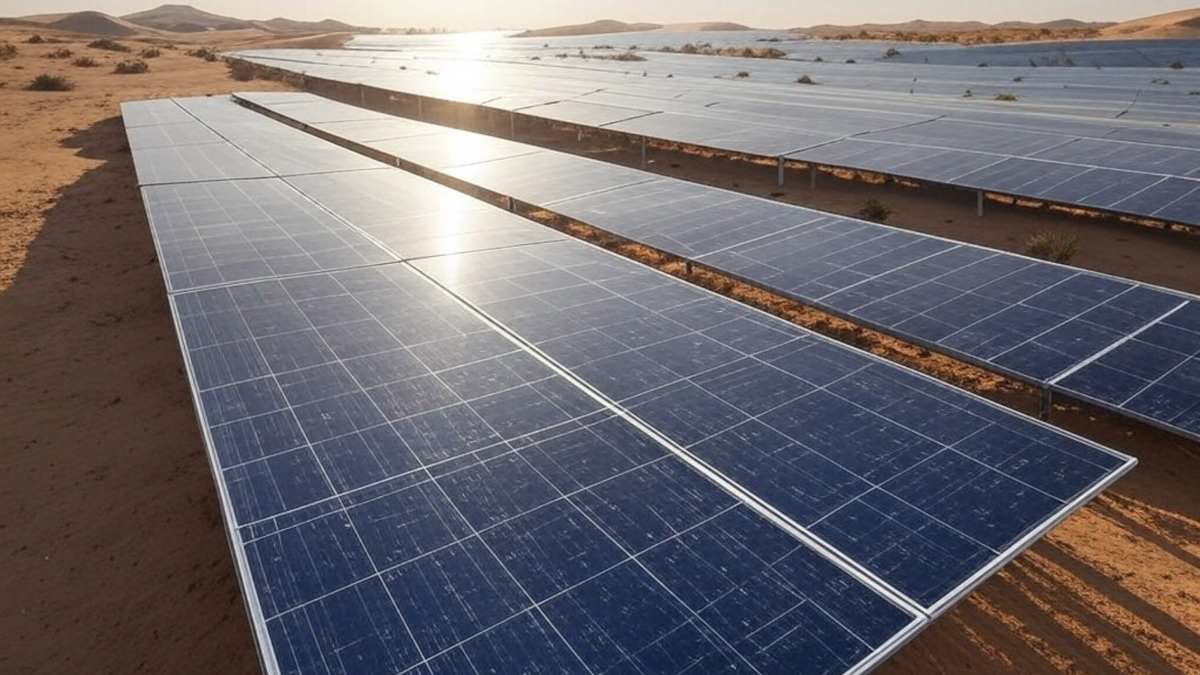
On a recent trip to the high-altitude desert of Qinghai Province, I was struck by rows of gleaming panels stretching to the horizon—an unexpected sight in such a barren landscape. Yet new research from Xi’an University of Technology shows that these photovoltaic installations do more than generate electricity: they fundamentally alter the desert ecosystem. Using the DPSIR model—a framework recommended by the European Environment Agency—the team monitored 57 environmental indicators around China’s massive 15 600-megawatt Gonghe Talatan Solar Park in Qinghai Province¹.
Amazon co-founder MacKenzie Scott has donated over $19 billion to charity in just five years
Diamond batteries powered by nuclear waste promise 28,000 years of clean energy
Did you know? In China, deserts cover about 25% of the country’s land area—and desertification affects roughly 400 million people².
From barren land to thriving microclimate
The study found that areas under the panels exhibited notably higher ecological health than untouched stretches of sand². The shade cast by the panels reduces evaporation and lowers soil temperatures, allowing precious moisture to linger far longer than in the open desert. This shift enabled seedlings to sprout where none had before—and encouraged a surge in soil microorganisms, essential architects of fertile earth.
Walking among those panels, I noticed tiny patches of green ferns and shrubs poking through the sand. It was a testament to how even small shifts in temperature and humidity can trigger desert renewal. As the UN Decade on Ecosystem Restoration explains, boosting soil life is key to reversing land degradation and fighting climate change³.
A symbiotic relationship between solar energy and nature
Traditionally, solar farms and environmentalists have warily eyed each other—one promises clean power, the other protects fragile habitats. But the Gonghe Talatan findings suggest a symbiotic outcome. The panels act like artificial canopies, creating cool “islands” where life can gain a foothold. According to a recent Energy Media analysis, large solar installations in desert areas can play an essential role in ecological governance, supporting both power generation and habitat recovery⁴.
Long-term effects still need more research
Despite these positive signs, scientists caution that long-term monitoring is crucial. Will this microclimate effect persist as panels age? How will shifting rainfall patterns interact with panel shade? Researchers at Xi’an University stress that site selection matters—what works in Qinghai’s plateau desert may not translate to lower-altitude dunes elsewhere.
Ongoing studies will need to track biodiversity shifts, water cycles, and soil chemistry over decades. Only then can we be sure these solar farms deliver lasting benefits and avoid unintended side effects.
NASA warns China could slow Earth’s rotation with one simple move
This dog endured 27 hours of labor and gave birth to a record-breaking number of puppies
A new future for solar energy and desert ecosystems
This emerging research marks a turning point in how we view solar energy’s role on our planet. No longer just a tool to cut carbon emissions, large-scale solar farms could also act as microclimate engineers, helping to mend ecosystems long written off as lifeless.
As global demand for clean power surges, planners and conservationists have an opportunity to collaborate. Imagine deserts worldwide hosting solar arrays that not only light up cities but also foster pockets of biodiversity. With thoughtful design and continued study, solar energy might just become one of our greatest allies in healing the Earth’s most fragile landscapes.
Sources
-
Wikipedia. “List of photovoltaic power stations.” https://en.wikipedia.org/wiki/List_of_photovoltaic_power_stations
-
Energi Media. “China’s big solar parks help battle desertification: Study.” https://energi.media/news/chinas-big-solar-parks-help-battle-desertification-study/
-
Wikipedia. “UN Decade on Ecosystem Restoration.” https://en.wikipedia.org/wiki/UN_Decade_on_Ecosystem_Restoration
-
Central Asia Climate Portal. “Chinese Scientists Discover Unexpected Benefits of Solar Panels.” https://centralasiaclimateportal.org/chinese-scientists-discover-unexpected-benefits-of-solar-panels/