

In the pitch-black depths of the ocean, where sunlight never penetrates and the pressure could crush an unprepared creature in an instant, a new nightmare has emerged for the ecosystem. While the vast majority of the ocean remains a mystery to us, recent findings have shed light on a truly bizarre and unsettling predator lurking in the hadal zone—the deepest regions of the ocean, where life seems as strange and eerie as the environment itself.
Amazon co-founder MacKenzie Scott has donated over $19 billion to charity in just five years
Diamond batteries powered by nuclear waste promise 28,000 years of clean energy
A predator from the abyss: Dulcibella camanchaca
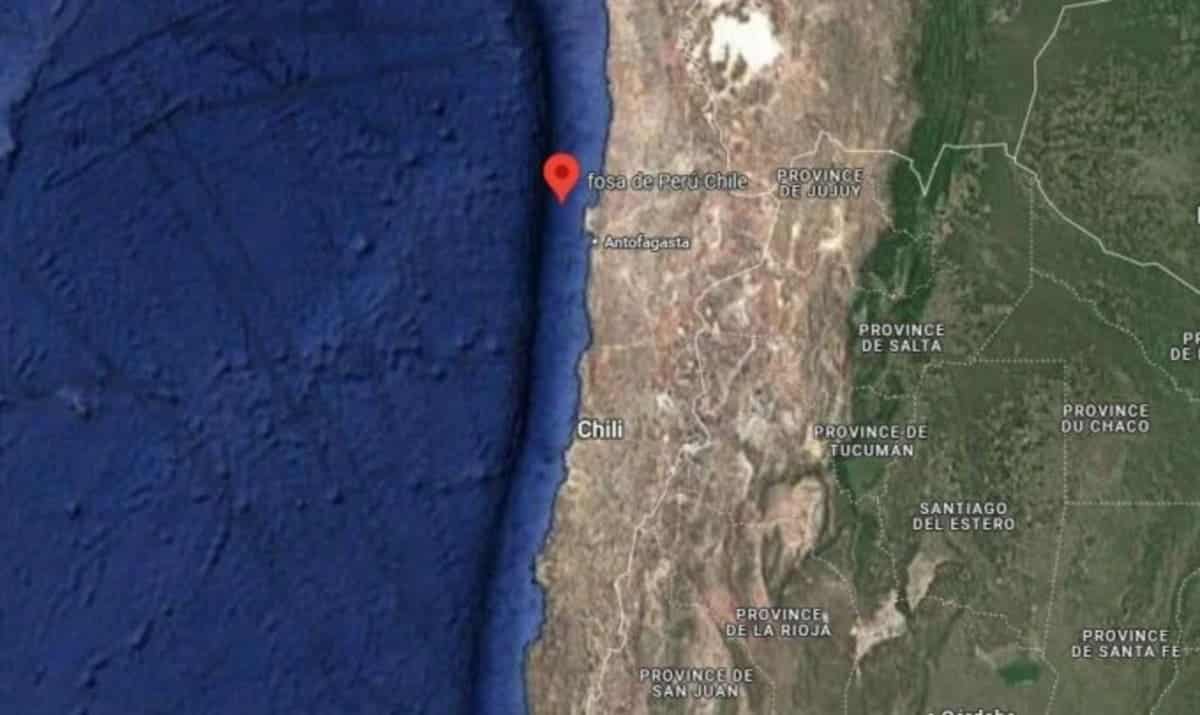
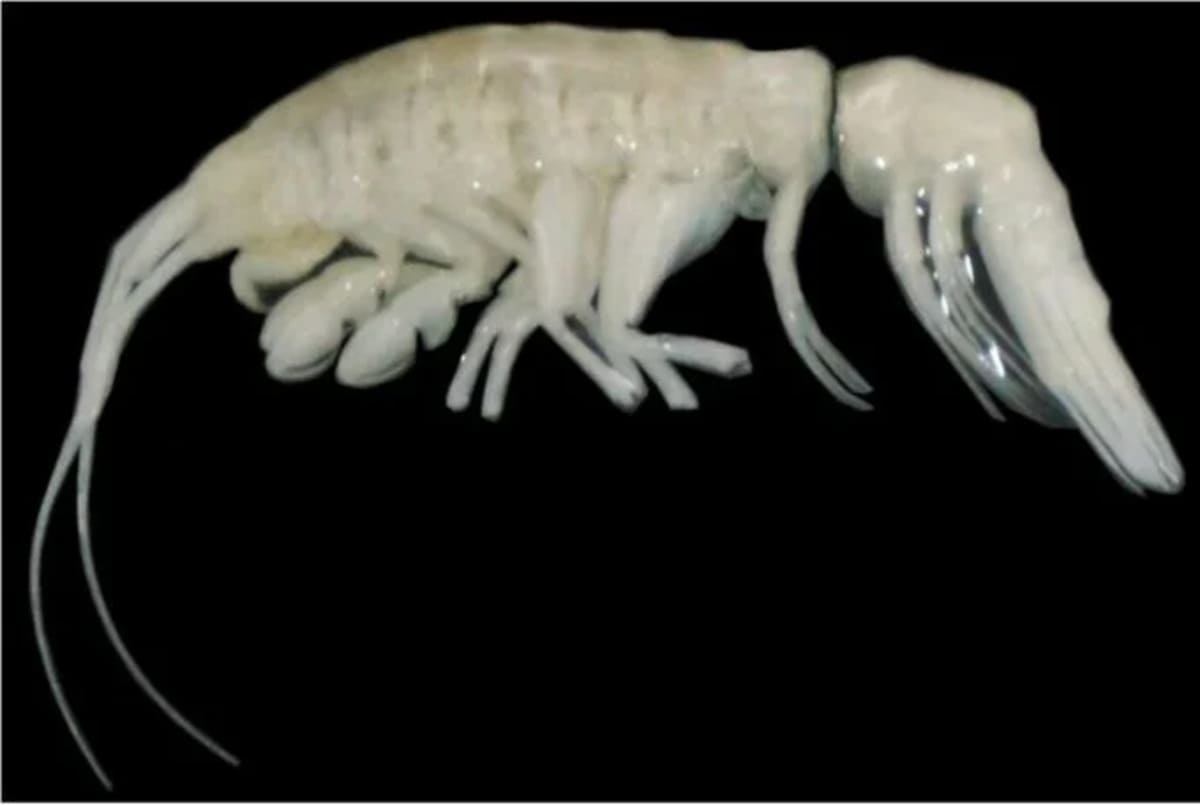
At nearly 8 kilometers beneath the surface, in the Atacama Trench off the coasts of Chile and Peru, scientists recently made an unsettling discovery: a shrimp-like creature called Dulcibella camanchaca. Despite its small size, measuring just about 4 centimeters, this deep-sea amphipod is far from harmless. In fact, it’s a relentless predator, specially adapted to survive—and hunt—in the complete darkness of the ocean’s depths.
What makes Dulcibella camanchaca particularly frightening isn’t just its eerie appearance, but the specialized tools it uses to capture prey. Armed with prehensile appendages that function like a pair of highly dexterous claws, it actively hunts other amphipods in its vicinity. And all this happens in an environment where there is no light, no warmth, and no safety from predators of its own.
“We named it after the word for ‘darkness’ in the Andean languages, which perfectly captures the shadowy realm where it thrives,” says Johanna Weston, co-director of the study from the Woods Hole Oceanographic Institution. This creature isn’t just surviving in the abyss—it’s thriving in the very heart of darkness.
A new discovery in marine biology: a new genus and species
The discovery of Dulcibella camanchaca has set the scientific community buzzing. This isn’t just a new species—it’s a brand-new genus, marking a groundbreaking moment in marine biology. When researchers captured four specimens of the creature during the 2023 IDOOS expedition (Integrated Deep-Ocean Observing System), it became clear that this was not just another fish or mollusk.
A genus, as any biologist will tell you, is a broader category than a species—it encompasses a group of species that share certain characteristics. The discovery of a new genus is like uncovering an entirely new branch on the tree of life, one that had been hidden in the depths of the ocean until now.
“These hadal zones are teeming with life forms that we can barely even imagine,” says Carolina González, co-director of the study. “The ecosystems we find there are unique, and we must continue exploring and protecting them from human interference.”
NASA warns China could slow Earth’s rotation with one simple move
This dog endured 27 hours of labor and gave birth to a record-breaking number of puppies
The hidden biodiversity of the hadal zone
For a long time, many believed the hadal zone to be a barren, lifeless void. Yet, the discovery of creatures like Dulcibella camanchaca proves just how far off that assumption is. The hadal zone is a world of its own, with bizarre creatures adapted to the extreme conditions of deep-sea life. While these regions remain largely unexplored, it’s becoming increasingly clear that they are home to a vibrant and mysterious ecosystem.
As exploration technologies improve, scientists are gaining a better understanding of the incredible diversity that exists in these extreme environments. But we have only scratched the surface. Every new discovery opens up more questions about life in the depths and how organisms like Dulcibella camanchaca manage to survive in such a hostile world.
Protecting the final frontier of Earth
The discovery of this new predator isn’t just a fascinating scientific breakthrough—it’s also a reminder of how much we still don’t know about our planet. The ocean’s depths, especially the hadal zones, remain one of the least explored and most inhospitable environments on Earth. Yet, with each new species we uncover, we are forced to rethink what is possible for life on Earth.
As we continue to explore these extreme ecosystems, it’s crucial to understand their fragility. Many of the species living in these depths are highly specialized and could be threatened by human activity. Whether it’s deep-sea mining or climate change, the ecosystems that thrive in these dark corners of the Earth are incredibly vulnerable.
“Dulcibella camanchaca is a glimpse into a world we still don’t fully understand,” says González. “It’s a reminder that we need to continue our efforts to protect these ecosystems, as they are an integral part of the planet’s biodiversity.”
The unknown abyss
The ocean remains one of Earth’s last great frontiers. Every discovery we make in the deep sea reveals more about life’s resilience and adaptability. From creatures that can withstand crushing pressure to predators like Dulcibella camanchaca that have evolved to hunt in total darkness, the abyss continues to astonish us.
As technology improves and our understanding deepens, the mysteries of the deep sea will continue to unfold. And while some discoveries may be awe-inspiring, others—like this terrifying new predator—will remind us just how little we truly know about the world beneath the waves.
Sources:
-
“New Deep-Sea Predator Discovered in the Atacama Trench: Dulcibella camanchaca.”. https://oceanographicmagazine.com/news/newly-discovered-deep-sea-predator-crustacean-named-after-the-darkness/
-
“Exploring the Hadal Zone: A Journey to the Deepest Depths.” https://www.sciencedirect.com/science/article/abs/pii/S0967064518302625
-
“2023 Integrated Deep-Ocean Observing System Expedition: Discovery of New Species.” https://modernsciences.org/staging/4414/new-crustacean-species-atacama-trench-deep-sea-biodiversity-december-2024/