
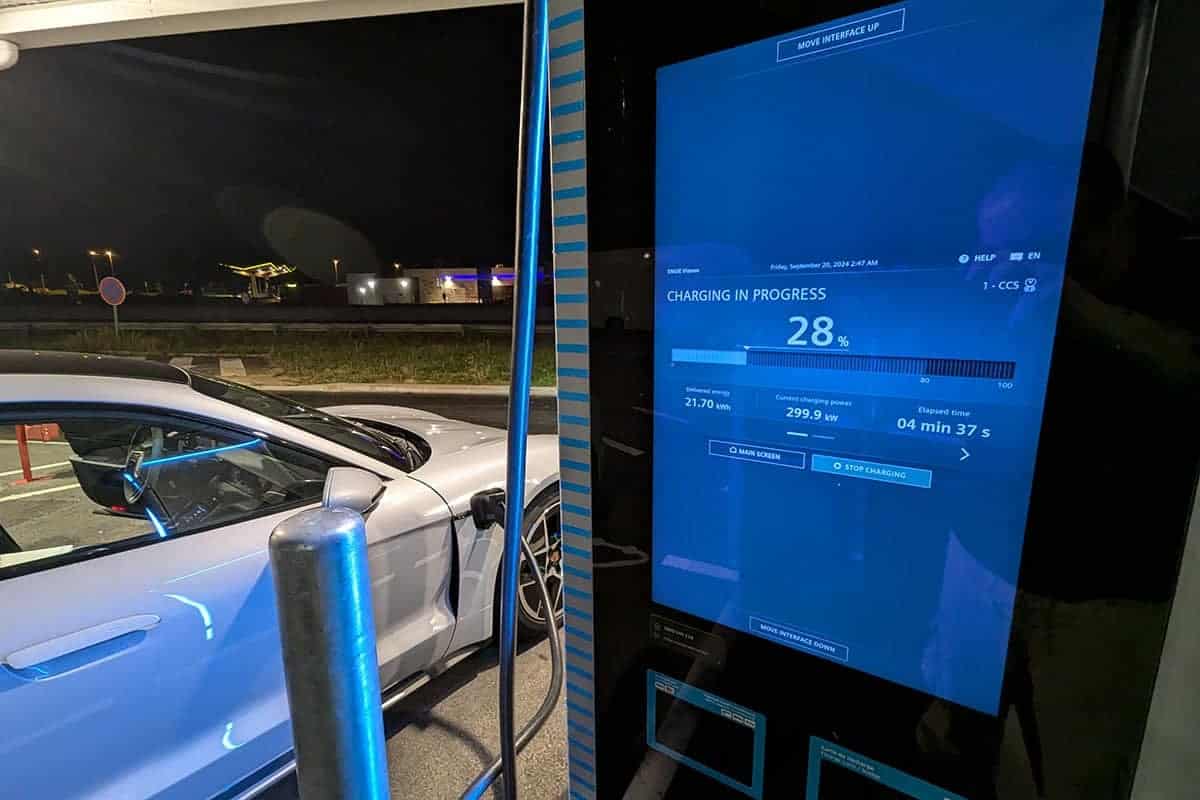
When it comes to electric cars, charging speed is almost as important as driving range. While gas-powered vehicles take just minutes to refuel, electric vehicles (EVs) can take much longer, depending on the car and charging station. But which electric car charges the fastest? We’ve put the most popular EVs to the test to answer this question, and the results might surprise you.
Amazon co-founder MacKenzie Scott has donated over $19 billion to charity in just five years
Diamond batteries powered by nuclear waste promise 28,000 years of clean energy
The Real Story Behind Charging Speeds
For electric vehicles, charging performance is a crucial factor in the buying decision. While car manufacturers have to report the WLTP (Worldwide Harmonized Light Vehicles Test Procedure) figures for range, they don’t have the same requirement for charging speeds. This has led to a confusing and often misleading picture. For example, manufacturers sometimes cite the time it takes to charge between 20-80%, rather than the full 0-100%, which can make charging times appear faster than they really are.
The key issue here is the peak power—the maximum charging rate the car can achieve under ideal conditions. While manufacturers boast about these high peak numbers, the real-world charging performance, particularly when you look at the average power over a session, tells a different story. It’s not about how fast the car can charge at its peak for a few minutes; it’s about how much power is delivered over the entire charging session. That’s what really matters to most drivers looking to minimize downtime during long trips.
What Are the Best Charging Powers and Times?
We’ve tested dozens of vehicles to find out which ones provide the best balance of charging speed and efficiency. The results were clear: the fastest charging vehicles aren’t necessarily the ones that hit the 10-80% range the quickest. Rather, the best performers are those that manage to deliver the most electrons in the shortest time, minimizing wait times and maximizing efficiency.
Among the top performers, the Porsche Taycan RWD stands out with an average charging power of 265 kW. With a near-constant charging curve, it comes remarkably close to its peak power throughout the session, making it unbeatable in this category. The Kia EV9 RWD follows closely behind, boasting an average charging power of 181 kW over the 10-80% range.
On the other end of the spectrum, the Lucid Air Grand Touring shows that high peak numbers don’t always translate to fast real-world charging. Despite its advertised peak of 300+ kW, it takes 34 minutes to charge from 10% to 80%, with an average of only 145 kW—a significant drop from its peak. Similarly, the Tesla Model 3 Long Range, while showing a peak of 250 kW, averages just 106 kW during its 33-minute charge.
Average Power and Fast Charging Times
| Car Model | Peak Power (kW) | Average Power 10-80% (kW) | Charging Time 10-80% (min) | Charging Time 10-100% (min) |
| Porsche Taycan RWD | 320 | 265 | 17 | 53 |
| Kia EV9 RWD | 215 | 181 | 25 | 58 |
| Lucid Air Grand Touring | 300 | 145 | 34 | 74 |
| Volkswagen ID.7 Pro | 170 | 129 | 27 | 48 |
| Cupra Born V 230 XL | 170 | 124 | 28 | 47 |
| BMW i5 eDrive40 | 205 | 115 | 31 | 60 |
| BYD Seal Design | 150 | 109 | 36 | 64 |
| Tesla Model 3 Long Range | 250 | 106 | 33 | 72 |
| Volvo EX30 Extended Range | 155 | 102 | 28 | 71 |
| Renault Scenic e-Tech | 150 | 101 | 38 | 99 |
Which Cars Recover the Most Range in 30 Minutes?
Charging speed isn’t just about the time it takes to get from 10% to 80%—what really matters is how much range you get in that time. After all, when you’re on a long road trip, you don’t want to wait hours for just a few miles of range. To measure this, we used a typical highway route from Lyon to Paris (around 500 km) to see how much range the cars could recover in 30 minutes of charging.
Once again, the Porsche Taycan topped the charts, recovering an impressive 400 km in just 30 minutes of charging—an incredible feat. It’s followed by the Lucid Air Grand Touring, which gained 340 km in the same time. The Tesla Model 3 Long Range, which didn’t perform as well in the previous test, managed to recover 280 km in 30 minutes, putting it in the top tier for long-distance drivers.
NASA warns China could slow Earth’s rotation with one simple move
This dog endured 27 hours of labor and gave birth to a record-breaking number of puppies
Interestingly, it wasn’t the smaller city cars that lagged behind in these tests. In fact, BYD’s Tang, a larger SUV, only managed to gain 140 km in 30 minutes, despite its impressive peak charging figures. Even the smaller BYD Dolphin didn’t do much better, with just 70 km recovered in half an hour, highlighting the challenges of smaller battery packs when it comes to fast charging.
The Fastest Charging Electric Cars
After all the testing, it’s clear that the Porsche Taycan is in a league of its own, both in terms of charging speed and the range it gains per minute of charging. If you’re looking for the quickest charging electric car, the Taycan should be at the top of your list. But for most people, other models like the Lucid Air or Tesla Model 3 might offer a good balance of performance and charging efficiency, depending on your needs.
Whether you’re in the market for a new car or just curious about the latest in EV tech, understanding charging times and power is crucial for making an informed decision. After all, no one wants to spend more time waiting at a charging station than necessary, and knowing which cars can give you the most miles per minute could make all the difference on your next road trip.