
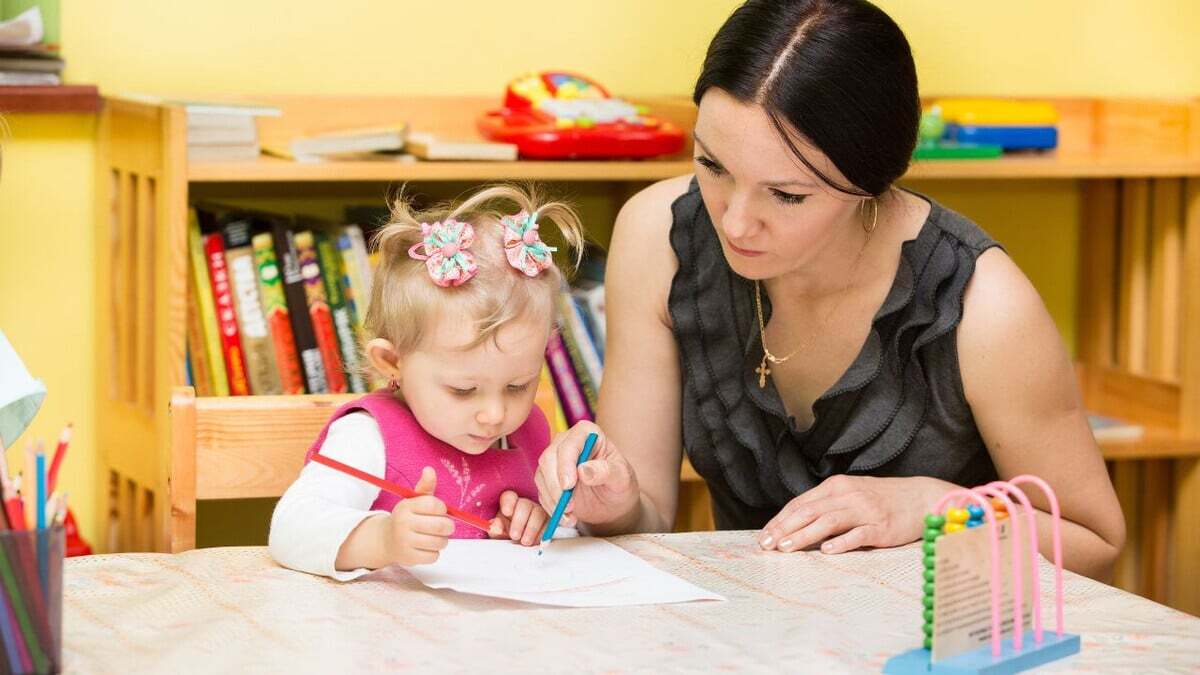
The Montessori method has become a popular choice for parents seeking an alternative to traditional schooling, promising a focus on independence, self-directed learning, and curiosity-driven education. But for some families, like mine, it doesn’t always meet expectations. After four years in a Montessori school, my daughter faced significant academic challenges that led us to transition her to a traditional school—and we soon realized that private lessons were necessary to help her catch up.
Amazon co-founder MacKenzie Scott has donated over $19 billion to charity in just five years
Diamond batteries powered by nuclear waste promise 28,000 years of clean energy
The Appeal of Montessori: Independence Over Structure
When we first enrolled our daughter in Montessori, I was drawn to its philosophy of hands-on discovery and self-paced learning. In the early years, she thrived in this environment. She was engaged, curious, and enjoyed exploring activities that helped develop her fine motor skills and basic literacy. At the time, it seemed like the perfect fit.

But as she progressed through the grades, the lack of structured lessons in critical subjects like reading, grammar, and mathematics started to become more apparent. By the end of first grade, she was still struggling with reading, and I realized that foundational skills like spelling and grammar had barely been addressed. In fact, by third grade, she had never even done a basic dictation exercise—a routine part of any traditional curriculum.
When Gaps Become Hard to Ignore
As my daughter’s academic struggles became harder to ignore, I approached the school’s educators with my concerns. I was hoping for some clarity or at least some insight into how the Montessori approach was preparing her for future grades. Unfortunately, the response I received was less than reassuring. “She’s just not ‘ready’ yet,” they said, suggesting the problem lay with her, rather than with the approach. This left me questioning whether the lack of structure was truly fostering her development, or if it was inadvertently holding her back.

The math difficulties were particularly frustrating. While the teachers assured me that she would “pick it up when she’s ready,” I wasn’t seeing the progress I had hoped for. By the time we switched her to a public school, it was clear that she was falling behind her peers in several key areas.
A Lack of Transparency in the Curriculum
One of the most frustrating aspects of our experience with Montessori was the lack of transparency. As a parent, I felt out of the loop. We weren’t given clear information on what was being taught, and there were no formal evaluations to track her progress. Whenever I tried to ask about specific lessons or areas of concern, I often felt like I was being a bother.
NASA warns China could slow Earth’s rotation with one simple move
This dog endured 27 hours of labor and gave birth to a record-breaking number of puppies
This lack of communication isn’t uncommon in Montessori schools, especially those that operate independently. Many schools follow flexible curricula that don’t necessarily align with national education standards, leaving parents feeling in the dark about their child’s academic journey.
More Parents Reconsidering Montessori
My experience isn’t unique. As children progress through the elementary grades, many parents are beginning to question whether Montessori provides a solid foundation in subjects like literacy and math. Experts have raised concerns about whether the Montessori method, with its emphasis on autonomy, is robust enough to prepare children for the demands of higher education.
Additionally, the high cost of Montessori education and the lack of external oversight have led to skepticism about its effectiveness. Publications like Madame Figaro have reported concerns about the inconsistent quality of teaching and the lack of regulation in many Montessori schools.
A Lesson Learned
Looking back, I don’t regret giving Montessori a try. My daughter certainly benefitted from the early years of self-directed learning, but it became clear that she needed more structure as she got older. Now, in her new school, she’s catching up—but only with the help of extra support like private tutoring.
For other parents considering Montessori, my advice is to do thorough research and stay actively involved in your child’s progress. While Montessori can be a great fit for some children, it’s not a one-size-fits-all solution. If you start to notice academic gaps, don’t be afraid to reassess and explore other options. A balance between independence and structure might be the key to ensuring long-term academic success.