
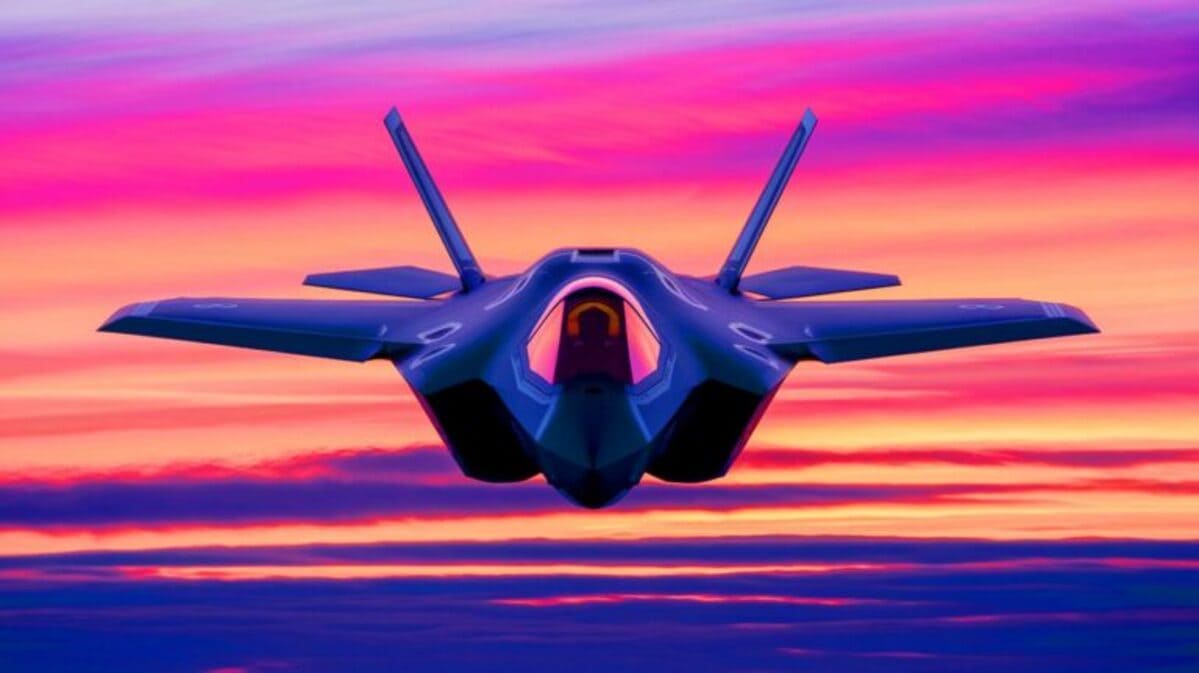
The international military landscape is shifting rapidly as the US Navy prepares to unveil its next leap in aerial power—the F/A-XX, a cutting-edge sixth-generation fighter jet promising unprecedented capabilities. This development has already sparked alarm in Moscow, prompting Russia to launch an emergency investigation into the potential implications of the new aircraft.
Amazon co-founder MacKenzie Scott has donated over $19 billion to charity in just five years
Diamond batteries powered by nuclear waste promise 28,000 years of clean energy
A Leap Forward in Range and Reach
The upcoming F/A-XX promises to outpace the current F-35C Lightning II by an impressive 25% increase in operational range, extending its reach well beyond 1,700 miles. Rear Admiral Michael “Buzz” Donnelly highlighted this game-changing feature during the Sea Air Space 2025 exhibition, emphasizing how this extended range will allow the Navy to project power across vast oceans without the immediate need for refueling.
This capability dramatically enhances the US Navy’s operational flexibility, allowing fighter jets to stay airborne longer and strike targets from farther away. Coupled with aerial refueling technologies, the F/A-XX could maintain near-continuous presence over critical theaters, reinforcing America’s strategic dominance.
Cutting-Edge AI and Stealth Technologies
But range is just one piece of the puzzle. The F/A-XX incorporates advanced artificial intelligence systems designed to revolutionize how pilots manage complex battlespaces. Transitioning to a “man-on-the-loop” model means the aircraft will collaborate seamlessly with unmanned drones, enabling coordinated operations that blend human decision-making with machine precision.
Stealth is another cornerstone of this platform. Its radar-evading design promises to operate undetected in heavily defended enemy airspace, granting it a crucial advantage. In an era where aerial threats evolve constantly, these technological innovations ensure the US Navy stays several steps ahead of potential adversaries.
Expanding the Battlefield’s Horizon
The introduction of the F/A-XX, alongside the MQ-25 Stingray unmanned refueling tanker, is expected to dramatically broaden the operational footprint of carrier air wings—potentially covering an astounding 11 million square miles. This vast area of effect not only allows for more targeted and sustained missions but also increases uncertainty for opponents, making it harder to predict or counter US strikes.
Such expansive reach enhances the survivability of aircrews by dispersing operations and complicating enemy defense strategies. It also reflects a strategic shift toward more agile, networked, and multi-domain warfare, where air superiority is maintained through a blend of range, stealth, and intelligent systems.
Rising Tensions and Global Reactions
Russia’s emergency probe into the F/A-XX signals growing unease over America’s advancing military technology. The Kremlin views this leap as a direct challenge to its regional and global influence, raising concerns about a new arms race in next-generation fighter capabilities.
NASA warns China could slow Earth’s rotation with one simple move
This dog endured 27 hours of labor and gave birth to a record-breaking number of puppies
While the full impact of the F/A-XX remains to be seen, it undeniably represents a significant step in naval aviation evolution. As global powers recalibrate their strategies, the coming years may witness intensified competition in aerospace innovation, with far-reaching consequences for international security.