
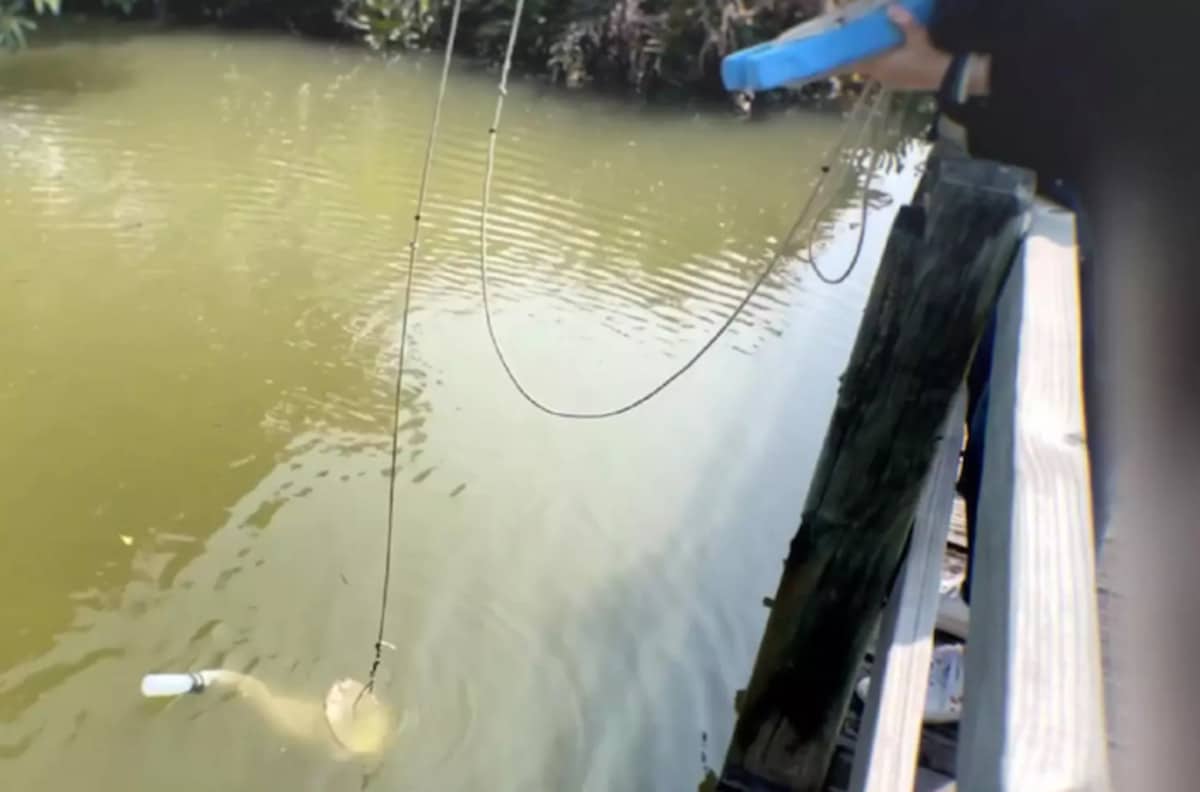
Imagine walking through a peaceful pond in Hong Kong’s Mai Po Nature Reserve, expecting to see the usual assortment of aquatic life. But instead, you come across a creature that looks like something straight out of a science fiction novel. This was the exact scene when researchers made a surprising discovery—a venomous, cube-shaped jellyfish with 24 eyes. This finding not only adds to the biodiversity of the region but also challenges what we know about marine life.
Amazon co-founder MacKenzie Scott has donated over $19 billion to charity in just five years
Diamond batteries powered by nuclear waste promise 28,000 years of clean energy
A Surprising Encounter in Mai Po
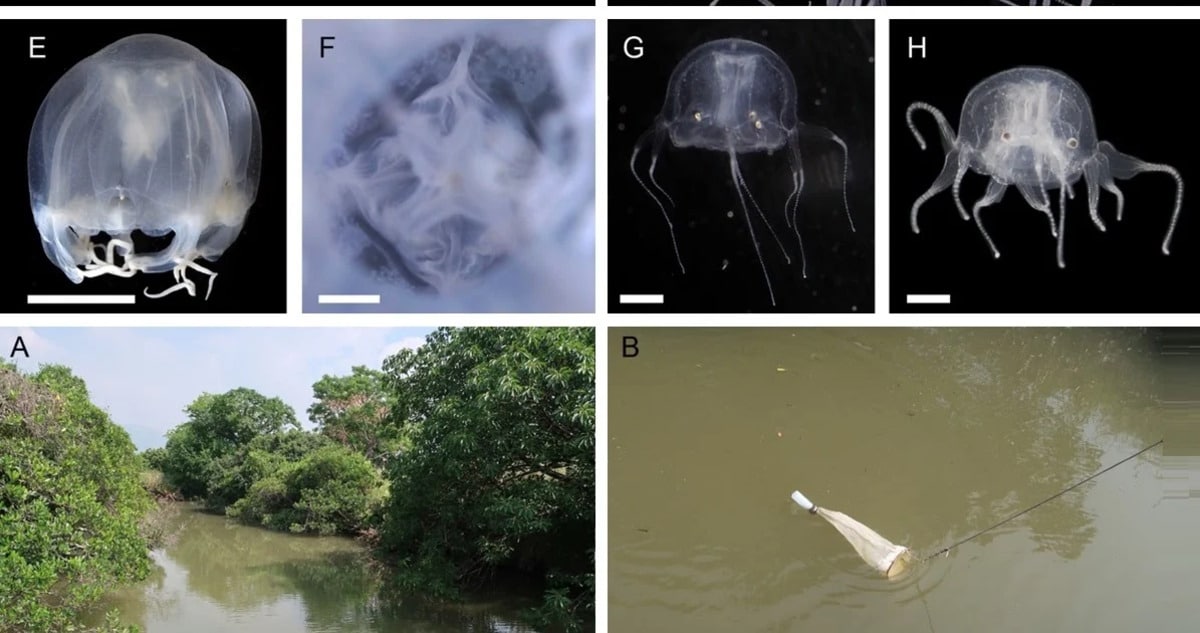
While conducting a routine water quality study in Mai Po Nature Reserve, a team of scientists decided to cast a net into the tranquil, greenish waters. What they pulled up, however, was far beyond what they expected: a tiny, transparent jellyfish with a cube-shaped body and an astonishing number of eyes. This remarkable discovery, published in the journal Zoological Studies, has officially introduced a new species within the infamous box jellyfish family.
Dr. Laura Chen, a marine biologist with the Hong Kong Oceanographic Society, couldn’t hide her excitement. “Finding a new species is always thrilling, but the unique features of Tripedalia maipoensis make this discovery truly exceptional.”
The Venomous Marvel with 24 Eyes
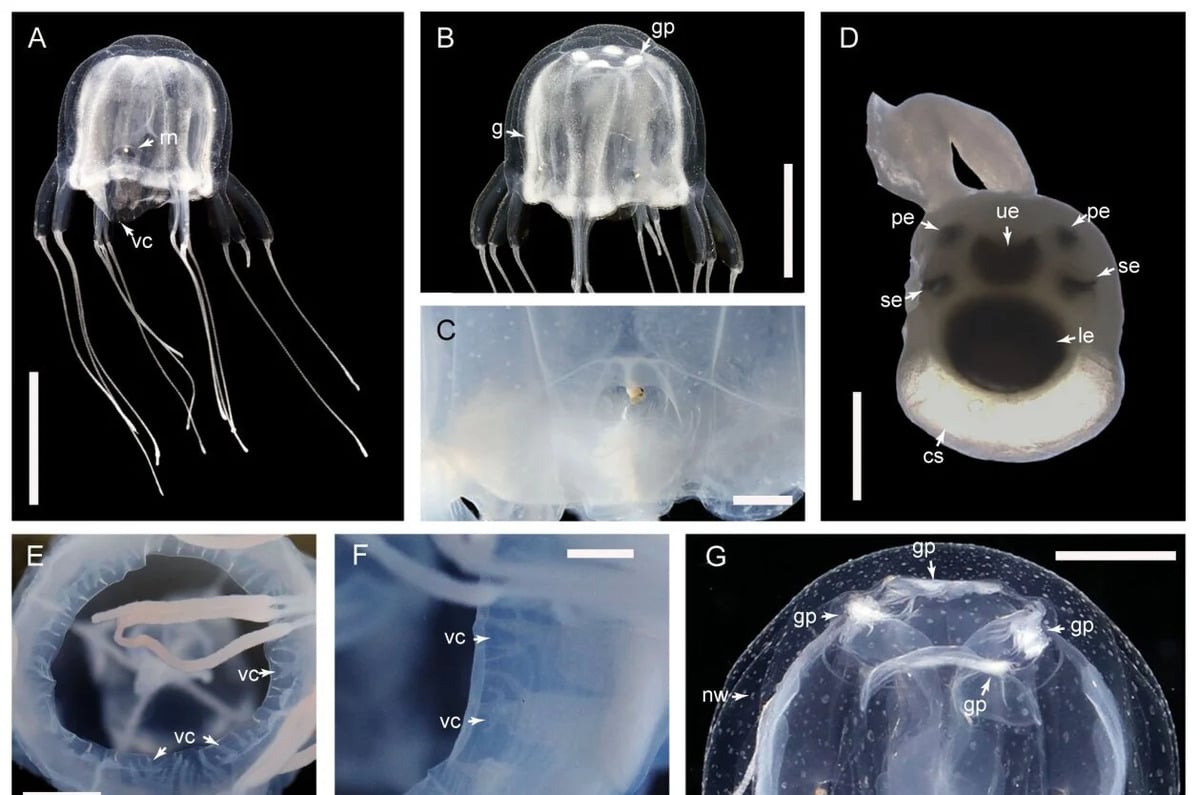
The newly identified jellyfish, named Tripedalia maipoensis after the Mai Po region, is truly a wonder of nature. Though it measures less than a centimeter in length, its body is a transparent cube with a faint white hue. Each corner of the cube has three tentacles, and there are a total of 24 eyes arranged in clusters of six. These eyes aren’t just for decoration—they serve a functional purpose. Two eyes on each side capture images, while the remaining four detect light, giving the jellyfish an impressive range of vision.
“Box jellyfish are some of the most venomous creatures in the ocean,” explains Dr. Michael Lee from the Marine Research Institute. “Tripedalia maipoensis adds another level of intrigue to their already complex biology.”
Unique Features That Set It Apart
What truly sets Tripedalia maipoensis apart is not only its unusual shape and numerous eyes but also its ability to move. At the base of its tentacles are pedal-like structures, which act as paddles, allowing the jellyfish to swim with surprising speed. This agility is essential for both catching prey and evading predators in its environment.
Dr. Chen, who observed the jellyfish during a dive, recalls, “Watching it move was like seeing a living work of art. Its ability to propel itself forward so smoothly is absolutely remarkable.”
NASA warns China could slow Earth’s rotation with one simple move
This dog endured 27 hours of labor and gave birth to a record-breaking number of puppies
The Significance of This Discovery
The discovery of Tripedalia maipoensis is more than just the addition of another species to the marine catalog. It offers valuable insights into the evolution and adaptability of jellyfish. By understanding how this species thrives in the specific conditions of Mai Po, researchers can gain a deeper understanding of broader ecological dynamics within freshwater ecosystems.
This discovery also highlights the importance of protecting habitats like Mai Po. “Every new species we find emphasizes the incredible biodiversity these areas support,” says Dr. Chen. “Protecting these regions ensures we can continue to uncover and study such remarkable creatures.”
Embracing the Wonders of Nature
Encounters like the discovery of Tripedalia maipoensis serve as reminders of the endless mysteries nature holds. Whether you’re a seasoned marine biologist or simply a nature enthusiast, the world beneath the water’s surface is brimming with surprises waiting to be discovered.
Organizations such as the World Wildlife Fund (WWF) stress the importance of continuous research and the preservation of natural habitats. By supporting these efforts, we can ensure that future generations will continue to experience the incredible diversity of life our planet has to offer.
So, the next time you visit a pond or coastal area, keep your eyes peeled—you never know what extraordinary creature might be lurking just beneath the surface, watching you right back.