
In a major leap forward for energy storage technology, a team of researchers from South Korea has developed a groundbreaking method that could revolutionize the manufacturing of sodium-ion batteries. This innovation not only promises to enhance battery efficiency but could also reshape how we think about energy storage and its future applications in various industries.
Amazon co-founder MacKenzie Scott has donated over $19 billion to charity in just five years
Diamond batteries powered by nuclear waste promise 28,000 years of clean energy
A Technological Breakthrough
At the Korea Electrotechnology Research Institute (KERI), a team led by Dr. Kim and Dr. Park has achieved a breakthrough in the production of hard carbon anodes for sodium-ion batteries. By using a method that involves microwave induction heating, they are now able to prepare these anodes in just 30 seconds—a dramatic improvement over conventional methods. This quick processing technique could significantly reduce manufacturing times and costs, potentially making sodium-ion batteries a more viable option for widespread use.
The research team’s approach has already gained considerable attention in the scientific community, as it marks a significant step toward the commercialization of sodium-ion batteries, which are seen as a safer, more sustainable alternative to lithium-ion batteries.
How the Technology Works
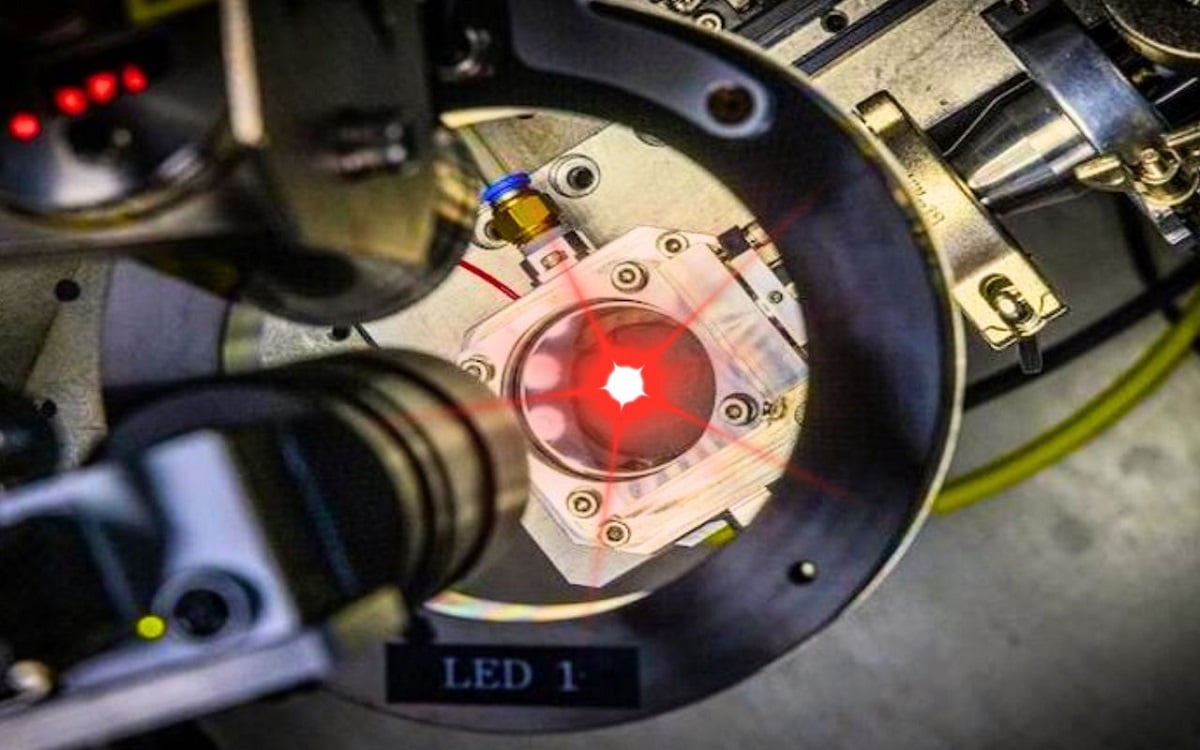
The team’s method starts by creating films made from a mixture of polymers and carbon nanotubes, which are known for their high conductivity. Then, a microwave magnetic field is applied to the films, inducing electric currents that heat the carbon nanotubes to temperatures exceeding 1,400°C—all within a few seconds. This process allows for uniform and rapid treatment of the films, enabling the creation of highly effective anodes for the batteries.
The speed and precision of this technique are key to its potential success. Unlike traditional methods, which can take minutes or even hours to complete, this microwave induction process drastically reduces production time, offering a major advantage for mass production.
Impact on Industrial Processes
While the main focus of the research is on sodium-ion batteries, the technology is already making waves in other sectors. The ability to quickly and uniformly heat materials has caught the attention of industries involved in the production of semiconductors and displays. At KERI’s Nanohybrids Technology Center, which is recognized as a national leader in carbon nanomaterials, this microwave heating method is being explored for its potential in improving other materials and manufacturing processes.
This innovation may not only change the future of battery technology but could have wide-reaching applications across several high-tech industries.
Advantages of Sodium-Ion Batteries
Sodium-ion batteries offer several key benefits over their lithium counterparts, especially in terms of safety and performance under extreme conditions. One of the standout features of sodium-ion batteries is their superior performance in cold temperatures, making them an attractive solution for energy storage in colder climates or situations where traditional batteries might fail.
NASA warns China could slow Earth’s rotation with one simple move
This dog endured 27 hours of labor and gave birth to a record-breaking number of puppies
Additionally, sodium-ion batteries are considered to be safer than lithium-ion batteries, which have recently been involved in several high-profile fires, particularly in electric vehicles. According to Dr. Park, these batteries could play a crucial role in providing a secure energy transition as the world moves away from fossil fuels and toward more sustainable sources of power.
The Role of Multiphysics Simulation
The development of the anode materials was made possible by an advanced technique called multiphysics simulation. This method allowed the research team to gain a deep understanding of the complex processes that occur when electromagnetic fields are applied to nanomaterials. By modeling these interactions, they were able to refine their process and improve the efficiency of the sodium-ion batteries they were developing.
This approach has proved invaluable in creating more reliable and efficient materials for energy storage, paving the way for future advancements in the field.
Manufacturing and Commercialization Potential
With a domestic patent already filed for this breakthrough technology, KERI is poised to attract significant interest from energy storage companies and other industry players. The team’s goal is to establish technology transfer agreements with industrial partners to bring this method to market, which could lead to a wide adoption of sodium-ion batteries in the coming years.
In addition to improving the manufacturing process, KERI is working on scaling up production capabilities. They are also looking into applying their microwave induction technology to other areas, such as solid-state batteries, which require high-temperature baking during manufacturing.
Continuous Improvement on the Horizon
The team is not stopping here. They plan to continue refining the anode materials and exploring new technologies to enhance the performance of their batteries. With the potential for mass production and further applications in high-tech energy storage, this development could mark the beginning of a new era for energy storage solutions worldwide.
As the world looks for alternatives to traditional energy storage methods, this innovation from South Korea could very well become the next big thing in sustainable energy technology.