
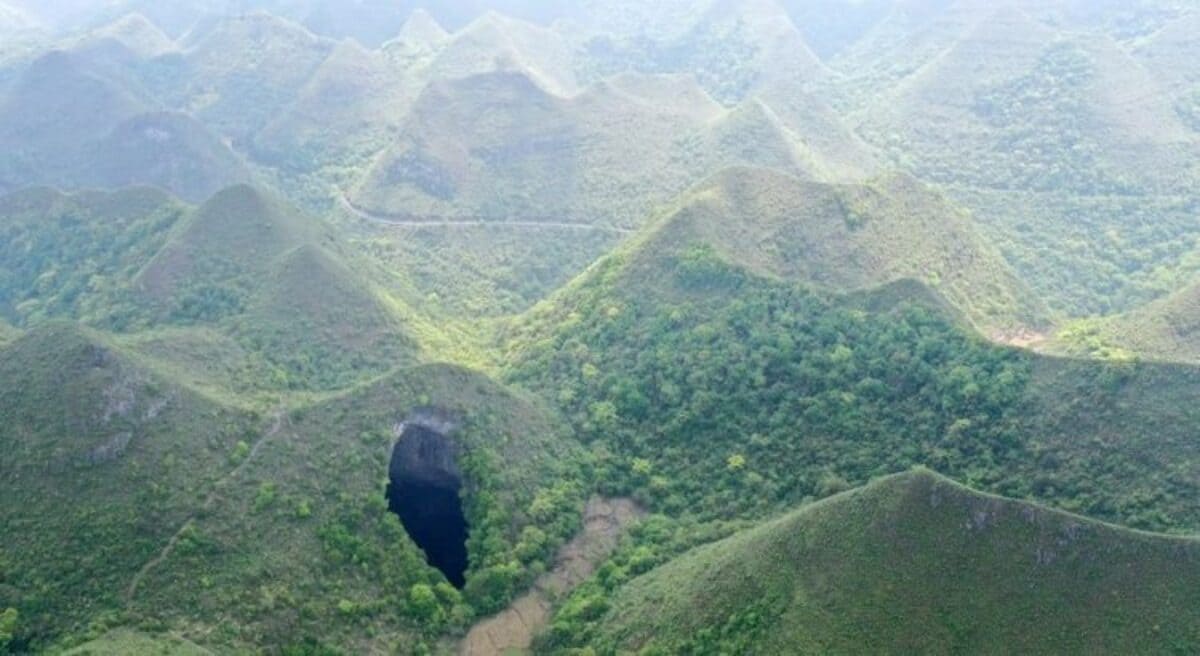
Deep in southern China, a team of explorers recently made a discovery that feels more like a scene from a fantasy novel than a geological survey. In the Guangxi region’s limestone highlands, they descended into a newly uncovered massive sinkhole—and found, to their astonishment, a lush forest thriving hundreds of feet below the surface. Towering trees, giant ferns, and possibly even undiscovered species are quietly flourishing in this secret world beneath our feet.
Amazon co-founder MacKenzie Scott has donated over $19 billion to charity in just five years
Diamond batteries powered by nuclear waste promise 28,000 years of clean energy
An enormous sinkhole opens a window into the Earth
The sinkhole was found in Leye County, a region known for its dramatic landscapes and extensive underground networks. This latest find is particularly striking: it measures over 300 meters long, 150 meters wide, and plunges nearly 200 meters deep. To put that into perspective, you could fit a 60-story skyscraper inside it and still have room to spare.
But while the scale is jaw-dropping, Leye isn’t new to such formations. It’s part of a karst landscape, where limestone erosion has sculpted the terrain into a Swiss cheese of caves, gorges, and subterranean voids. Over time, acidic rainwater seeps into cracks in the rock, slowly dissolving it and hollowing out vast chambers underground. When these cavities become too large to support the weight above, the ground collapses—revealing gaping chasms like this one.
A forest hidden from the modern world
What makes this particular sinkhole stand out isn’t just its size—it’s the ecosystem it holds. Nestled in its depths are three distinct caverns, each sheltering dense vegetation that seems untouched by human hands. Light streams through the opening above, casting a gentle glow over tree canopies and allowing a miniature rainforest to thrive in the depths.
Some of the trees reach 40 meters high, their roots anchored in rich, undisturbed soil. Ferns the size of adults flourish along the floor, and the whole scene feels eerily prehistoric—like stepping into a lost era. According to the Chinese researchers who explored the site, conditions at the bottom are ideal for biodiversity. There’s already speculation that this hidden pocket could be home to species unknown to science, just waiting to be studied.
Nature’s secret garden, known as a Tiankeng
In China, such vegetated sinkholes are referred to as “Tiankeng,” or “heavenly pits.” The term is poetic, and fitting. These formations are rare gifts of nature—microcosms where isolation and time have created unique habitats. The protection offered by steep walls and limited access keeps these areas largely free from human impact, allowing delicate ecosystems to persist and evolve.
I remember visiting a smaller karst cave system in Vietnam a few years ago—while it didn’t have a forest inside, the sensation of stepping into the Earth and finding life growing in silence was unforgettable. This latest discovery takes that feeling and multiplies it by ten.
Why this matters more than ever ?
As our planet faces mounting environmental pressures, these natural sanctuaries offer more than just scientific intrigue. They are living laboratories, preserving what might already be lost above ground. Understanding how life adapts in such secluded, extreme conditions could even inform our search for life in similar environments elsewhere—on planets like Mars, or the ice-covered oceans of Europa.
NASA warns China could slow Earth’s rotation with one simple move
This dog endured 27 hours of labor and gave birth to a record-breaking number of puppies
China’s newly revealed sinkhole is more than a geological marvel; it’s a powerful reminder of how much of our own world remains unexplored. In an era of satellites and space telescopes, it’s humbling to realize that untouched wilderness can still exist—right beneath our feet.