
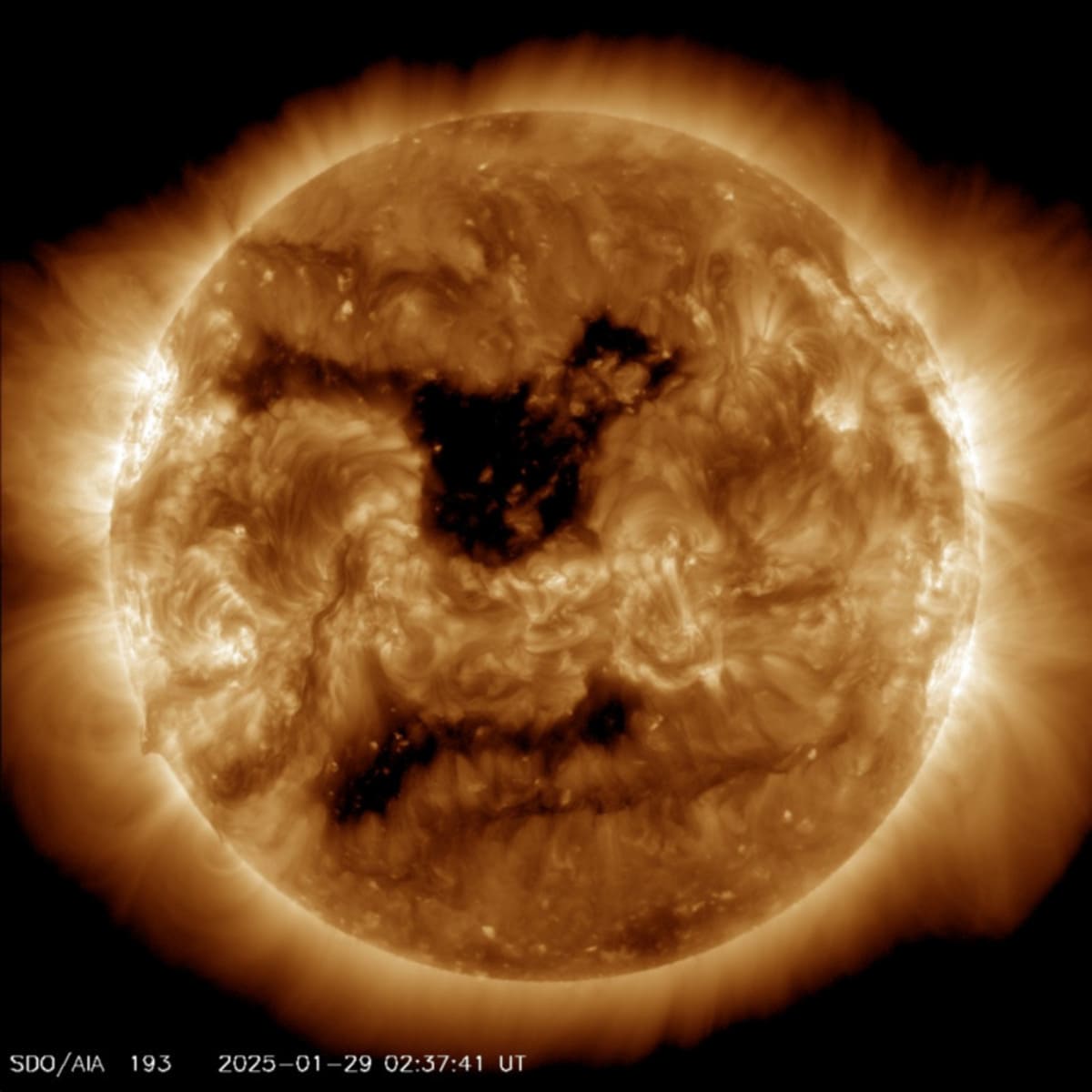
A dramatic solar event is unfolding above our heads, and it could light up our night skies in spectacular fashion. A giant coronal hole—one of the largest seen in recent months—is currently aligned with Earth, potentially unleashing powerful streams of solar wind that could stir up geomagnetic storms and even trigger auroras visible at unusual latitudes.
Amazon co-founder MacKenzie Scott has donated over $19 billion to charity in just five years
Diamond batteries powered by nuclear waste promise 28,000 years of clean energy
What Exactly Is a Coronal Hole?
To understand what’s going on, imagine the Sun not as a static ball of fire, but as a boiling, ever-changing sphere of superheated plasma. Surrounding its visible surface lies the chromosphere and, further out, the solar corona—a vast outer atmosphere that extends millions of kilometers into space.
A coronal hole is essentially a break in this outer layer, where the Sun’s magnetic field opens up and allows charged particles to stream out into the solar system. These particles make up the solar wind, which can travel at speeds of over 800 kilometers per second and impact Earth’s magnetosphere.
NASA’s Solar Dynamics Observatory (SDO) has captured the latest images showing not one but two massive holes on the Sun’s surface. The larger of the two spans more than 250,000 kilometers across—over 20 times the diameter of Earth. That’s a gaping chasm in solar terms, and it’s pointing directly at us.

What This Means for Earth
When a stream of high-speed solar wind from a coronal hole hits Earth’s magnetic field, it can cause temporary disturbances. These include fluctuations in GPS systems, issues with satellite communications, and, most notably, the generation of auroras, also known as the northern and southern lights.
If Earth’s magnetic field happens to align in just the right way—specifically oriented southward—this solar wind can slip through more easily and spark intense light shows in the atmosphere. While it’s hard to predict exactly when and where these auroras will appear, experts recommend keeping an eye on the Kp index, which measures geomagnetic activity. A Kp of 7 or higher means there’s a real chance of seeing auroras much farther south than usual.
Could We See Auroras in Unlikely Places?
In past events of this scale, there have been reports of auroras as far south as France, the U.S. Midwest, and even parts of the U.K. I still remember a surreal evening in northern France last year, when the sky turned a shimmering green and purple—like a painter had spilled glowing watercolor across the stars. All thanks to a similar coronal hole.
NASA warns China could slow Earth’s rotation with one simple move
This dog endured 27 hours of labor and gave birth to a record-breaking number of puppies
This time, with such a massive hole in the corona and favorable conditions developing, we might be in for another visual treat. To catch it, you’ll need a clear sky, a dark location, and a bit of patience. Long-exposure photography can help, especially if you’re far from the poles.

Where to Track the Storm Activity ?
If you’re eager to try your luck, several sites monitor geomagnetic activity in real time. NOAA’s Space Weather Prediction Center offers up-to-date information, and enthusiasts often share alerts on social media platforms like X (formerly Twitter) and BlueSky. Follow accounts that track the Kp index and solar flare activity—they’re often the first to let you know when it’s time to grab your camera and head outside.
Just remember: auroras can be fleeting and unpredictable, but when they do appear, they offer one of the most magical natural displays our planet has to offer.