
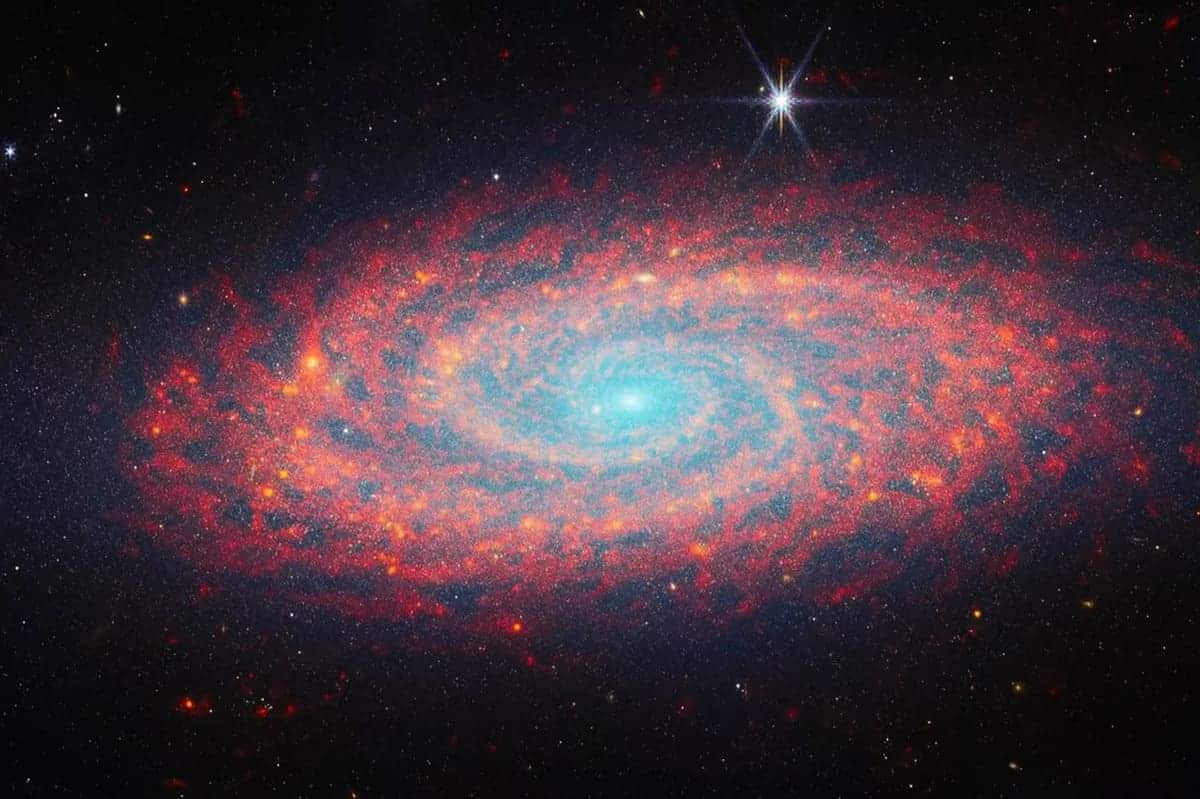
The James Webb Space Telescope has dazzled the world since its launch in 2021, providing us with some of the most breathtaking images and insights into distant galaxies, stars, and the early universe. However, there’s another groundbreaking telescope ready to take space exploration to the next level. The Vera C. Rubin Observatory, set to begin operations in February 2025, promises to offer a whole new perspective on the universe, filling gaps in the research that the James Webb Telescope wasn’t designed to address.
Amazon co-founder MacKenzie Scott has donated over $19 billion to charity in just five years
Diamond batteries powered by nuclear waste promise 28,000 years of clean energy
A Giant on the Horizon: Meet Vera C. Rubin
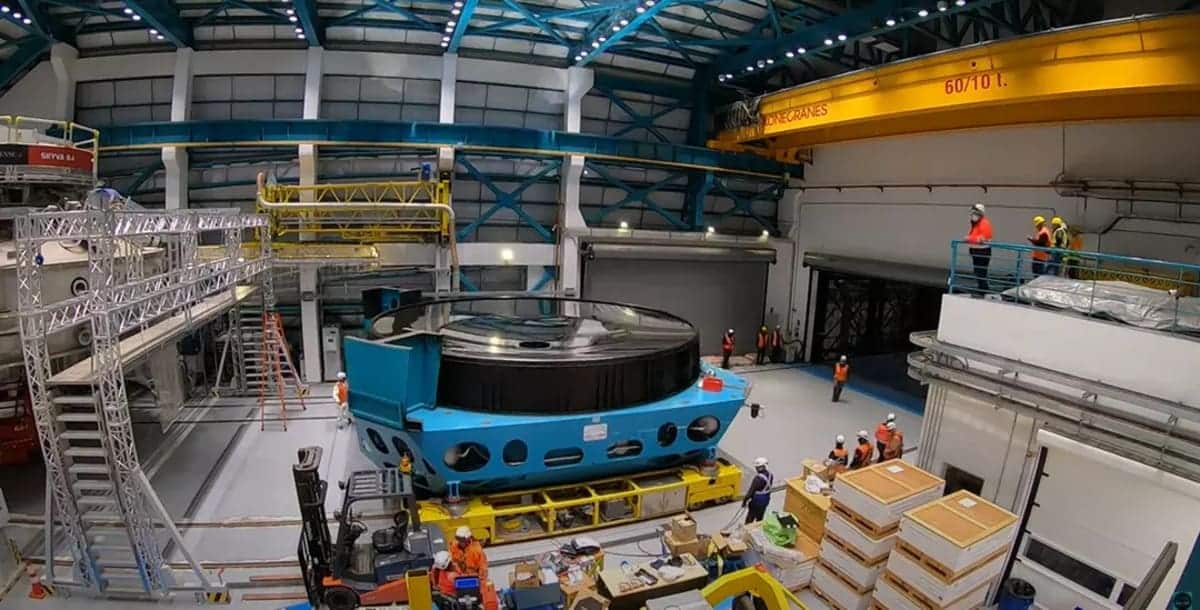
Nestled 2,700 meters above sea level in the Andes mountains of Chile, the Vera C. Rubin Observatory is equipped with a 3.2-gigapixel camera, which is set to be the most advanced of its kind. After 25 years of planning and development, the observatory is now ready to begin its mission of mapping the skies continuously. Unlike James Webb, which focuses on infrared wavelengths to peer deep into space and time, Rubin’s mission is vastly different: it will scan large portions of the night sky regularly, taking high-resolution images that will cover the cosmos in unprecedented detail.
One of the most unique aspects of Rubin’s design is its three-mirror setup, which allows the observatory to capture massive areas of the sky. It will revisit the same patch of sky every three days, allowing researchers to track changes in the movement and brightness of objects like asteroids, stars, and entire galaxies. This fast-paced cadence makes Rubin invaluable for monitoring dynamic phenomena and even identifying potential threats to Earth.
A Data Powerhouse: Mapping the Universe in Unprecedented Detail
The Vera C. Rubin Observatory is more than just a telescope; it’s a data powerhouse. Every night, it will generate an astonishing 20 terabytes of data as it surveys the sky, documenting nearly 20 billion galaxies over a span of 10 years. This unprecedented volume of information will provide scientists with the tools to solve some of the most profound mysteries of astronomy.
Rubin will be instrumental in studying elusive concepts like dark matter and dark energy, which make up about 95% of the universe but remain largely undetectable. It will also track near-Earth asteroids, catalog variable stars, and uncover new phenomena that may change how we understand the cosmos. With its ability to monitor so much at once, Rubin will help us see the big picture, offering the kind of detailed map that has never before been possible.
Collaboration on a Global Scale
The Vera C. Rubin Observatory is also a prime example of international collaboration in science and technology. For instance, France played a key role in designing its ultra-high-definition camera, and the vast amounts of data it generates will be processed and stored in Lyon, France. This kind of collaboration mirrors the teamwork that went into the James Webb Space Telescope, highlighting how different countries come together to push the boundaries of space exploration.
Such global partnerships are essential in advancing our understanding of the universe, ensuring that cutting-edge technologies and knowledge are shared for the benefit of all.
NASA warns China could slow Earth’s rotation with one simple move
This dog endured 27 hours of labor and gave birth to a record-breaking number of puppies
A Complementary Approach to James Webb
While the James Webb Space Telescope excels at focusing on specific targets with unparalleled clarity, the Vera C. Rubin Observatory excels at giving us a broader view of the universe. By systematically surveying large areas of the sky, Rubin provides crucial context that helps enhance the detailed investigations conducted by Webb. For example, Rubin could help locate transient events such as supernovae or gamma-ray bursts, which Webb could then zoom in on for a deeper investigation. This collaboration between the two observatories is poised to deepen our understanding of the cosmos, ensuring that no corner of space goes unstudied.
Searching for Planet Nine and Beyond
One of the most exciting possibilities for the Vera C. Rubin Observatory is its potential to help discover Planet Nine, the hypothetical ninth planet at the far reaches of our solar system. By continuously scanning the sky, Rubin will provide the most detailed map of our cosmic neighborhood ever created. This extensive survey could reveal hidden objects in the distant corners of our solar system, providing new insights into the formation of planets and the dynamics of our galaxy.
Rubin’s vast sky coverage will enable astronomers to discover objects that might otherwise be missed, expanding our knowledge of the solar system and potentially answering some of the most pressing questions about our place in the universe.
Redefining Our Understanding of the Cosmos
As the Vera C. Rubin Observatory prepares to begin its groundbreaking work, excitement is building in the astronomical community. Its ability to provide high-resolution, wide-field imagery will not only complement the work of James Webb but will also open up new avenues of exploration that were previously unimaginable. From studying dark matter to monitoring near-Earth asteroids, Rubin’s contributions will reshape how we understand the universe and our place in it.
This observatory isn’t just a tool for scientists—it’s a window to the cosmos for humanity. Its launch represents the beginning of a new era in space exploration, one where the mysteries of the universe become a little clearer and a little more accessible. The stars may still be distant, but with Rubin’s technology, their secrets are about to get a lot closer.