
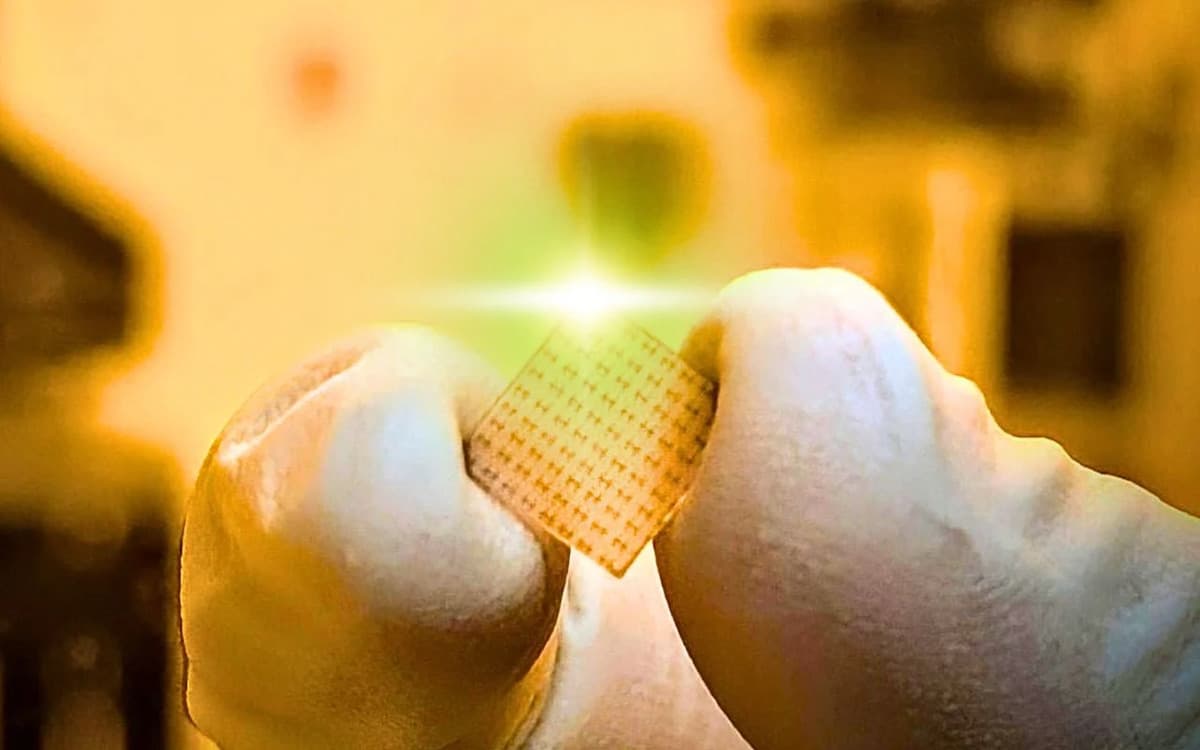
A team of researchers at Stanford University has made a remarkable discovery that could transform the electronics industry. They’ve found that a material called niobium phosphide could replace copper in electrical applications, offering greater efficiency and potentially lowering energy consumption across a range of technologies. This breakthrough could pave the way for more powerful, compact devices and help address some of the current limitations of traditional materials.
Amazon co-founder MacKenzie Scott has donated over $19 billion to charity in just five years
Diamond batteries powered by nuclear waste promise 28,000 years of clean energy
Why Copper’s Reign May Be Ending ?
For decades, copper has been the go-to material for electrical conduction, powering everything from power grids to microchips. Its combination of high conductivity and relative abundance made it the ideal choice for the industry. However, as electronic devices continue to shrink in size and become more complex, copper is starting to show its limitations. At the nanoscale, where components are only a few atoms thick, copper loses its efficiency. It generates excess heat, causing energy loss and making it harder to manage the demands of ultra-small, high-performance technologies. This has led to a bottleneck for industries that rely on miniaturization to push the boundaries of performance.
Introducing Niobium Phosphide: A Game-Changer
Enter niobium phosphide, the material at the heart of the Stanford team’s discovery. Their research shows that niobium phosphide actually outperforms copper in conductivity when used in extremely thin films—less than 5 nanometers thick. Unlike copper, which struggles to carry electrical signals at such small scales, niobium phosphide maintains its conductivity, ensuring minimal energy loss and better heat management. These properties make it a promising candidate for use in advanced electronics, particularly in applications that require ultra-thin, high-performance wiring.
Key Advantages of Niobium Phosphide
-
Efficiency at the Nanoscale: Niobium phosphide holds its conductivity even in ultra-thin layers, a challenge that copper cannot meet without substantial energy loss.
-
Reduced Heat Generation: Devices using this material would likely run cooler, reducing the risk of overheating and enhancing overall reliability.
-
Compatibility with Current Manufacturing: One of the standout features of niobium phosphide is that it can be manufactured at lower temperatures, making it compatible with existing silicon-based production methods. This reduces the cost and complexity of integrating it into modern chip production.
Applications in Future Electronics
While niobium phosphide might not entirely replace copper in every electrical application, it shows immense promise for fine-scale uses, such as microchip connections and high-speed signal transmission lines. These areas demand materials that can maintain efficiency and reliability even as devices become smaller and more intricate. Because niobium phosphide doesn’t require precise crystalline structures, it could be more adaptable across a wide range of technological applications.
What Sets Niobium Phosphide Apart ?
Many materials that could potentially replace copper in electrical applications require very specific conditions for optimal performance. For example, some need extremely high temperatures or specialized fabrication methods. Niobium phosphide, however, stands out by being more flexible—it doesn’t require such conditions, which simplifies production and broadens its potential uses. This flexibility gives it a significant edge in an industry always seeking cost-effective and scalable solutions.
The Road Ahead : Beyond Copper
Though niobium phosphide represents a leap forward, researchers are already turning their attention to other topological semimetals, materials that, like niobium phosphide, possess unique electronic properties. These materials could push the boundaries of efficiency and miniaturization, enabling even more compact designs for everything from smartphones to quantum computers. The future of electronics could see a blend of these advanced materials, where both quantum technologies and conventional systems work together to create smaller, faster, and more energy-efficient devices.
A Sustainable Future for Electronics
Beyond its performance capabilities, niobium phosphide could also play an essential role in the drive toward sustainability. With growing global awareness of energy consumption, the potential for this material to cut down on energy loss and reduce heat generation makes it an attractive option for creating greener technologies. As more devices move toward energy efficiency, niobium phosphide may be a critical player in ensuring that electronics can deliver top performance without overburdening our energy resources.
While the widespread adoption of niobium phosphide is still a few years away, its discovery marks an exciting step forward in addressing the technological and environmental challenges we face today. From revolutionizing modern devices to unlocking the potential for entirely new technologies, this material could be the key to a smarter, more sustainable future in electronics.
NASA warns China could slow Earth’s rotation with one simple move
This dog endured 27 hours of labor and gave birth to a record-breaking number of puppies