
Amazon co-founder MacKenzie Scott has donated over $19 billion to charity in just five years
Diamond batteries powered by nuclear waste promise 28,000 years of clean energy
A Growing Movement
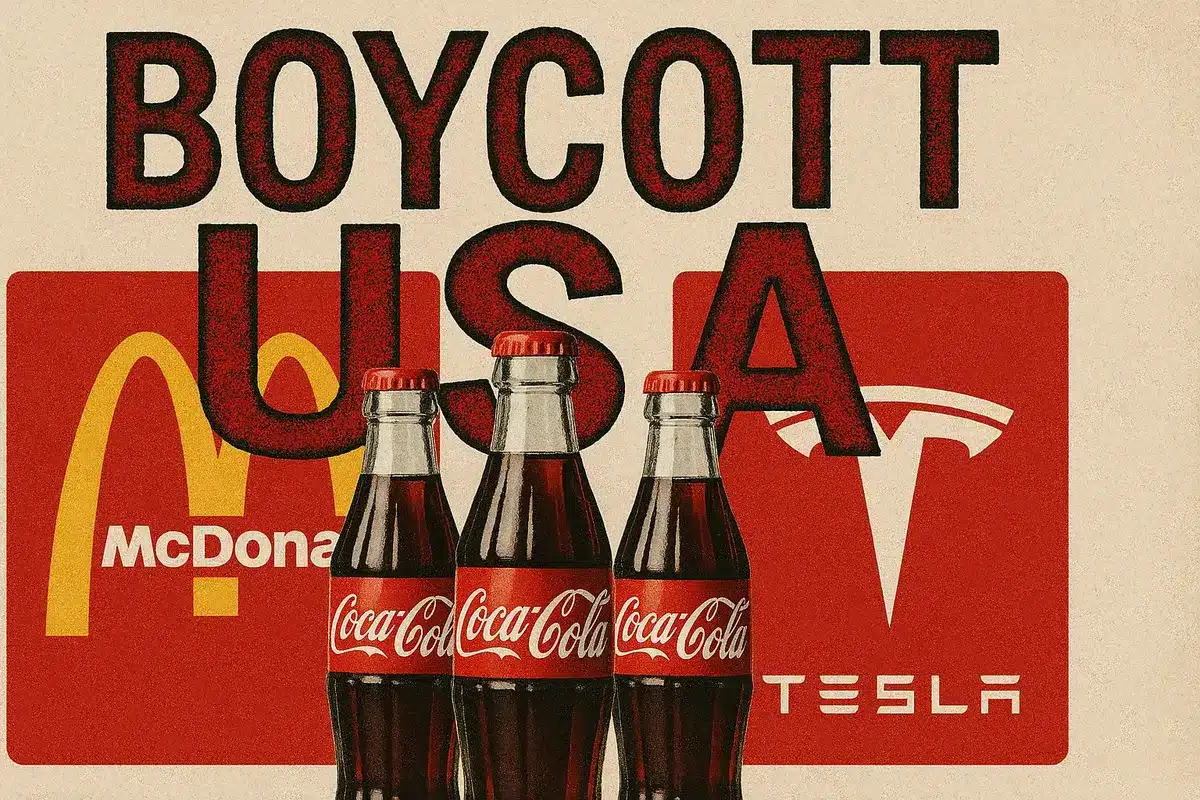
Since early March 2025, calls to boycott American goods have been increasing in France. This movement was sparked by Donald Trump announcing a 25% tariff increase on European products and a highly publicized altercation with Ukrainian President Volodymyr Zelensky.
An Ifop survey for NYC.fr shows that 62% of French people support these boycotts. Among them, one-third have already stopped consuming certain American products. The reasons vary: opposition to Donald Trump’s political decisions, support for the European economy, or simply a preference for local alternatives.
Most Affected Brands
Certain American brands are particularly targeted by this boycott. Products that are easily replaceable are most affected, especially soft drinks like Coca-Cola (48% of boycotters), fast food chains like McDonald’s (44%), and Starbucks (15%).
Tesla has also experienced a significant drop, with a 45% sales decline in Europe over the past year, though this decrease may be more complex to analyze. Elon Musk, owner of Tesla and the social network X, is often mentioned for his overt support of Donald Trump, which has tainted his companies’ images in France and Europe.
NASA warns China could slow Earth’s rotation with one simple move
This dog endured 27 hours of labor and gave birth to a record-breaking number of puppies
On the other hand, technology products like iPhones or streaming services like Apple Music seem relatively unaffected by the boycott. After all, giving up Apple, for those of us who are accustomed to it, is seriously challenging and tricky…
Diverse Profiles Among Boycotters
Unlike other boycott movements often limited to younger generations, this one appears to affect a broader audience. According to François Kraus, director of the political & news section at Ifop, seniors and higher socio-professional categories are particularly active.
These consumers, generally better informed and less dependent on digital products, are ready to shun American brands to express their opposition to Donald Trump’s policies or to support European companies.
The study also shows that motivations vary according to political leanings: left-wing voters primarily cite their opposition to the American president, while right-wing voters act more out of economic patriotism. Everyone seems to find a compelling reason to lean towards boycotting.
Will the Boycott Last?
For now, the intent to boycott is present. According to Ifop, 57% of French people plan to stop buying American products in the coming months. But it’s still too early to assess the real impact of this movement on the sales of the companies involved, and there’s often a significant gap between the intention to boycott and actually taking action, with the risk of disrupting one’s consumption habits.
What’s your stance on this issue? Let us know in the comments.