With over 146 million units sold, the Nintendo Switch has been nothing short of a phenomenon. Now, with the official reveal of the Nintendo Switch 2, one question is sparking heated debates online: How much will it cost?

 Smith Noah
With over 146 million units sold, the Nintendo Switch has been nothing short of a phenomenon. Now, with the official reveal of the Nintendo Switch 2, one question is sparking heated debates online: How much will it cost?

For many gamers, the Nintendo GameCube is a nostalgic icon, home to some of the most beloved titles of the early 2000s. But one particular version of the console has just made history—not for its gaming capabilities, but for its staggering $100,000 price tag. The catch? It doesn’t even work.
Lithium-ion batteries have powered the modern world, but their limitations have pushed researchers to explore more advanced energy storage solutions. A breakthrough in battery technology—Lithium Titanium Phosphate (LTP) batteries—is now set to redefine performance, durability, and efficiency. This next-generation chemistry combines the best properties of lithium titanate (LTO) and lithium iron phosphate (LFP), offering superior thermal stability, extreme cold resistance, and ultra-long lifespan.

As the world accelerates its transition to renewable energy, researchers in Australia have unveiled a breakthrough that could revolutionize thermal energy storage. Scientists at Monash University have developed a new class of thermal batteries that harness the unique properties of boric and succinic acids to store and release heat efficiently. This innovation has the potential to increase electricity production without additional costs, making renewable energy more reliable and competitive.

A groundbreaking geological discovery has positioned China at the forefront of nuclear energy. In the Ordos Desert, researchers have uncovered an enormous uranium deposit, estimated at 30 million tons—one of the largest ever recorded. This finding could reshape the global uranium market, solidify China’s energy independence, and accelerate the transition to nuclear power.

Imagine a world where wearable devices never need to be charged. No more scrambling for a charger, no more worrying about battery life—just seamless, uninterrupted use. That future might be closer than we think, thanks to Power-Over-Skin, a groundbreaking technology developed by researchers at Carnegie Mellon University.

While futuristic technologies like AI and space exploration often steal the spotlight, some of the most groundbreaking innovations are happening right beneath our feet. One such marvel is the Fehmarnbelt Tunnel, an ambitious project that will reshape European connectivity and push the limits of modern engineering—all without using a tunnel boring machine (TBM).

Astronomers have identified a mysterious exoplanet that challenges existing theories of planet formation. Located in what scientists call Neptune’s Desert, this celestial body—TOI-3261 b—is an ultra-short-period hot Neptune, meaning it shares a similar size to Neptune but orbits extremely close to its host star, completing a full revolution in just 21 hours.
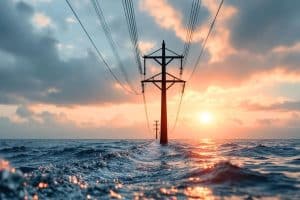
A groundbreaking transatlantic power cable could revolutionize the way Europe and North America manage renewable energy, addressing one of its biggest challenges: intermittency. By connecting two of the world’s largest energy networks, this ambitious project aims to stabilize electricity supply, optimize energy markets, and accelerate the transition to carbon-free power.

Apple’s rise to tech dominance is often told through the lens of Steve Jobs’ visionary leadership, but one of the company’s most remarkable moments of generosity came from Steve Wozniak, the man who co-founded Apple alongside him. In December 1980, during one of the most pivotal moments in the company’s history, Wozniak made a decision that defied Silicon Valley norms—he gave away $10 million worth of his own stock to early Apple employees who had been left out of the company’s financial success.