
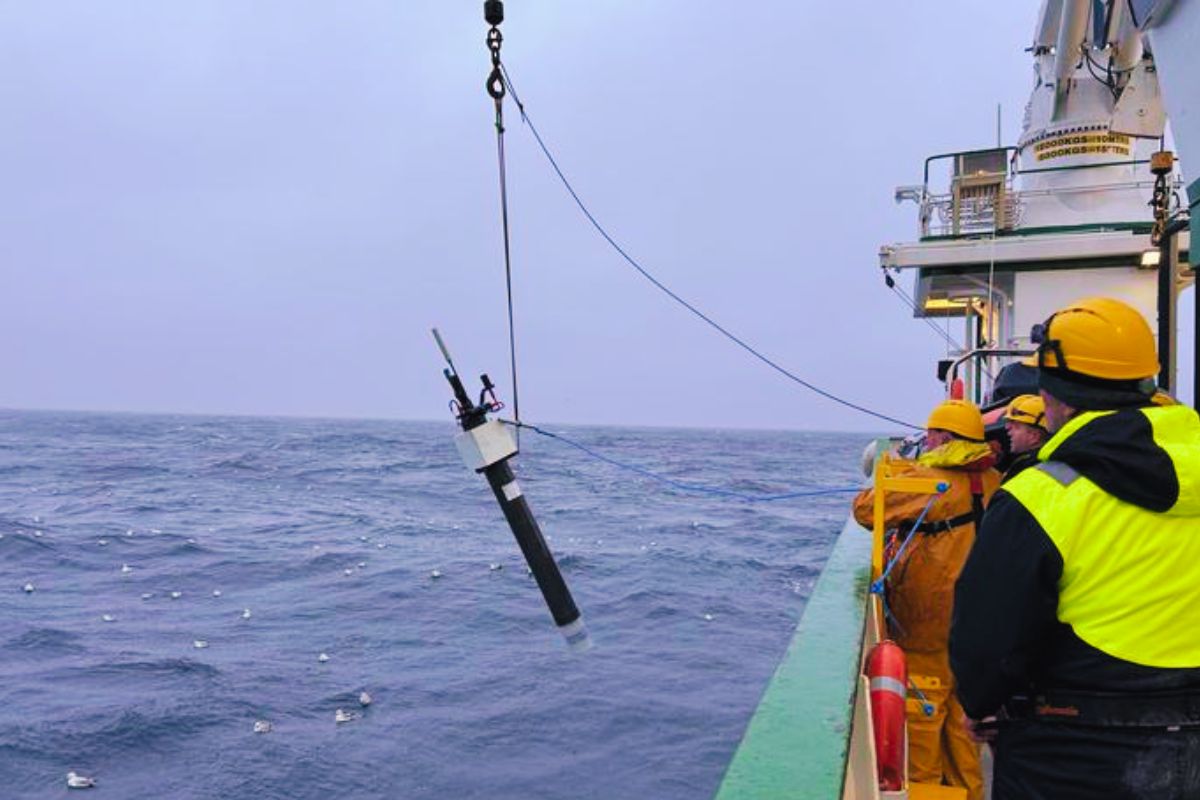
Beneath the ocean’s surface lies a living mass of microscopic life so vast it rivals the weight of entire continents—until now, it remained hidden from view. A Canadian-led robotic survey has just revealed this secret world in unprecedented detail.
Amazon co-founder MacKenzie Scott has donated over $19 billion to charity in just five years
Diamond batteries powered by nuclear waste promise 28,000 years of clean energy
Unveiling a Hidden Giant
Last summer, I chatted with a marine biologist friend who casually mentioned that most ocean life is invisible from above—until robotic explorers revealed the truth. Deploying 903 floats under the Biogeochemical-Argo program, Canadian researchers have now measured the global phytoplankton biomass at an astonishing 314 teragrams—roughly 314 million metric tons¹. To put that into perspective, it’s like discovering a living mass below the waves equal to about 52 million elephants. Institutions such as the International Oceanographic Commission are hailing this as a game-changer for our understanding of the sea’s hidden productivity.
The Role of Phytoplankton in Climate Regulation
Microscopic though they are, phytoplankton serve as the ocean’s primary carbon sink and generate about half of Earth’s oxygen. I recall watching a documentary that likened these tiny organisms to the “lungs of the sea,” a description that experts at NOAA frequently echo. Through photosynthesis, they draw down vast amounts of carbon dioxide, helping to buffer our planet against the worst effects of global warming².
Implications for Climate Change Monitoring
Satellites have long tracked surface conditions, but they can miss life flourishing below. The robotic floats plunge into deeper layers, filling crucial data gaps and allowing scientists to refine climate models with real-world measurements. This integrated approach—combining satellite and float data—gives policymakers a clearer roadmap for tackling carbon emissions and predicting climate trends more accurately.
Advancements in Oceanographic Research
What began as industrial sensor technology has evolved into a vital tool for environmental science. These BGC-Argo floats dive and drift, continuously sampling water chemistry and tiny plant life. Their success underscores how innovation—in this case, robotics—can help us protect the oceans: by revealing the unseen ecosystems that sustain marine food chains and Earth’s climate alike. As we face mounting environmental challenges, such breakthroughs remind us that every byte of data—and every drop of ocean surveyed—brings us closer to a sustainable future.
Footnotes
-
Argo Program, “BGC-Argo Floats Data Coverage”; https://argo.ucsd.edu
-
Next Nature, “Phytoplankton: The Lungs of the Ocean”; https://nextnature.org/en/magazine/story/2021/tiny-phytoplankton
-
UNESCO-IOC, “The International Oceanographic Commission”; https://ioc.unesco.org