
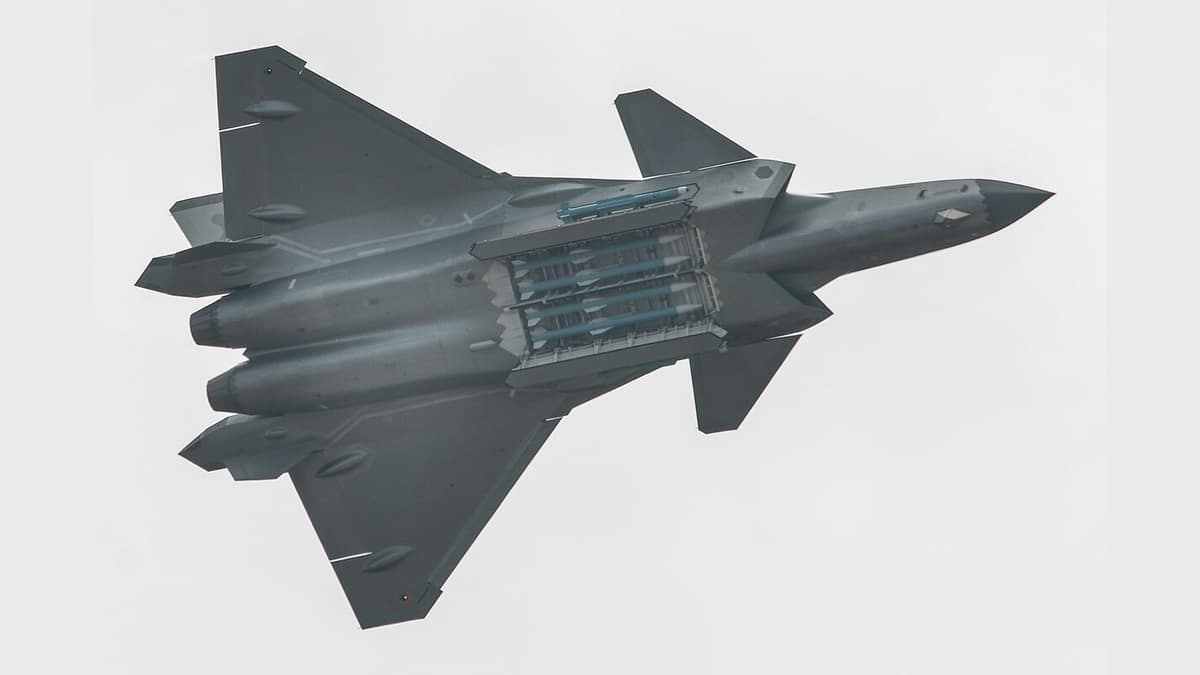
The world of hypersonic technology has long been dominated by materials that are scarce, expensive, and difficult to work with. For decades, components exposed to extreme temperatures—such as those in hypersonic missiles—have relied on tungsten alloys, known for their exceptional heat resistance and high melting point of 3,422°C. However, these advantages come at a price, both literally and logistically. Tungsten is costly, hard to source, and presents challenges in mass production.
Amazon co-founder MacKenzie Scott has donated over $19 billion to charity in just five years
Diamond batteries powered by nuclear waste promise 28,000 years of clean energy
Chinese researchers have now rewritten the rulebook on hypersonic materials. A team led by Professor Huang Fenglei at the Beijing Institute of Technology has developed a method to use stainless steel, a far more affordable and readily available alternative, in the construction of hypersonic missile components. This breakthrough could significantly cut costs while maintaining the performance needed for high-speed, high-temperature applications.
Defying Heat Limits: How Stainless Steel Became a Viable Option
At first glance, stainless steel seems like an unlikely candidate for hypersonic technology. While durable and corrosion-resistant, it typically starts to deform at around 1,200°C, which is nowhere near the 3,000°C+ temperatures generated during hypersonic flight. The challenge was clear: How can a material with such thermal limitations be made to withstand the extreme heat of Mach 8 speeds?
The answer lies in an ingenious multi-layered thermal protection system. The research team engineered a solution that combines:
- Ultra-high-temperature ceramic coatings to form a protective barrier
- A 5mm aerogel insulation layer, an ultra-lightweight material known for its superior thermal resistance
- A carefully optimized structural design that distributes heat exposure more effectively
This combination ensures that the stainless steel core remains stable even under the most extreme flight conditions, preserving the component’s structural integrity and performance.
A Strategic Advantage for China’s Defense Industry
The implications of this breakthrough go far beyond scientific innovation. By replacing expensive and difficult-to-source tungsten alloys, China can now produce hypersonic missiles at a lower cost and on a larger scale. This move strengthens China’s military capabilities while also reinforcing its independence from foreign material suppliers.
Reports indicate that the People’s Liberation Army (PLA) has already begun integrating these stainless steel-based components into its missile designs. If widely adopted, this shift could reshape global defense dynamics, as China finds ways to deploy advanced hypersonic weaponry at a fraction of the usual cost.
NASA warns China could slow Earth’s rotation with one simple move
This dog endured 27 hours of labor and gave birth to a record-breaking number of puppies
Beyond Defense: The Future of High-Temperature Engineering
The significance of this discovery isn’t limited to military applications. The same principles that allowed stainless steel to function in hypersonic flight could be applied in various high-temperature industries. Potential applications include:
- Reusable space vehicles, where cost-effective heat-resistant materials are crucial
- Next-generation power plants, improving energy efficiency and sustainability
- High-speed aerospace travel, making hypersonic passenger flights a reality
With this success, Chinese researchers are already pushing forward. Future research will likely focus on further enhancing stainless steel’s durability under extreme conditions, potentially unlocking even more advanced applications.
Conclusion: A Testament to Ingenuity and Resourcefulness
China’s ability to turn an engineering challenge into an opportunity demonstrates remarkable scientific and technological ingenuity. By developing a cost-effective alternative to traditional hypersonic materials, Chinese researchers have not only solved a long-standing problem but also set a new standard for material science and aerospace engineering.
As the world closely observes this advancement, one thing is clear: China’s commitment to innovation is reshaping the landscape of modern technology, proving once again that resourcefulness and ingenuity can overcome even the most daunting limitations.