
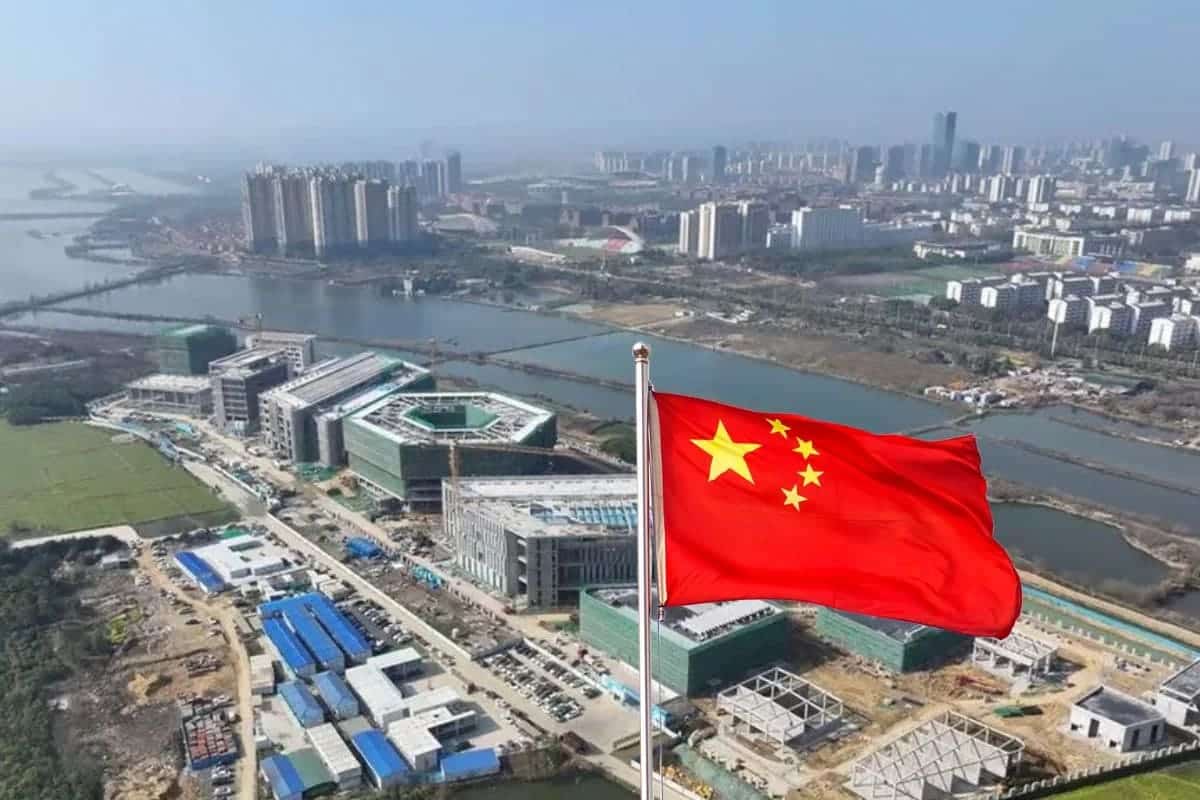
In an ambitious and groundbreaking move, China has revealed its plan to build the world’s first fusion-fission hybrid reactor, named Xinghuo, meaning “spark” in Mandarin. This revolutionary project could significantly change the landscape of global energy production and reshape China’s position in the race for cleaner, more powerful energy solutions.
Amazon co-founder MacKenzie Scott has donated over $19 billion to charity in just five years
Diamond batteries powered by nuclear waste promise 28,000 years of clean energy
Fusion + Fission: China’s Bold Energy Bet
To understand the magnitude of this innovation, it’s important to distinguish between the two nuclear processes involved. Fission, the method at the heart of today’s nuclear power plants, splits heavy atomic nuclei like uranium to release energy. Fusion, on the other hand, is the process that powers the sun, where lighter atomic nuclei combine to form a heavier one, releasing vast amounts of energy in the process. Fusion has the potential to generate four times more energy per kilogram of fuel than fission.
What makes Xinghuo unique is its combination of both processes. The ultra-energetic neutrons generated by fusion reactions will be used to trigger fission in surrounding materials, creating a continuous energy cycle. This hybrid system not only maximizes the energy output but also reduces the radioactive waste typically associated with traditional fission-based reactors. It’s a double-layered reactor, where every particle is harnessed to its fullest potential—paving the way for cleaner and more efficient energy generation.
A High-Cost, High-Reward Venture
The construction of this ambitious hybrid reactor will cost around €2.5 billion (20 billion yuan), with an expected output of 100 megawatts (MW)—roughly equivalent to that of a small traditional nuclear plant. However, the Xinghuo reactor aims for a Q value greater than 30, a measure of energy efficiency. To put this into perspective, the ITER project in France aims for a Q value of 10, and the U.S. recently celebrated achieving a Q of 1.5. Clearly, China has set its sights much higher with this project, hoping to drastically boost energy efficiency compared to current reactors.
A Strategic Location for Innovation
The reactor will be constructed on Yaohu Island in Jiangxi Province, a region known for its specialized technology zone focusing on superconductors. The location is no accident—Jiangxi is rich in copper, a critical material for superconducting cables that will be necessary for plasma containment. This site selection aligns perfectly with China’s focus on integrating advanced technology and resources to drive energy innovations.
The project is a collaboration between China Nuclear Industry 23 Construction Corporation (a state-owned giant) and Lianovation Superconductor, a private firm specializing in precision components. Their partnership aims to produce the world’s first functional fusion-fission hybrid reactor with top-tier quality and performance.
Environmental Approval and Long-Term Planning
Before the Xinghuo reactor can begin its groundbreaking work, it must first pass an extensive environmental impact assessment, which will address air and water quality, noise emissions, and ecosystem impacts. This process, set to begin in 2025, is a testament to China’s growing commitment to balancing ambitious energy projects with environmental responsibility.
China is keenly aware of the importance of public opinion and regulatory standards when it comes to large-scale energy projects. As part of the process, Rosatom’s comprehensive environmental impact report will include long-term monitoring and risk management plans, ensuring that the potential benefits outweigh the environmental costs.
NASA warns China could slow Earth’s rotation with one simple move
This dog endured 27 hours of labor and gave birth to a record-breaking number of puppies
China’s Strategic Leap Ahead of Competitors
If the timeline holds, China could connect its fusion-fission hybrid reactor to the grid by 2030, giving it a significant edge over competitors. The ITER project in France, which is currently in development, does not expect to produce electrical power until at least 2035. This gives China a unique opportunity to become a global leader in advanced nuclear energy technology much sooner than expected.
Additionally, China is working on another monumental project—the China Fusion Engineering Test Reactor—which will focus purely on fusion technology, without the fission component. Set for the 2030s, this project could further cement China’s position as a pioneer in nuclear fusion technology, offering a more practical and less bureaucratic alternative to ITER.
China’s Growing Energy Ambitions
These projects are part of a broader national strategy to meet China’s growing energy needs. As the world’s largest energy consumer, China’s demand for power has been steadily increasing alongside its rapid economic development. By 2025, the country is expected to reach a peak in coal consumption before gradually transitioning to cleaner, renewable sources. Solar and wind power capacity is expected to hit 1,720 GW by 2030, exceeding initial targets. Meanwhile, natural gas demand will continue to rise, and China is also focusing on energy storage and green hydrogen technologies to facilitate this transition.
With its ambitious plans to achieve carbon neutrality by 2060 and a target of 20% non-fossil fuel energy consumption by 2025, China is positioning itself as a leader in the shift toward sustainable energy solutions. The Xinghuo reactor is just one piece of this much larger puzzle, representing the cutting edge of China’s long-term energy strategy.
Looking to the Future of Nuclear Technology
As China forges ahead with these groundbreaking projects, the potential implications for the global energy landscape are vast. The success of the fusion-fission hybrid reactor could signal a new era in nuclear energy—one that is cleaner, more efficient, and potentially more scalable than current technologies. With countries around the world looking for sustainable energy solutions, China’s innovations could serve as a beacon for the future of nuclear energy.
In the race to develop the next generation of energy technologies, Xinghuo represents not just a national achievement but also a global leap forward. With the promise of sustainable, high-efficiency power generation, this ambitious project could help to light the way to a new energy future for the entire world.