
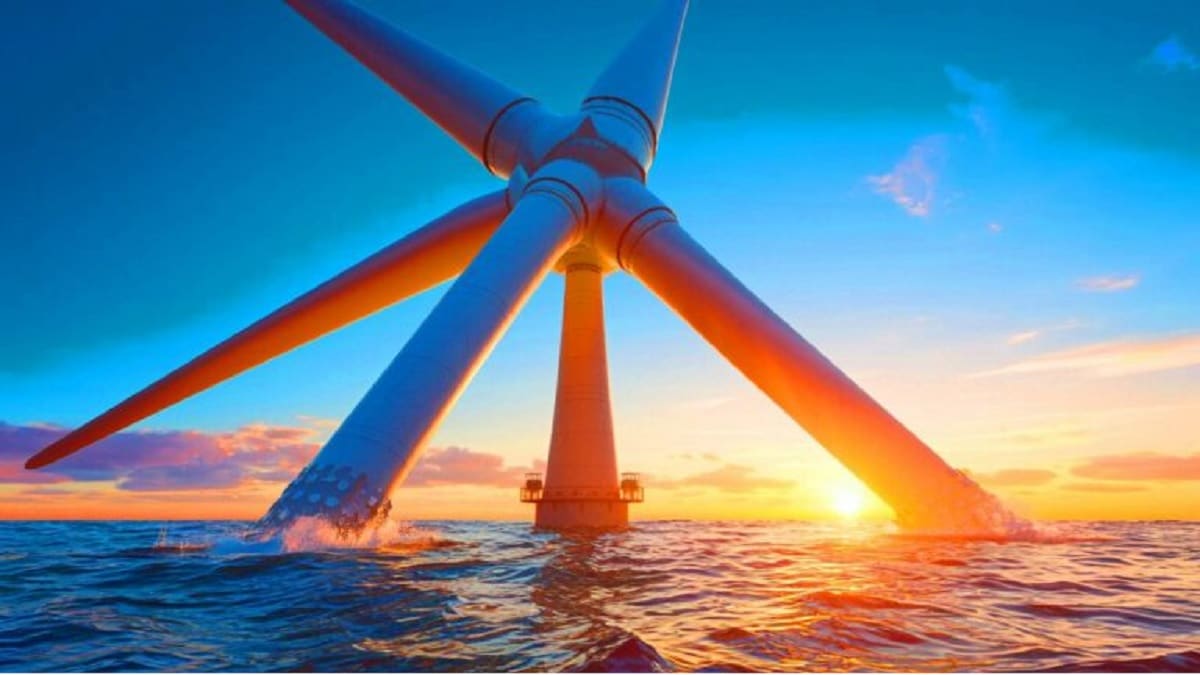
In an impressive leap towards a cleaner, more sustainable future, China has just unveiled QiHang, the world’s largest floating wind turbine. This 20 MW giant is not just another step in the world of renewable energy—it’s a game-changer, poised to set new standards for offshore wind technology. With its sheer size and cutting-edge design, QiHang has left many in the global energy community, including in the US, watching in awe.
Amazon co-founder MacKenzie Scott has donated over $19 billion to charity in just five years
Diamond batteries powered by nuclear waste promise 28,000 years of clean energy
Developed by the China Railway Construction Corporation (CRRC), this floating wind turbine is nothing short of a technological marvel. With a rotor diameter of a staggering 853 feet (roughly the size of seven football fields), QiHang sits 495 feet above the sea, making it the largest floating wind turbine on the planet. What’s even more remarkable is its ability to harness the power of the wind with incredible efficiency, creating enough energy to power an entire household for several days with just one rotation¹. The engineering behind this turbine is impressive, and it’s set to revolutionize the way we think about clean energy.
Overcoming the challenges of construction and transportation
Building a turbine of this scale is no easy feat. The process involved complex engineering and meticulous planning. After being assembled in Sheyang, Jiangsu, QiHang was transported across the seas using a self-propelled modular transport unit, a marvel in itself to ensure its structural integrity. The journey wasn’t just about getting the turbine from one point to another; it also involved navigating through harsh weather, extreme ocean currents, and high seismic activity.
Once it reached the Shandong Dongying wind equipment testing base, engineers put the turbine through rigorous tests to ensure its stability and performance in real-world marine conditions. Thanks to its advanced control systems and strategies to withstand typhoons, QiHang has proven to be incredibly stable, even in the most challenging weather conditions².
Environmental and energy impact
The environmental benefits of QiHang are staggering. This floating giant will save an estimated 27,500 tons of coal annually and cut down carbon emissions by 68,500 tons, making it a crucial player in the fight against climate change. By shifting away from fossil fuels, it will help reduce China’s carbon footprint and contribute to its long-term goal of a more sustainable future.
Beyond its environmental impact, QiHang is also a significant economic opportunity. With the potential to reduce fuel imports, as well as create new jobs in the renewable energy sector, it offers a promising future for both China and the global economy. As energy production continues to shift toward renewables, innovations like QiHang will become vital in driving down the cost of energy production while supporting green growth.
A global leap forward in renewable energy
China’s unveiling of QiHang cements its position as a global leader in wind energy. The country’s offshore wind capacity has already surpassed that of the UK, and with this latest advancement, its influence in the international energy market is bound to grow. Chinese companies, such as CRRC and Mingyang Wind Power, are expanding their reach, particularly into Europe, where the demand for renewable energy is rapidly increasing.
NASA warns China could slow Earth’s rotation with one simple move
This dog endured 27 hours of labor and gave birth to a record-breaking number of puppies
What’s more, this is just the beginning. Companies like Mingyang Wind Power are already working on even more powerful turbines, with a 22 MW turbine currently in development. Meanwhile, Envision Energy is set to deliver 344.5 MW of wind turbines for the Quezon North wind project in the Philippines, the country’s largest wind contract ever. With continued investments in research and development, China’s dominance in renewable energy is solidified, and its innovations are paving the way for a greener future worldwide.
The future of wind energy
QiHang is more than just a technological achievement—it’s a glimpse into the future of energy production. With its unparalleled performance and capacity to significantly reduce carbon emissions, this floating wind giant is setting the stage for the next generation of renewable energy solutions. As China continues to innovate in the wind energy sector, the global energy landscape will undoubtedly shift, driving efforts to combat climate change and build a sustainable energy future.
As we look ahead, it’s clear that China’s commitment to clean energy is not just about leading the market—it’s about reshaping the future of energy production for the entire planet. The QiHang project is a bold statement of ambition and innovation, and it’s only the beginning of what promises to be a transformative era for renewable energy.
Sources
-
“China’s Wind Energy Development,” Reuters.
https://www.reuters.com/world/china/china-widens-wind-power-lead-with-new-generation-record-maguire-2024-04-18/ -
“QiHang Floating Wind Turbine Launch,” CRRC.
https://www.crrcgc.cc/en/2025-02/13/article_2025021317225881058.html