
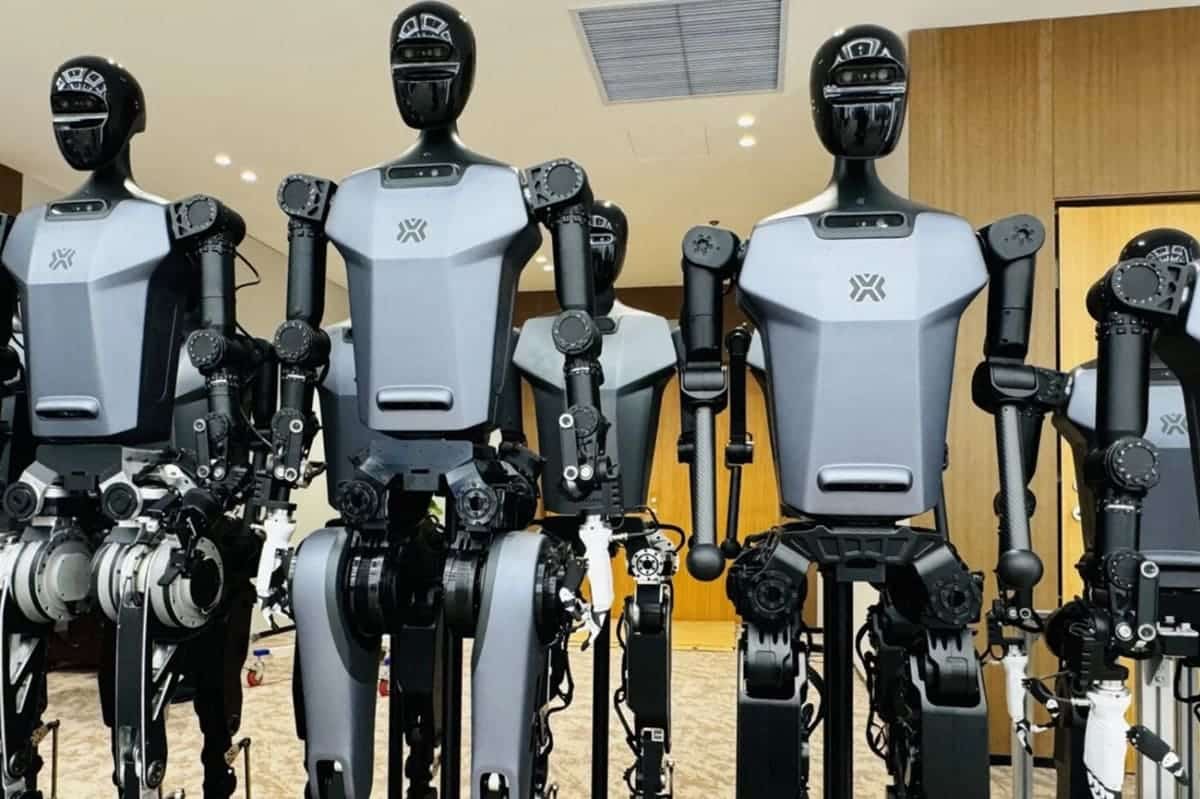
The future of robotics is unfolding before our eyes, and China’s latest creation, Tiangong, is leading the charge. This full-sized humanoid robot is not just an engineering feat—it’s an open-source platform, inviting researchers, developers, and industries across the globe to collaborate, innovate, and accelerate the integration of humanoid robots into everyday life.
Amazon co-founder MacKenzie Scott has donated over $19 billion to charity in just five years
Diamond batteries powered by nuclear waste promise 28,000 years of clean energy
A Technological Marvel
Developed by the Beijing Humanoid Robot Innovation Center, Tiangong stands at 163 cm tall, weighs 43 kg, and is fully electric-powered. Despite its compact build, this robot moves with impressive agility, reaching speeds of 6 km/h while maintaining remarkable stability.
Its fluid movement is powered by advanced electric actuators and an array of high-tech sensors, including 3D vision, visual perception systems, and force sensors. These features allow Tiangong to walk, run, climb stairs, navigate slopes, and even tackle difficult terrains like sand and gravel without losing balance. If it stumbles? It self-corrects in real time, making it an ideal solution for industries requiring adaptability.
Open-Source Accessibility: A Game-Changer
What truly sets Tiangong apart is its open-source nature. Since its official release in April, all design blueprints, software, and technical schematics have been made freely available. This unprecedented level of access allows developers worldwide to modify and repurpose the robot for various applications, from warehouse automation to power plant surveillance—two sectors where Tiangong has already proven its capabilities.
To cater to different needs, two models are available:
- Tiangong 1.0 LITE – A streamlined version for basic automation and research.
- Tiangong Pro – A more advanced model designed for complex industrial applications.
This open-source strategy dramatically reduces costs and development timelines, providing a strong foundation for future robotics innovation. By embracing collaboration, Tiangong is poised to become a global standard for humanoid robotics.
A National Vision for Robotics Leadership
Tiangong is more than just a technological breakthrough—it’s a strategic move in China’s broader ambition to dominate the robotics industry. The government has set bold targets, including the mass production of humanoid robots by 2025 and the development of AI-powered robots capable of learning, reasoning, and independent decision-making by 2027.
This effort isn’t limited to one research center. Leading robotics firms like UBtech Robotics and Unitree are actively pushing boundaries, while top universities such as Peking University and Huazhong University of Science and Technology are making key contributions in robotic AI and biomechanics. The open-source model encourages standardization and rapid progress, reinforcing China’s role as a frontrunner in robotic innovation.
NASA warns China could slow Earth’s rotation with one simple move
This dog endured 27 hours of labor and gave birth to a record-breaking number of puppies
A Blueprint for Global Collaboration
By making Tiangong’s design and software accessible to all, China is setting a new precedent for international cooperation in robotics. The robot’s adaptability and modular nature make it an ideal choice for developers worldwide looking to tackle challenges in manufacturing, logistics, healthcare, and beyond.
The Beijing Humanoid Robot Innovation Center has announced plans to release additional tools and resources by the end of the year, further expanding Tiangong’s potential applications. As developers refine and expand its capabilities, this platform could revolutionize multiple industries.
The Future of Robotics Is Here
With China pushing forward on its ambitious robotics agenda, Tiangong represents a significant leap in humanoid robotics. Its open-source framework, cutting-edge technology, and real-world applications make it more than just a breakthrough for China—it’s a global opportunity for innovation.
For researchers, developers, and industries alike, Tiangong offers a unique chance to shape the future of robotics. As more tools become available and global collaboration grows, the world could soon find itself working, learning, and even living alongside humanoid robots in ways previously reserved for science fiction.