

For centuries, humanity has wondered about the mysteries hidden deep within the Earth. We’ve long been fascinated by the concept of vast, hidden water reservoirs beneath our feet. Now, new research suggests that Earth may hold an enormous solid ocean far beneath the surface—something we never could have imagined. This discovery, stemming from the analysis of rare minerals found in diamonds, hints at a geological water reservoir deep within the mantle, possibly holding more water than all of Earth’s oceans combined.
Amazon co-founder MacKenzie Scott has donated over $19 billion to charity in just five years
Diamond batteries powered by nuclear waste promise 28,000 years of clean energy
A Glimpse into Earth’s Hidden Water Reservoir
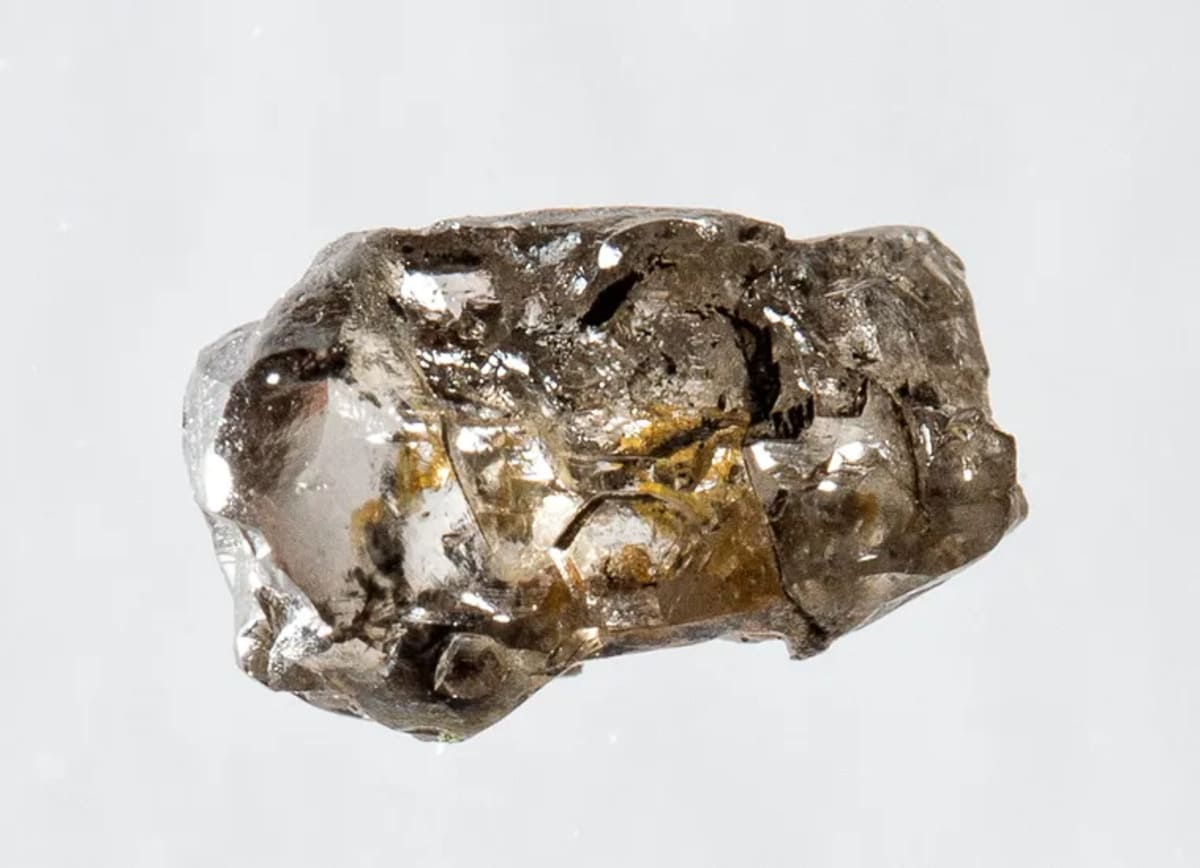
In 2009, a team of scientists led by Dr. Graham Pearson, a researcher at the University of Alberta, stumbled upon an extraordinary find in Brazil. A diamond, unlike any other, was discovered in a transition zone between the upper and lower mantle of the Earth, at depths ranging between 410 and 660 kilometers—far deeper than the typical 150 kilometers where most diamonds are formed. This diamond contained a rare mineral called ringwoodite, a hydrous mineral that had only previously been found in meteorites or created in lab experiments.
What’s so significant about ringwoodite? It can trap hydroxyl radicals (OH- molecules), essentially water fragments, and in this case, the diamond contained about 1.4% of its total weight in water. This discovery provided compelling evidence that significant amounts of water are likely trapped deep within the Earth, specifically in the mantle transition zone.
As Dr. Pearson explains, “Diamonds act as incredible time capsules, trapping tiny inclusions of the materials deep within the mantle.” He and his team found the ringwoodite inside the diamond’s inclusion, offering a unique glimpse into the Earth’s interior. This evidence suggests that the mantle, a layer far below Earth’s surface, could be a giant storehouse of water.
A Solid Ocean Beneath Our Feet?
The discovery raises exciting possibilities: if water is indeed stored deep within the mantle, could there be an underground ocean much larger than anything we’ve ever seen on the surface? Dr. Pearson’s research points to this potential, as he suggests that the transition zone, which sits between the upper and lower layers of the mantle, could be filled with large quantities of water. “If this part of the mantle is uniformly hydrated, we could be talking about the equivalent of one to two Earth oceans right beneath our feet,” he says.
This possibility took another leap forward when similar discoveries were made in 2022 in Botswana, when another diamond with ringwoodite inclusions was found. This find, combined with previous research, points to the transition zone as a potential global water reservoir—one that could change our understanding of Earth’s water cycle entirely.
The Mystery of Earth’s Hidden Water
Two major questions arise from these discoveries: where did this water come from, and how does it fit into Earth’s overall water cycle? The first question revolves around whether this water is primordial—meaning it’s been trapped in the mantle since Earth’s formation—or whether it’s recycled through subduction, the process by which oceanic plates sink into the mantle. Dr. Pearson notes, “We need to determine whether the hydrogen in these minerals comes from the Earth’s surface or from deeper sources, such as meteorites.”
NASA warns China could slow Earth’s rotation with one simple move
This dog endured 27 hours of labor and gave birth to a record-breaking number of puppies
Researchers are working to compare the isotopic ratios of hydrogen in the water trapped within minerals, hoping to pinpoint whether it matches surface water or whether it originated in the planet’s early days. This distinction could help answer whether the water deep inside the Earth is ancient or part of a continuous cycle that’s been happening over millions of years.
The second question concerns the role of this water in Earth’s geological processes. Dr. Tingting Gu, a mineral physicist at the Gemological Institute of America, suggests that this hidden water could be crucial to understanding deep-water cycles, volcanic activity, and even earthquakes. She explains, “This underground water could play a role in the distribution of water across the planet, and it may also influence tectonic processes, such as the formation of earthquakes.”
In fact, some researchers, including Dr. Pearson, suggest that the presence of water in the transition zone could be linked to the hydraulic weakening of rocks deep within the Earth. This process may contribute to the formation of earthquakes in areas between 300 and 660 kilometers deep in the mantle.
Exploring Earth’s Hidden Depths
The answers to these pressing questions will likely require interdisciplinary research, combining seismology, chemistry, and mineral physics to understand the complex dynamics of these deep-Earth materials. The rare minerals like ringwoodite provide us with an opportunity to study the Earth’s innermost layers—something that humans have never directly experienced.
Dr. Gu sums up the challenge: “We are so small compared to the Earth. We didn’t realize just how vast and complex our planet truly is.” As we continue to explore these geological mysteries, we are coming closer to understanding not only Earth’s past but also its future, and how this deep reservoir of water might impact everything from volcanic activity to the distribution of life-giving water on the surface. The discovery of an underground ocean could ultimately unlock new insights into the planet’s evolution and its potential to sustain life for generations to come.