
The United States is making bold moves to assert dominance not just on Earth, but also in space. With the establishment of the US Space Force nearly five years ago, the country has been determined to ensure its military is equipped to excel across all domains, including the final frontier. In line with this ambition, the US military has allocated $35 million to develop a cutting-edge spacecraft designed to be the most agile and high-speed vehicle in history, surpassing the limitations of current rocket fuels.
Amazon co-founder MacKenzie Scott has donated over $19 billion to charity in just five years
Diamond batteries powered by nuclear waste promise 28,000 years of clean energy
A 100kW Propulsion System to Reach New Heights
To achieve these goals, the US is turning to the University of Michigan for help. The aim is to design a nuclear microreactor that combines the power of traditional chemical rockets with the efficiency of electric propulsion. This ambitious project hopes to develop a propulsion system capable of not only unprecedented speed but also maneuverability, pushing the boundaries of space travel.
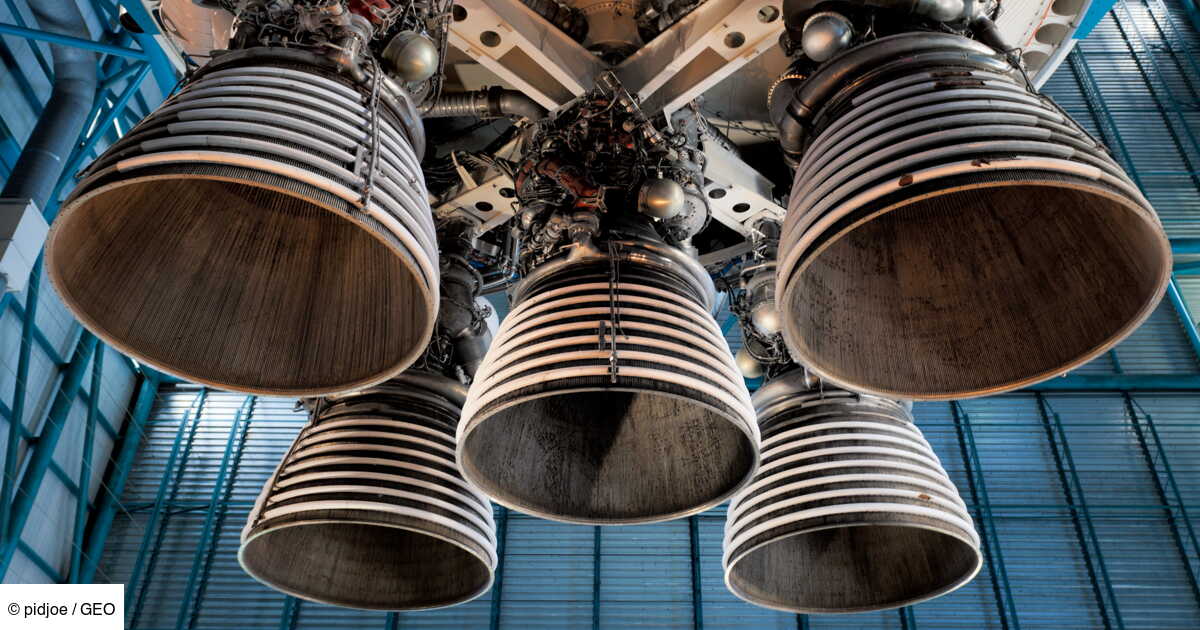
For years, chemical propulsion has been the go-to for space rockets due to its power, but it comes at a significant cost: high fuel consumption in a short period of time. On the other hand, electric propulsion systems, while far more efficient in energy use, are much slower to ramp up and are dependent on solar panels, which significantly increase the size and weight of the system.
The breakthrough being worked on at the University of Michigan is a Hall-effect thruster that delivers 100kW of power. This type of electric propulsion works by creating a magnetic field that propels the spacecraft forward. While this system has the potential to achieve impressive speeds, the challenge remains: how to generate enough power efficiently for sustained use.
Converting Nuclear Heat into Usable Electricity
The International Space Station (ISS), for instance, generates around 100 kilowatts using solar panels the size of two football fields—an impractical setup for missions that require more energy in smaller spaces. That’s where the nuclear microreactor comes into play. The goal is to harness the heat produced by the reactor and convert it into usable electricity to power the propulsion system.
Researchers are exploring two main methods for this energy conversion: thermionic emission cells and thermo-photovoltaic cells. The idea is that by capturing the heat from the reactor, these cells can generate electricity without the need for bulky solar panels, making the system much more compact and efficient.
The final design for the spacecraft will combine both chemical rocket engines for quick maneuvers and the nuclear microreactor for sustained propulsion. The challenge now is finding the right fuel that can power both systems efficiently. To bring this vision to life, collaborations are taking place between multiple companies, including Ultra Safe Nuclear for the microreactor, and universities such as Cornell and Wisconsin to further develop and test the technology.
The Future of Space Travel
This project is poised to be a game-changer in space exploration, with the potential to transform how we think about propulsion in space. By merging the strengths of chemical propulsion with the efficiency of electric and nuclear technology, the US Space Force could soon have a spacecraft capable of maneuvering through space at unprecedented speeds with a level of precision never before possible.
NASA warns China could slow Earth’s rotation with one simple move
This dog endured 27 hours of labor and gave birth to a record-breaking number of puppies
As development continues, this multi-million-dollar project could mark a new chapter in the way humanity explores the universe, making it a critical milestone in space technology.