

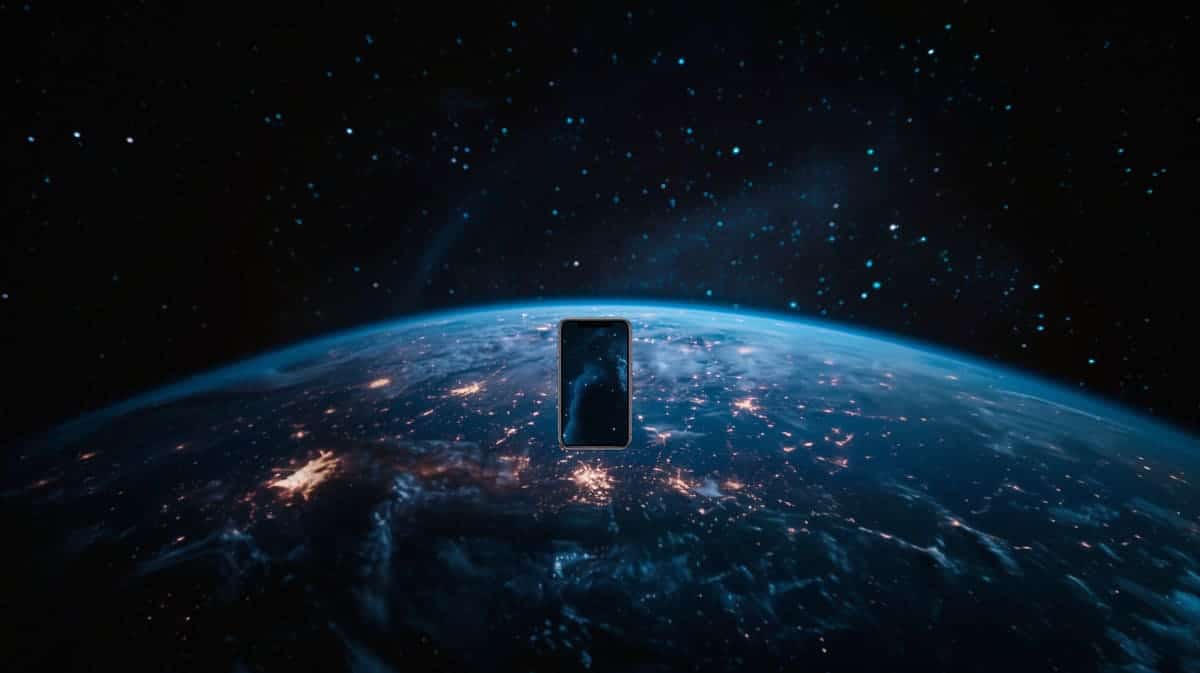
In a move that sounds straight out of a sci-fi novel, Elon Musk has done it again. This time, it’s not rockets or robots making headlines—but your everyday smartphone. Thanks to Starlink’s latest breakthrough, people around the world will soon be able to make voice calls and send messages from just about anywhere on the planet—no cell towers required, no bulky satellite phones in sight.
Amazon co-founder MacKenzie Scott has donated over $19 billion to charity in just five years
Diamond batteries powered by nuclear waste promise 28,000 years of clean energy
Starlink’s Direct-to-Cell: connectivity without limits
Starlink, the satellite internet arm of SpaceX, is rolling out a new service called Direct-to-Cell—and it might just change the way we think about mobile communication. The promise is simple but powerful: take your existing LTE phone, step into the wild—whether you’re hiking in Patagonia or drifting in the middle of the Pacific—and still be able to place a call or send a message.
This isn’t a niche gadget for techies. It’s a plug-and-play update that works on your regular smartphone. No app to download. No antenna to strap on. Just signal, where there used to be none.
No new phone needed: it just works
In filings to the FCC, SpaceX confirmed that the system has been tested successfully on a wide range of phones from brands like Apple, Samsung, and Google. From the latest models to older LTE-capable devices like the iPhone 13, users can expect full connectivity under trees, in rural zones, and even inside buildings.
This is big. I remember trying to text my family from a remote cabin in Canada years ago, holding my phone up to the sky like a divining rod. Nothing. With this Starlink update, those days could be over—for me, and for millions of others living or traveling beyond the reach of traditional networks.
Full messaging, real calls—even in an emergency
Perhaps the most impactful feature of Direct-to-Cell is how it handles emergencies. While old-school satellite phones usually only allow pre-set messages or basic texts, Starlink’s service supports full custom messaging and voice communication via your regular apps. That means you can say what you need, how you want—whether it’s a life-saving update during a hiking trip gone wrong, or just a check-in text to your partner from a faraway trail.
And you don’t need to change your habits. This service doesn’t force you onto a clunky new interface; it integrates with the messaging platforms and call systems you already use.
NASA warns China could slow Earth’s rotation with one simple move
This dog endured 27 hours of labor and gave birth to a record-breaking number of puppies
What’s next for Starlink’s phone service?
Starlink hasn’t revealed pricing just yet, but the service is expected to be part of a commercial rollout in the near future. While it’s easy to imagine it being a hit with adventurers and rescue services, it could also be a game-changer for rural communities in the U.S. and abroad where cell coverage is unreliable—or non-existent.
But Starlink’s ambitions don’t stop there. According to documentation shared with regulators, the company is exploring expansions that include IoT connectivity, improved voice quality, and even web access via satellite, directly to your phone.
A lifeline for the disconnected world
Sure, if you live in a city with blazing 5G and fiber-optic broadband, satellite calling might sound like overkill. But globally, billions still lack consistent mobile coverage. For them, this isn’t just a cool perk—it’s a vital connection to safety, opportunity, and loved ones.
I can’t help but think back to a friend who volunteers with medical teams in remote parts of sub-Saharan Africa. They rely on patchy radio contact to coordinate logistics. With Starlink’s Direct-to-Cell, their work could be safer, faster, and more efficient.
Musk’s latest innovation might not involve a shiny new gadget—but it quietly changes the rules of how we stay in touch. From mountaintops to ocean crossings, the simple act of making a call just got a whole lot more universal.