

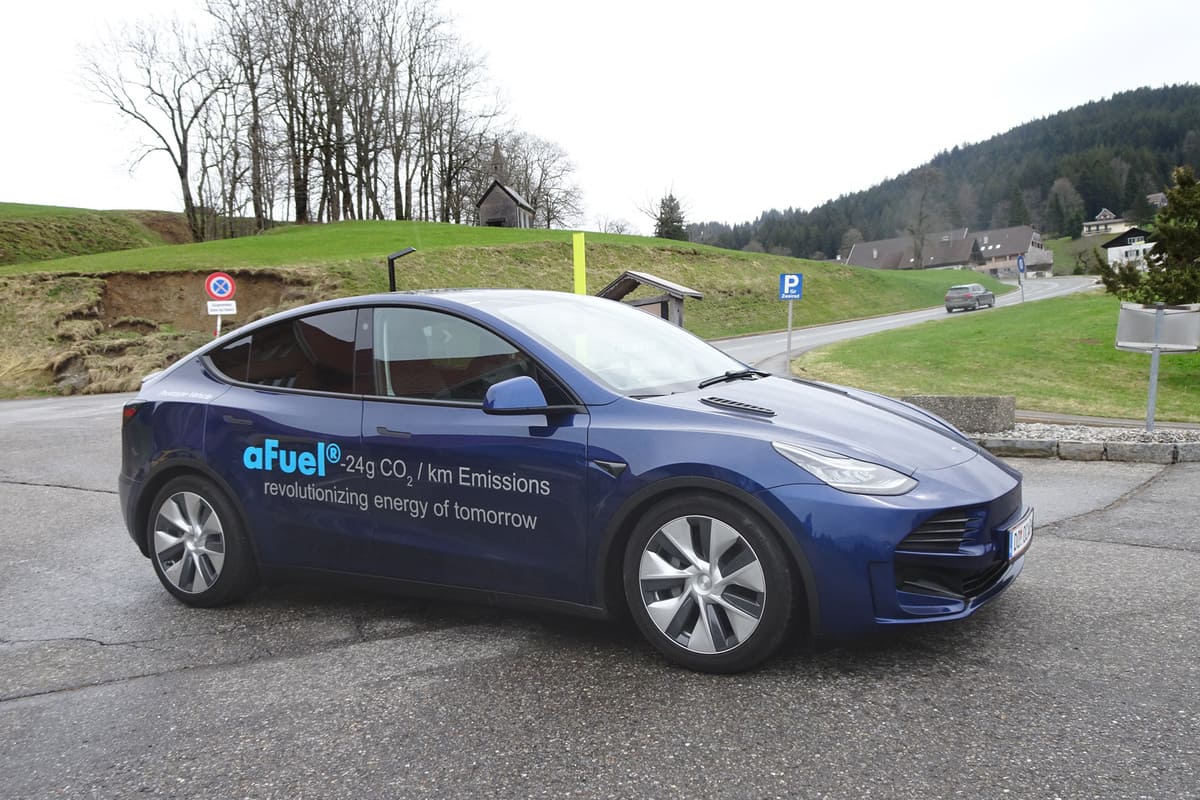
Elon Musk has been very vocal about his views on alternative fuels, particularly hydrogen, which he’s criticized as “stupid” and a poor choice for energy storage. Despite his stance, it seems that the world of clean energy is full of surprises, and one of the most unexpected has come from Obrist, an Austrian company thinking outside the box. This company has taken a Tesla Model Y and turned it into a “Hyper-Hybrid”—a vehicle that runs on methanol, not electricity. Could this be the next step in sustainable transportation?
Amazon co-founder MacKenzie Scott has donated over $19 billion to charity in just five years
Diamond batteries powered by nuclear waste promise 28,000 years of clean energy
The Hyper-Hybrid: A Tesla with a Twist
The Tesla Model Y Hyper-Hybrid is not an official product from Tesla itself, but rather a creative prototype developed by Obrist. The idea is a hybrid vehicle that combines a small battery with a methanol-powered engine. While it retains the sleek look and many of the familiar features of a traditional Tesla, this version also incorporates a fuel tank for methanol. This setup addresses the issue of driving range and refueling, offering a more flexible solution compared to traditional electric vehicles (EVs).
I remember the first time I faced the challenge of running low on charge during a road trip in my own EV. I found myself searching for charging stations and fretting about the wait time. The convenience of the Hyper-Hybrid’s dual-fuel system, which switches between the battery and methanol when needed, could solve this problem, offering more freedom on long drives without relying solely on charging stations.
Why Methanol?
Methanol may not be the first fuel that comes to mind when we think of clean energy, but Obrist sees untapped potential in it. To make things even more innovative, the company has developed its own synthetic methanol fuel, called aFuel, which is designed to be carbon-neutral or even carbon-negative. The idea behind aFuel is to capture CO2 directly from the air and use it in the production of the fuel, making it a renewable and potentially sustainable alternative to traditional fuels.
Obrist claims that aFuel contains about 10% CO2 extracted from the atmosphere, which is then converted into solid carbon. This process reduces the overall carbon footprint of the fuel. Obrist boldly describes aFuel as “the most efficient energy carrier humanity can use to eliminate fossil fuels for good,” aligning with broader efforts to combat climate change through innovative technologies.
As an advocate for sustainability myself, I’m intrigued by the idea of using carbon capture technology as part of fuel production. It’s a step toward creating a more circular system in which carbon emissions are reduced and even reversed.
Methanol vs. Hydrogen: A Pragmatic Alternative
While hydrogen has long been touted as a potential clean fuel, it comes with several challenges. Storing and transporting hydrogen requires either large tanks or cryogenic liquid systems, which are both inefficient and costly. Methanol, on the other hand, is easier to store and transport, making it a much more practical choice for hybrid vehicles.
NASA warns China could slow Earth’s rotation with one simple move
This dog endured 27 hours of labor and gave birth to a record-breaking number of puppies
Obrist’s approach with the Hyper-Hybrid challenges Elon Musk’s rejection of hydrogen by showing that there are alternative paths to sustainable mobility beyond electricity alone. Methanol may serve as a bridge between the current fuel systems and a future with more renewable solutions. It’s flexible, potentially carbon-neutral, and could lower the environmental impact while still utilizing existing infrastructure, making it an appealing option for countries and industries that are hesitant to make a complete shift to electric vehicles.
A Glimpse Into the Future?
While the Tesla Model Y Hyper-Hybrid is still in its prototype phase, it opens up exciting possibilities for the future of transportation. It challenges the notion that electric vehicles are the only route to cleaner transportation, showing that a combination of alternative fuels could be the key to a more sustainable future.
The development of carbon-neutral fuels like aFuel could drive broader adoption of hybrid systems that use existing infrastructure, reducing reliance on fossil fuels. Though Obrist hasn’t yet partnered with Tesla or other major manufacturers, the Hyper-Hybrid hints at a future where flexible, innovative technologies work together to meet global energy demands.
The Bottom Line
Elon Musk may dismiss hydrogen, but the methanol-powered Tesla Model Y prototype suggests that there are more options for clean energy than we might think. Obrist’s Hyper-Hybrid shows that even in a world dominated by electric vehicles, alternative fuels like methanol can offer a compelling solution to some of the challenges we face in sustainable transportation.
While it remains to be seen if this technology gains traction, it’s clear that the future of transportation might not be as one-dimensional as we once thought. Whether through electric, hydrogen, or methanol-powered solutions, innovation will continue to drive us toward cleaner, more flexible energy solutions.