
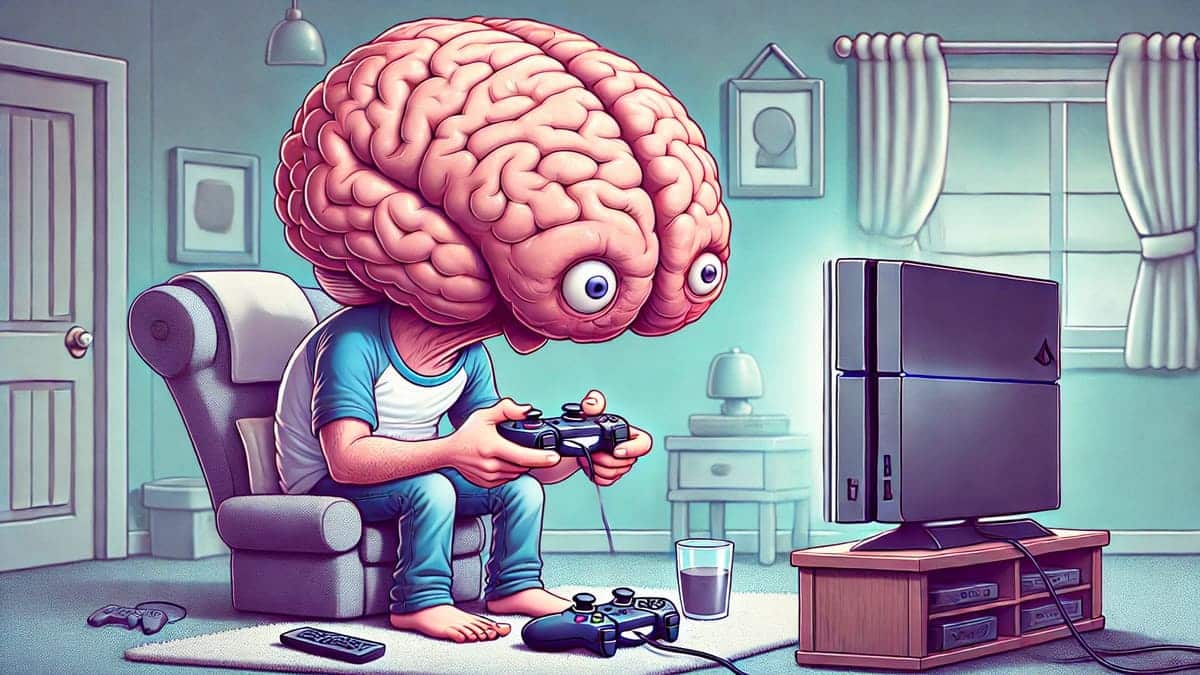
For decades, gamers have been told to “go outside” or “get a real hobby,” but science is finally giving them a well-earned comeback. A Canadian study has revealed that playing video games for at least five hours a week can keep your brain younger—up to 14 years younger, to be exact, in terms of specific cognitive abilities. Let’s dive into how gaming sharpens the mind and why it’s more than just a pastime.
Amazon co-founder MacKenzie Scott has donated over $19 billion to charity in just five years
Diamond batteries powered by nuclear waste promise 28,000 years of clean energy
The Study That Backs Up Gamers
The research, conducted by Western University in Canada, involved 2,000 participants worldwide. These individuals completed a detailed lifestyle questionnaire and then engaged in “brain games” designed to measure key cognitive skills, such as memory, reasoning, attention, and verbal ability. The findings? Regular gamers demonstrated cognitive performance akin to people nearly 14 years younger than their actual age.
Participants who played fewer than five hours a week still showed improvements, equivalent to being about five years younger in cognitive terms. But those hitting the five-hour mark regularly scored significantly higher on tests. So, the next time someone rolls their eyes at your gaming habit, you’ve got some hard science to defend yourself.
Why Video Games Work Like a Brain Gym ?
Think of video games as high-intensity workouts—for your brain. Games often require players to solve puzzles, process information quickly, and adapt to constantly changing scenarios. For example, navigating a fast-paced battle in an action game like Fortnite sharpens reflexes and decision-making, while strategy games like Civilization demand long-term planning and resource management.
Additionally, games can train memory and focus. Titles like Portal challenge players to recall complex patterns and think outside the box. These mental exercises are like lifting weights for the mind, improving cognitive abilities that naturally decline with age.
The Mental Health Angle
While the cognitive benefits are impressive, the study also looked at mental health. Here’s the takeaway: playing video games neither harms nor improves mental health significantly. In contrast, physical activity—like a 30-minute jog—was associated with reduced symptoms of anxiety and depression. But don’t hang up your controller just yet; the researchers suggest pairing gaming with regular exercise to maximize both mental and physical well-being.
The study highlighted that participants who clocked 150 minutes of weekly physical activity were 12% less likely to show symptoms of depression and 9% less likely to experience anxiety. This suggests that combining gaming with exercise could create the ultimate brain-body boost.
A Balanced Approach for Gamers
The message here isn’t to ditch all other activities for marathon gaming sessions. Instead, balance is key. Regular gaming offers a significant edge for cognitive health, but it’s not a substitute for other proven brain-boosting habits like physical exercise or engaging in social activities.
For those worried about long-term screen time, consider this: video games can serve as a powerful mental workout when consumed in moderation. Just like a balanced diet, adding variety—gaming, exercise, and social interaction—ensures you reap the full spectrum of benefits.
NASA warns China could slow Earth’s rotation with one simple move
This dog endured 27 hours of labor and gave birth to a record-breaking number of puppies
The Future of Gaming and Cognitive Research
As gaming technology advances, researchers are beginning to explore its potential in other areas, from therapeutic applications to educational tools. Imagine video games tailored to train specific cognitive skills or even help treat neurological conditions. This study is just the beginning of understanding how gaming influences the brain and what it could mean for our overall health.
In the meantime, if you’re a gamer, consider this your permission slip to play—responsibly, of course. Your brain may thank you for it, and who knows? You might just outthink your non-gaming peers at trivia night.