
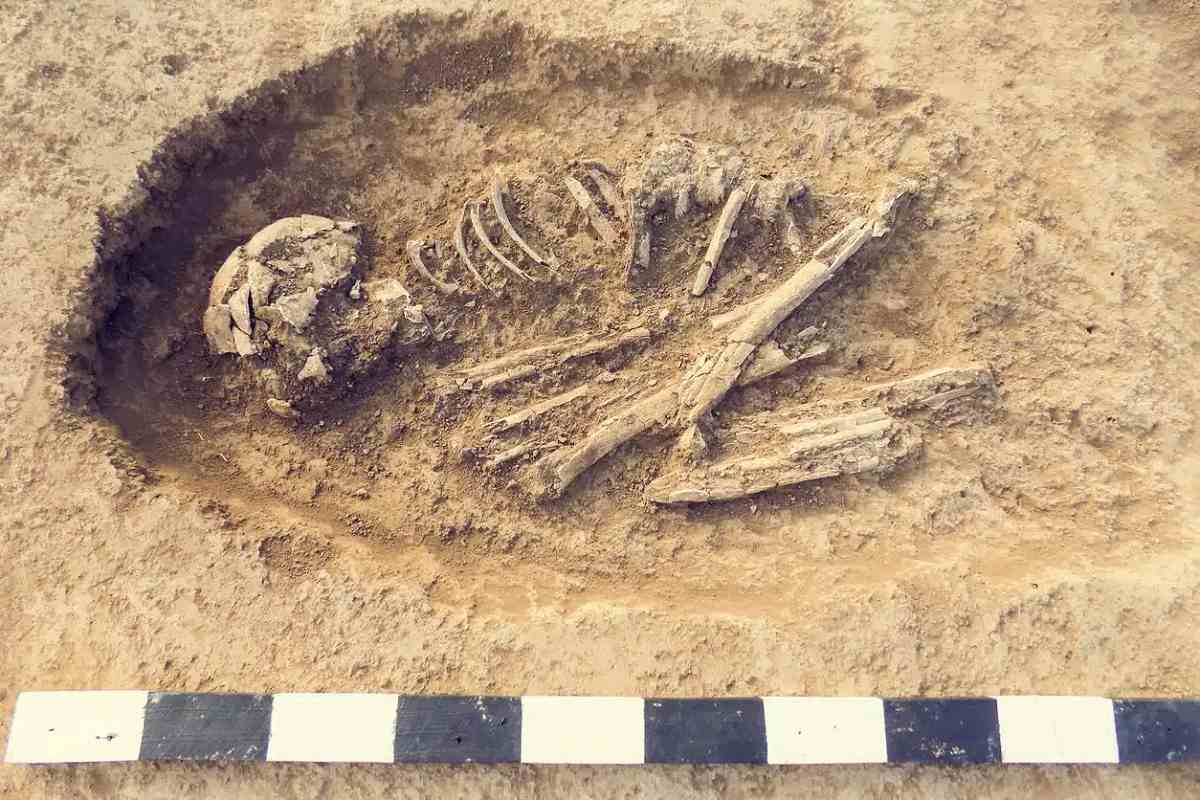
For nearly 70 years, a set of fossilized bones was thought to be the earliest evidence of humans in Japan. But a new study has thrown that long-held belief into serious doubt, with an unexpected twist: the fossils belong to an ancient bear, not a human. This surprising revelation reminds us that in science, just as in history, things are rarely as straightforward as they first appear.
Amazon co-founder MacKenzie Scott has donated over $19 billion to charity in just five years
Diamond batteries powered by nuclear waste promise 28,000 years of clean energy
A case of mistaken identity

Back in the 1950s, archaeologists working near Toyohashi, a city in central Japan, made a groundbreaking discovery. They uncovered ancient bones—a humerus and a fragment of a femur—that seemed to point to the first humans in Japan, potentially dating back around 20,000 years. At the time, the excitement was palpable. These fossils were considered the oldest human remains ever found on the archipelago, providing a vital link to Japan’s prehistoric past.
For decades, these bones were considered a cornerstone of Japan’s anthropological history. However, as the years passed, doubts started creeping in. By the late 1980s, some experts began to question whether these remains were truly human at all. The bones, despite their significance, seemed to defy a clear identity.
Technology turns the tide
Fast-forward to today, where technologies like CT scans and high-resolution imaging have revolutionized the way we analyze fossils. This is a far cry from the methods used when these bones were first discovered. Enter Gen Suwa, a researcher from the University of Tokyo, and his team, who decided to revisit the fossils using cutting-edge techniques. The results were astonishing: the bones didn’t belong to a human. In fact, they came from an ancient brown bear, likely a species of Ursus arctos that roamed the region about 20,000 years ago.
The team’s conclusion wasn’t based on mere guesswork. They conducted detailed morphological analysis, comparing the internal structures of the bones with those of known bear specimens. This careful examination confirmed that what had been believed to be the earliest human remains in Japan was, in fact, the fossilized bones of a bear. It’s a reminder that, in paleontology, even the most celebrated discoveries can be turned on their head by new technologies and deeper investigations¹.
Rewriting Japan’s prehistoric timeline
So, if these bones aren’t human, what does that mean for Japan’s history? The discovery shifts the focus to other remains found across the country. For example, skeleton fragments discovered near Hamakita, estimated to be between 14,000 and 17,000 years old, now hold the title of Japan’s oldest known human fossils. This reassessment of the Toyohashi fossils doesn’t erase Japan’s rich prehistoric past; it just adds another layer of complexity to it².
NASA warns China could slow Earth’s rotation with one simple move
This dog endured 27 hours of labor and gave birth to a record-breaking number of puppies
Even earlier signs of human activity have been traced to the Ryukyu Islands, a group of islands near Taiwan. Some of the findings there, dating back 32,000 years, offer tantalizing evidence of human migration through tools and other remnants, though no human skeletons have been found. These discoveries are offering new insights into the earliest chapters of Japan’s human history and suggest that the paths of our ancestors may have been far more intricate than we ever imagined³.
Fossil mix-ups: more common than you think
Mistaking human bones for those of animals may seem like an amateur mistake, but it’s far more common than we realize. A famous example from the 1990s involved a bone discovered in Alaska, initially thought to belong to a bear. Later, researchers determined it actually came from a Native American woman who lived more than 3,000 years ago.
These kinds of errors are not due to carelessness; they’re often the result of the limitations of the technology available at the time of discovery. Bones that are broken, degraded, or incomplete can be particularly challenging to identify. What once might have been a puzzling fragment of bone can now, with the help of advanced imaging and DNA analysis, be traced to its proper origin. It’s a reminder that science often works in fits and starts, with new breakthroughs helping us correct past misunderstandings.
Science: a never-ending process of discovery
The story of the Toyohashi fossils isn’t just a quirky twist in Japan’s archaeology—it’s a testament to how science constantly evolves. It’s a clear example of how our understanding of the past isn’t fixed. Instead, it’s a process of questioning, refining, and adjusting based on new data and tools.
In this case, researchers are now equipped with technologies that allow them to analyze microstructures in bones, reconstruct entire skeletons in 3D, and compare their findings with vast databases of known species. This has made paleontology an exciting field, but it’s also a humbling one. We may think we know a lot about the past, but as this study demonstrates, there’s always room for revision and surprises.
And so, Japan’s oldest human fossils have turned out to be bear bones—an unexpected and fascinating discovery. It’s a reminder that science, like history, is always open to reinterpretation and that sometimes, the real story is far more surprising than we imagined.
Sources:
-
“Reanalysis of Fossils from Toyohashi: Identification of Ancient Bear Bones.” https://wildinjapan.wordpress.com/2025/01/
-
“The Role of Advanced Imaging in Fossil Identification.” https://link.springer.com/article/10.1007/s10462-024-11080-y
-
“Fossil Discoveries and Their Impact on Japan’s Prehistory.” https://www.researchgate.net/publication/323639725_Paleolithic_archaeology_in_Japan