
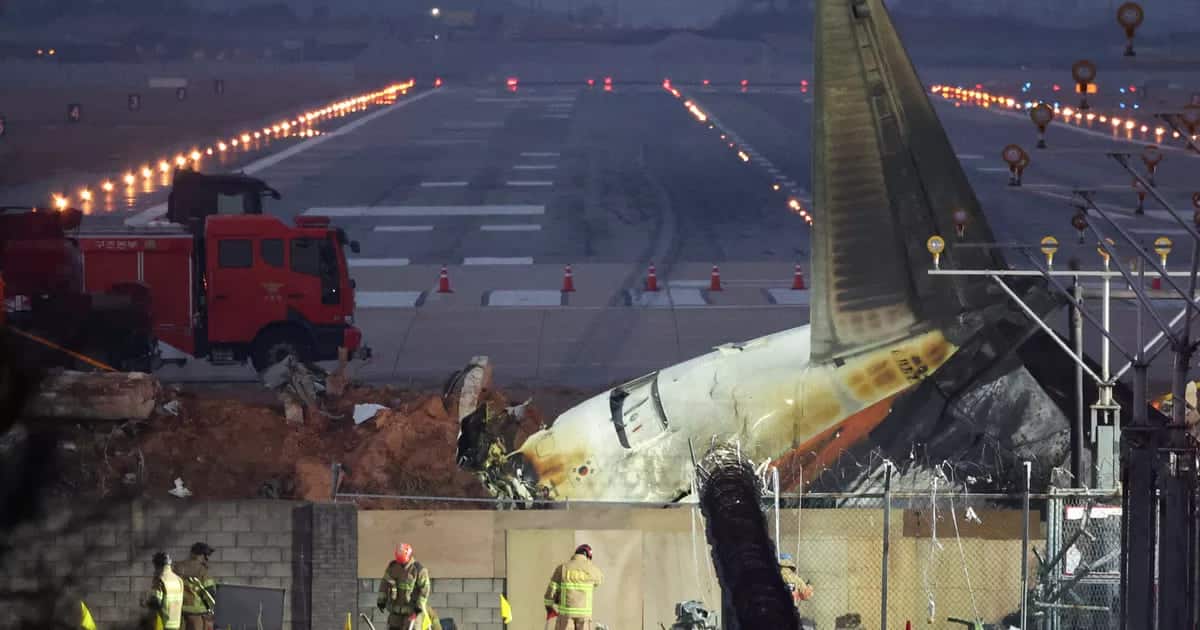
A devastating plane crash in South Korea on Sunday morning has captured the attention of both aviation experts and the public alike. The Boeing 737-800 operated by Jeju Air, which crashed at Muan International Airport, had completed 13 flights within just 48 hours before the tragic incident. This rapid sequence of flights is raising concerns about the possible link between aircraft utilization and the crash.
Amazon co-founder MacKenzie Scott has donated over $19 billion to charity in just five years
Diamond batteries powered by nuclear waste promise 28,000 years of clean energy
High Flight Frequency Raises Questions
The flight path of the ill-fated plane has left investigators wondering about its operational strain. In less than two days, the aircraft had visited eight airports across Asia, including Beijing, Bangkok, Kota Kinabalu, Nagasaki, and Taipei. Additionally, it had made stops at three airports within South Korea—Incheon, Jeju, and Muan. This intense flight schedule is particularly notable when compared to other airlines operating in the country.
For instance, Jeju Air has long been known for its high operational tempo. During the third quarter of the year, its aircraft averaged 418 flight hours per month, far exceeding the 371 hours by Jin Air and 386 hours by T’Way. Even more established carriers like Korean Air (355 hours) and Asiana Airlines (335 hours) had fewer flight hours per aircraft. The frequency and intensity of flights raise the question: could this have contributed to the crash?
Airline Denies Overuse of Aircraft
Despite the apparent high volume of flights, Jeju Air has denied that the aircraft in question was overused. Song Kyung-hoon, the airline’s director of management support, insisted that the airline followed a strict maintenance schedule and conducted routine inspections before and after every flight. “It is difficult to say that this plane was overused,” he remarked, emphasizing the airline’s adherence to its regular maintenance checks.
However, while the airline stands by its operations, the aviation community remains concerned. The 13 flights in such a short span are still drawing attention to whether aircraft were pushed beyond their limits, even with regular maintenance.
Investigations Underway
The crash has become the deadliest aviation incident in South Korea in recent memory, prompting a full investigation into its cause. Various potential explanations are being considered, including bird strikes, a possible landing gear failure, or even the presence of a solid wall at the end of the runway. None of these theories has been ruled out yet, as experts continue to piece together the sequence of events.
A chilling video aired by MBC, a South Korean news channel, shows the aircraft struggling to land. The plane is seen touching down belly-first at Muan Airport, with smoke billowing from its engines before crashing into a wall and bursting into flames. Out of the 181 people on board, including 175 passengers from Bangkok and six crew members, only a stewardess and a steward survived the devastating crash.
As the investigation continues, questions about the aircraft’s use and the factors contributing to the tragedy remain unanswered. While Jeju Air maintains that all maintenance protocols were followed, the high number of flights completed within such a short period is certainly a point of focus for those trying to understand the full scope of this tragedy.
NASA warns China could slow Earth’s rotation with one simple move
This dog endured 27 hours of labor and gave birth to a record-breaking number of puppies