
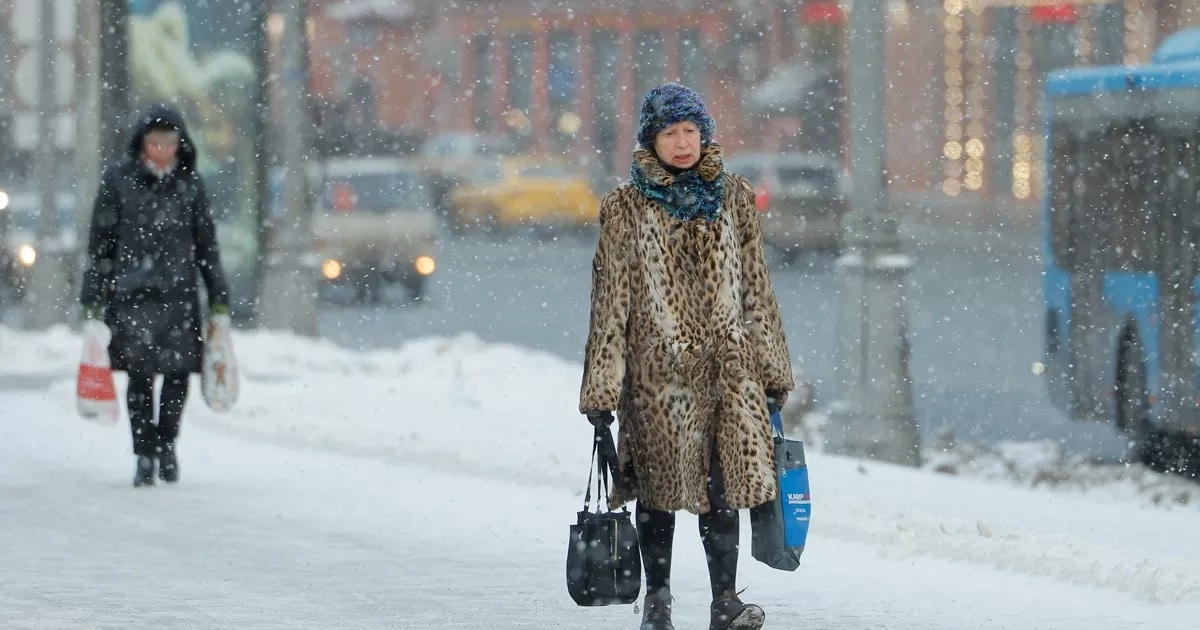
Russia’s economy, once touted as resilient in the face of mounting sanctions, is now facing significant challenges that have left economists and business leaders alike concerned about its future. Despite some optimistic declarations from Vladimir Putin, the economic situation is looking increasingly bleak, with rising inflation, skyrocketing interest rates, and an ever-growing risk of bankruptcies. So, what exactly is happening, and what does it mean for Russia’s economic outlook in the years ahead?
Amazon co-founder MacKenzie Scott has donated over $19 billion to charity in just five years
Diamond batteries powered by nuclear waste promise 28,000 years of clean energy
Inflation and Economic Pressures Mount
Inflation in Russia reached a staggering 8.9% in November, a level that has remained unresponsive to the efforts of the Central Bank of Russia (CBR). In a desperate attempt to curb the inflationary rise, the CBR raised its interest rates to 21% in October, a level not seen since 2003. However, even these drastic measures have failed to keep inflation in check, and the country is now dealing with the consequences. While inflation impacts everyone, the situation is particularly harsh for consumers, with prices for everyday items like butter seeing a dramatic increase of 34% since the start of the year. The typical optimism seen in Russian state media is now being replaced by headlines acknowledging the country’s growing economic troubles.
Worker Shortages and Sanctions Weigh Heavily
One of the key reasons behind the economic slump is the shortage of workers. According to Anton Tabakh, Chief Economist at Russian credit agency Expert RA, the combination of sanctions and the lack of labor is directly linked to the ongoing war. With many men on the front lines or fleeing abroad, Russia is facing a dramatic reduction in its workforce. On top of that, the military-industrial complex is drawing in workers to ramp up arms production, further straining the private sector.
Evgeny Nadorchine, a Russian economist and former advisor to the Ministry of Economic Development, points out that the private sector is especially hit by the shortfall. He estimates that Russia is short about 1 million employees, which is significantly hindering the country’s economic growth and slowing recovery efforts.
Soaring Interest Rates Threaten Business Survival
The government’s spending on military operations has only added to the economic burden, with the 2025 military budget set to increase by 67.5% compared to 2021. This has fueled inflation and pushed interest rates even higher, making loans prohibitively expensive for businesses and consumers alike. In fact, the interest rates for both personal and business loans are now hovering around 25% to 30%, a level that many consider unsustainable for long-term economic health.
German Gref, CEO of Russia’s largest bank, SberBank, has warned that such high rates are a sign of a serious slowdown in the economy. Even Sergey Chemezov, the head of the Russian military-industrial conglomerate Rostec, described the current interest rates as “madness,” further underscoring the troubling reality for the business sector. With soaring costs and rising debt, many small and medium-sized enterprises are struggling to survive, with some facing the risk of bankruptcy.
Growth Slowdown in 2025
Looking ahead, the Central Bank forecasts a significant slowdown in Russia’s GDP growth in 2025, predicting a growth rate between 0.5% and 1.5%, far lower than the 3.5% expected for the end of this year. Nadorchine warns that limited access to credit will be a major obstacle to growth, making it difficult for businesses to expand and invest. Although the Central Bank has dismissed fears of stagflation—a mix of low growth and high inflation—many remain skeptical about the country’s ability to recover without a significant change in economic policies.
At the same time, Russia’s currency, the rouble, has depreciated sharply due to U.S. sanctions targeting Gazprombank, which previously handled payments for foreign customers purchasing Russian gas. The rouble is now trading at its lowest level against the dollar and the euro since March 2022, a situation that further erodes the purchasing power of everyday Russians.
NASA warns China could slow Earth’s rotation with one simple move
This dog endured 27 hours of labor and gave birth to a record-breaking number of puppies
Putin’s Reassurances Amid Economic Turmoil
Despite the growing signs of economic distress, President Vladimir Putin remains optimistic. He points to Russia’s low federal budget deficit and an increase in non-oil revenues as evidence of the country’s financial stability. Furthermore, he highlights the influx of Chinese investors, who have filled the void left by Western companies pulling out of Russia due to sanctions. Still, Putin’s optimism seems to be in stark contrast with the reality on the ground, as the economy struggles under the weight of sanctions, high inflation, and the ongoing war in Ukraine.
In the end, the future of Russia’s economy hinges largely on the outcome of the war. As speculation grows about a potential peace process with Ukraine, the country’s economic trajectory will likely be tied to political developments. Until then, it’s clear that the economic storm clouds are gathering, and Russia’s path to recovery will require more than just reassurances from the Kremlin. The stakes for the Russian economy—and the people who rely on it—could not be higher.