
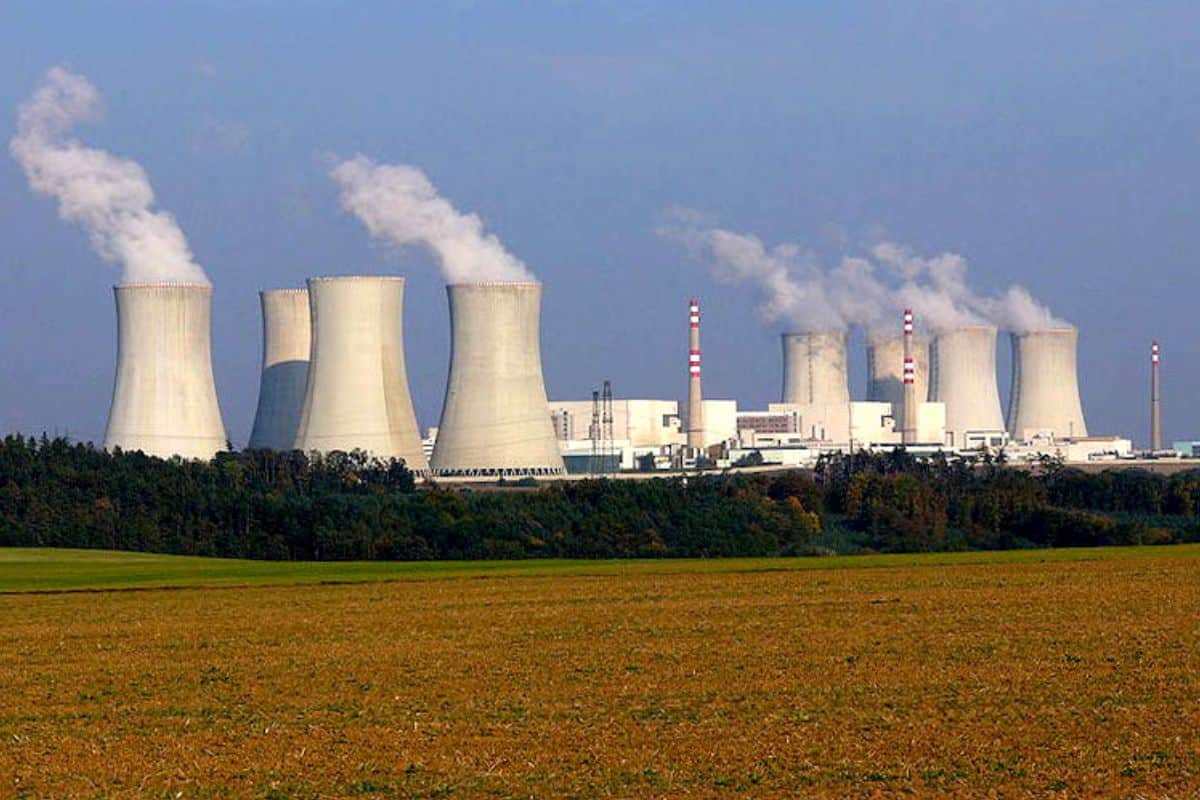
In a significant blow to France’s nuclear industry, the Czech Republic has decided to award its upcoming nuclear project to Korea Hydro & Nuclear Power (KHNP), effectively shutting out EDF, the French energy giant. This decision has cost France not just a lucrative contract but also its position in a key sector where it has traditionally held strong influence. Here’s what we know about the loss and the future of civil nuclear power in Europe.
Amazon co-founder MacKenzie Scott has donated over $19 billion to charity in just five years
Diamond batteries powered by nuclear waste promise 28,000 years of clean energy
The Czech Republic’s Bold Decision
On April 24, 2025, the Czech Competition Authority rejected EDF’s appeal against the bidding process for the construction of new nuclear reactors in the country. This decision officially handed the project to KHNP, a South Korean company, leaving EDF with little recourse. The French company had hoped to challenge the decision, but the authority ruled that the project’s security exemption kept it out of the typical public procurement framework, meaning EDF had no legal grounds to contest the award.
The loss is particularly bitter for EDF, which had long been a leader in civil nuclear power. For many, the outcome marks a turning point in the nuclear industry, signaling a shift away from the once-dominant European players in favor of rising Asian competitors.
The Final Showdown: KHNP vs. EDF and Westinghouse
Initially, three companies were in the running to build the new reactors: EDF with its EPR1200, Westinghouse with its AP1000, and KHNP with its APR1000. However, Westinghouse was soon disqualified for failing to meet technical criteria, leaving EDF and KHNP to compete for the project.
In July 2024, after months of deliberation, the Czech government ultimately favored KHNP. The decision was based on cost efficiency and more favorable conditions, with an estimated price of around €8.6 billion per reactor. KHNP also proposed an attractive deal to build two reactors simultaneously, further solidifying its bid.
The Strategy Behind the “Four-for-One” Offer
Interestingly, the Czech Republic originally planned to build only one reactor at Dukovany. But in October 2023, the government revised its approach, requesting bids for four reactors instead: one additional unit at Dukovany and two at Temelín. This move was aimed at maximizing cost savings, with the new plan promising an estimated 25% reduction in overall costs, potentially saving €25.8 billion in total.
Prime Minister Petr Fiala defended the shift as a more economical and rational approach to strengthening the country’s long-term energy security. The government’s decision to pursue this larger-scale plan marks a critical moment in the Czech nuclear energy strategy.
A Key Moment for the Czech Republic’s Energy Future
Nuclear power currently provides a third of the Czech Republic’s electricity, with reactors at Dukovany and Temelín playing a central role. Given the country’s reliance on nuclear energy, the renewal and expansion of its nuclear fleet is crucial to avoid becoming overly dependent on fossil fuels.
NASA warns China could slow Earth’s rotation with one simple move
This dog endured 27 hours of labor and gave birth to a record-breaking number of puppies
The new plan lays out a timeline with construction expected to begin around 2029, followed by test operations in 2036, and full commercial use by 2038. If KHNP meets these deadlines, it will be a major step forward for the Czech nuclear industry.
A Strategic Loss for France and EDF
For EDF, this loss is particularly painful given its role in Europe’s nuclear sector and its recent involvement in the Sizewell C project in the UK, which seemed to indicate a resurgence for the company’s EPR reactors. However, in the Czech Republic, the APR1000, a more compact and cost-effective design, proved more appealing.
This marks a clear turning point in the global nuclear landscape, as Asian operators continue to rise, challenging Europe’s dominance in the sector. With the Czech Republic now under the influence of KHNP, EDF faces a tough road ahead if it hopes to maintain its position in the highly competitive civil nuclear market.
Could EDF Still Fight Back?
Despite this setback, EDF still has the option to appeal the decision to a regional court. However, with the legal framework now locked in place, the chances of success seem slim. This setback also highlights the growing strength of Asian nuclear companies, especially in markets like Eastern Europe, where cost and efficiency are paramount.
A Broader Trend: The Rise of Asian Influence
The loss of the Czech contract is just the latest sign of the increasing influence of Asian companies in the global nuclear energy market. For decades, European and North American companies dominated the sector, but as the world moves toward cleaner energy, countries are looking for cost-effective, reliable solutions. The rise of KHNP is part of this broader shift, and it’s not just in the Czech Republic. China, South Korea, and Japan are all positioning themselves as leaders in nuclear technology, creating a competitive landscape that could significantly reshape the industry.
For France, the loss of this market is a reminder that global energy markets are evolving rapidly. With the nuclear industry under growing pressure to innovate and lower costs, countries like the Czech Republic are making decisions that prioritize long-term sustainability and economic efficiency over traditional alliances.
The Broader Economic Impact
French companies have long been a fixture in the Czech economy, particularly in industries like automobiles, energy, and construction. French businesses operate hundreds of subsidiaries in the country, employing tens of thousands and generating billions in revenue. Despite this, the nuclear setback shows how fragile these economic relationships can be when it comes to cutting-edge industries like nuclear energy.
The Czech decision may not only affect EDF’s standing in nuclear power but could also have a broader impact on France’s position in the European and global energy markets in the years to come.
This setback for EDF serves as a wake-up call for the French nuclear industry, highlighting the importance of staying competitive in an ever-evolving global market. The race for clean, efficient energy is intensifying, and France will need to adapt quickly if it hopes to maintain its leadership in nuclear power. The next few years will be critical for companies like EDF, as they navigate this increasingly complex and competitive landscape.
Sources:
-
“Czech Republic Energy Strategy: Nuclear Reactors and Future Investments,” World Nuclear News. https://www.world-nuclear-news.org/articles/czech-energy-plan-focuses-on-renewables-and-nuclear
-
“KHNP’s Success in Nuclear Power Projects,” Korea Hydro & Nuclear Power. https://www.khnp.co.kr/eng/selectBbsNttView.do;WCN_EXHP=AXW_A25xnmLdAL3fXsB44eWI4NwneU-L9DcT_5CROQP2w31wQBMC!-570597537?key=565&bbsNo=84&nttNo=28029&searchCtgry=&searchCnd=all&searchKrwd=&integrDeptCode=&pageIndex=18
-
“EDF and Its Global Nuclear Strategy,” EDF. https://www.edf.fr/en/the-edf-group/producing-a-climate-friendly-energy/nuclear-energy/shaping-the-future-of-nuclear