
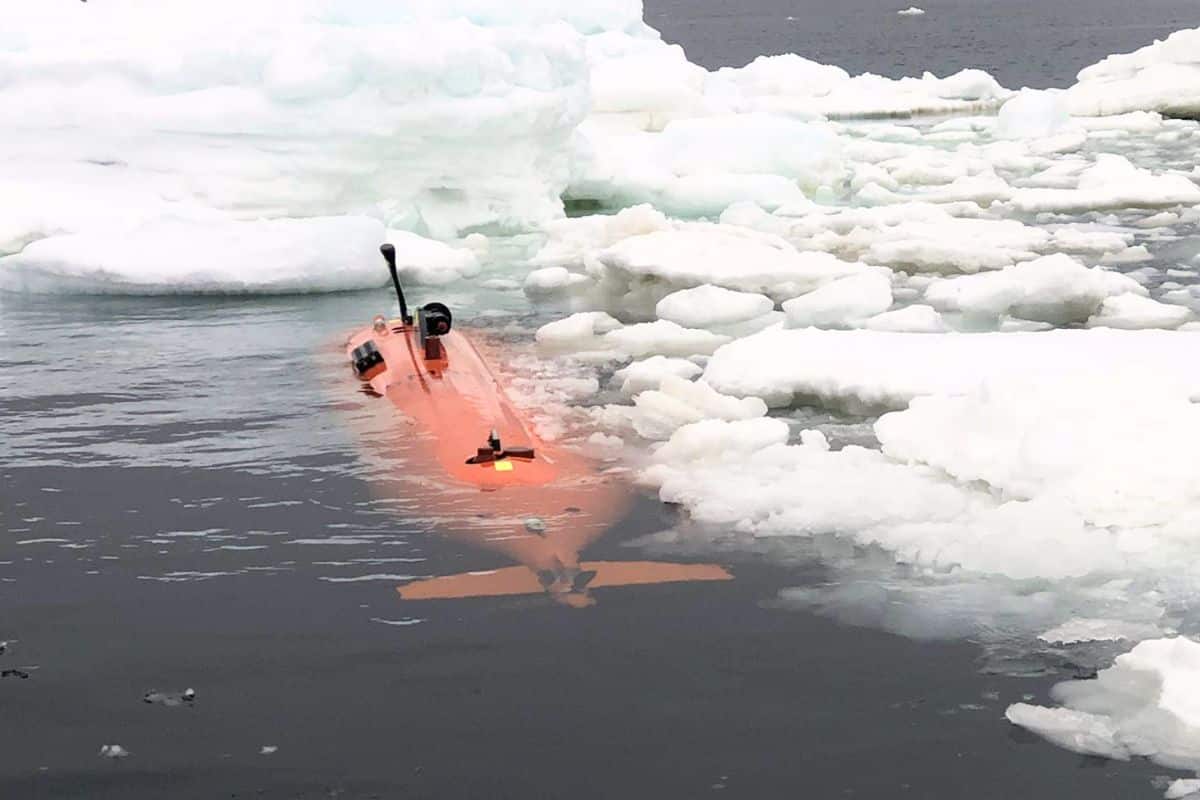
In a recent groundbreaking expedition to Antarctica, a daring exploration has unveiled a side of the South Pole that few have ever seen. An international research team, led by the University of Gothenburg, deployed an autonomous submarine named Ran to dive beneath the massive glaciers of Western Antarctica. Its mission? To uncover the secrets hidden beneath the ice and provide valuable insights into how melting glaciers might contribute to future sea-level rise. As someone who has always been captivated by the rugged beauty of polar exploration, I found this story both inspiring and awe-inspiring.
Amazon co-founder MacKenzie Scott has donated over $19 billion to charity in just five years
Diamond batteries powered by nuclear waste promise 28,000 years of clean energy
Penetrating the Mysteries of Antarctic Ice
Every journey into Antarctica is a step into the unknown. For this mission, the Ran submarine was designed to venture deep beneath the Dotson Glacier, one of Antarctica’s most studied but least understood features. Equipped with an advanced sonar system, Ran mapped the underside of the glacier, revealing parts of the ice that had never before been explored. Over 27 days, Ran covered more than 1,000 kilometers and journeyed an astonishing 17 kilometers into the glacier’s hidden cavities. I recall watching a documentary once about the mysteries of glaciers—it was mesmerizing to see the caverns and ice structures. This new mission felt like a real-world continuation of those discoveries.
A Window to the Invisible
The data collected by Ran has opened an entirely new chapter in glacial research. The high-resolution maps generated by the submarine are so detailed that experts have compared them to seeing “the dark side of the moon.” These maps reveal the complex landscape of the glacier’s underside, from towering peaks and deep valleys to unique formations that resemble sand dunes. These discoveries are pivotal, as they offer new insights into the physical processes that shape the glaciers and their movements. Institutions like the National Snow and Ice Data Center (NSIDC) have emphasized the importance of these findings in understanding how these glaciers will affect global sea levels in the future.
Key Discoveries Under the Glacier
This expedition yielded several remarkable findings that challenge previous scientific assumptions. For the first time, researchers measured the subglacial currents—the underground rivers flowing beneath the glaciers—and observed how certain areas of the Dotson Glacier are melting at an accelerated rate. The submarine’s data also revealed an unexpected landscape beneath the ice—peaks, valleys, and plateaus that defy prior models of glacial formation. I’m reminded of an interactive exhibit I once saw about glaciers, where you could explore their terrain in virtual reality. The new maps created by Ran bring that kind of educational experience to life on a global scale, showing just how dynamic and unpredictable glaciers can be.
New Models and Emerging Questions
The new data collected by Ran has led scientists to rethink their existing models of glacial behavior. The glacier’s base, with its unique landforms influenced by both moving water and the Earth’s rotation, has raised new questions that weren’t previously considered. As glaciologists continue to study this data, they’re working to develop improved models that will better predict the speed and extent of glacier melt. Researchers from NASA and other global institutions agree that these insights are crucial in refining projections of future sea-level rise and understanding the long-term impacts of climate change.
Implications for Glacier Modeling
The maps provided by Ran are more than just beautiful images—they are transforming the way scientists approach glacier modeling. This data not only validates satellite observations but also provides a more accurate simulation of how glaciers behave beneath the surface. Karen Alley, a leading glaciologist, has stated that these kinds of high-resolution maps are “game-changers” for understanding glacier dynamics. With these enhanced models, scientists can better anticipate how changes in the ice sheets will influence global sea levels, a critical area of research in today’s climate discussions.
Future Perspectives of the Study
While many questions remain, the success of the Ran mission is a huge leap forward in polar research. These new findings offer hope that with continued exploration and advancing technology, we will be able to uncover more of the secrets buried deep beneath the Antarctic ice. Researchers are eager to build on this work, pushing further into the unexplored regions, refining their models, and improving our understanding of how the Antarctic ice influences the planet’s future.
Stories like this remind us that, despite all our technological advancements, much of our planet’s natural wonders remain hidden. As we continue to explore, we uncover not just mysteries but also new ways to protect and preserve the Earth’s delicate ecosystems. If you’ve ever been fascinated by the unexplored corners of our world, you’re not alone. The more we discover, the more we realize how much there is still to learn about the forces that shape our environment.
NASA warns China could slow Earth’s rotation with one simple move
This dog endured 27 hours of labor and gave birth to a record-breaking number of puppies