Many of us reach for a fizzy soda without a second thought—but new research suggests that this sugary habit could be shaving years off your life at the cellular level.


Many of us reach for a fizzy soda without a second thought—but new research suggests that this sugary habit could be shaving years off your life at the cellular level.

When a wellness influencer in her late twenties decided to stop using deodorant six years ago, she expected awkward moments and panic. Instead, she discovered a surprising link between her body odour and what she ate.

Mastering the art of sleep means unlocking better focus, stronger immunity and a healthier heart. But how many hours of restorative rest do you truly need at each stage of life to thrive?

Next time you slip into your favourite pair of jeans, take a moment to admire that little pocket tucked inside the main front pocket. It may seem purely decorative, but it actually dates back to the late 1870s, when Levi Strauss & Co. and tailor Jacob Davis patented riveted denim trousers (US 139,121) on May 20, 1873 and soon introduced a tiny riveted pocket to house pocket watches.

Overthinking can turn every decision into a maze of doubts, draining your energy and stalling progress. Yet emotionally intelligent individuals break free with just three words—here’s how you can, too.

I’ll never forget my first family reunion in my thirties: standing among dozens of distant cousins, I found myself ducking out early, craving a quiet cup of tea rather than another round of small talk. It turns out, I’m not alone. Researchers analysed anonymised call logs from a European mobile-operator, covering some 3.2 million users, to map how social engagement shifts over the life course¹. Their findings suggest that as we grow older, our appetite for superficial chit-chat genuinely declines. In fact, what looked for years like an adult version of teenage aloofness may instead be a natural shift in our life stages.

I’ll never forget the time I set off on a summer ramble across the Yorkshire Dales, only to realise halfway up a steep incline that my water bottle was embarrassingly empty. Despite the sweltering sun, I shrugged off my thirst—until my legs felt like jelly. That episode taught me a vital lesson: waiting until you’re thirsty can leave you dangerously dehydrated. As urologist Dr Rena Malik explains, the body’s thirst mechanism only kicks in once you’ve lost around 2 % of your fluid volume, enough to impair both physical and mental performance¹. In other words, by the time the dryness hits your throat, you’re already playing catch-up.
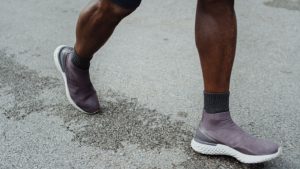
For decades, fitness trackers and wellness blogs have trumpeted 10,000 steps as the magic figure for daily health. I’ll admit, I religiously clocked them on holiday walks in the Lake District, convinced I was doing my body a solid. Yet the truth is far less arbitrary. The origin of this widely held target traces back to 1965 Japan, when a pedometer dubbed the “Manpo-Kei” (literally “10,000-step meter”) hit the market. The choice of ten thousand was more a clever marketing move—万 (man), the character for ten thousand, resembles a person in motion—than a number grounded in medical research.

Ever found yourself tossing and turning at 2 a.m., replaying the day’s stresses like a late-night radio loop? I’ve been there—staring at the ceiling, counting imaginary sheep, and praying for morning to come. That all changed when I tried fitness coach Craig Ballantyne’s 10-3-2-1-0 method, a straightforward framework designed to quiet the mind and usher in sleep with minimal fuss.

Avoid the common storage mistake that can turn your breakfast into a health hazard—expert tips to keep your eggs safe, fresh, and bacteria-free.