
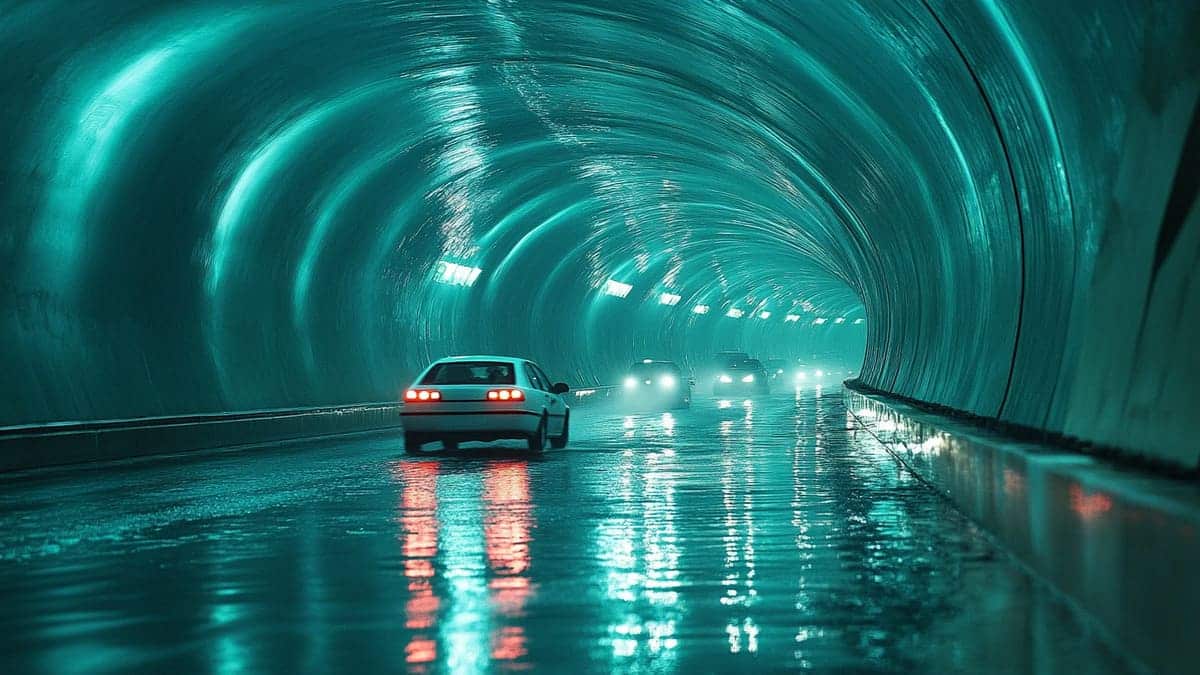
When we think about groundbreaking engineering feats, we often picture towering skyscrapers or futuristic transportation systems. But sometimes, the most impressive projects happen beneath the surface. Case in point: the Fehmarnbelt Tunnel, a massive infrastructure project that is set to revolutionize European connectivity while challenging traditional construction methods.
Amazon co-founder MacKenzie Scott has donated over $19 billion to charity in just five years
Diamond batteries powered by nuclear waste promise 28,000 years of clean energy
The Fehmarnbelt Tunnel : A Game-Changing Connection
The Fehmarnbelt Tunnel will connect the German island of Fehmarn to the Danish island of Lolland, spanning the Fehmarnbelt Strait. Right now, travelers rely on ferries to cross this stretch of the Baltic Sea, a journey that takes about 45 minutes. Once the tunnel is completed, that travel time will be slashed dramatically—just seven minutes by train or ten minutes by car.
What makes this tunnel particularly groundbreaking is not only its size but also the innovative construction techniques being used. Unlike most large tunnel projects that rely on tunnel boring machines (TBMs), the Fehmarnbelt Tunnel is being built using precast concrete sections—a technique that combines precision with boldness.
A Record-Breaking Undertaking
Once completed, the Fehmarnbelt Tunnel will hold the title of the world’s longest immersed tunnel, diving 40 meters below the surface of the Baltic Sea. Here’s a breakdown of what makes this project so extraordinary:
-
Precast segments: The tunnel will be built using 89 massive sections, each weighing a staggering 73,500 tons and stretching 217 meters in length. These sections are made on land, then carefully submerged and placed in position beneath the sea—a process that requires pinpoint accuracy.
-
Watertight barriers: To ensure safety and prevent leakage during the placement process, each segment is equipped with watertight bulkheads. These barriers keep the tunnel intact until the sections are securely joined together.
-
Environmental considerations: The construction team is also keenly aware of the tunnel’s impact on the sensitive Baltic ecosystem. Efforts are being made to minimize the environmental footprint, ensuring that the natural surroundings are preserved even as this monumental structure is built.
The first segment of the tunnel was placed underwater in early 2024, and the project is set for completion by 2029. With a projected cost of around €7 billion, the Fehmarnbelt Tunnel represents a significant investment in the future of European transportation.

The Impact on Travel and Trade
The Fehmarnbelt Tunnel is set to transform how people and goods travel between Germany and Denmark. The most obvious benefit is the dramatic reduction in travel time—what once took an hour by ferry will now only take a matter of minutes, whether by train or car.
NASA warns China could slow Earth’s rotation with one simple move
This dog endured 27 hours of labor and gave birth to a record-breaking number of puppies
For business and trade logistics, this new connection is a game-changer. The tunnel will allow goods to travel between Copenhagen and Hamburg in just two and a half hours, significantly cutting down the transport time from four and a half hours. This could even make the tunnel competitive with short-haul flights, offering a more efficient and sustainable alternative for travelers and businesses alike.
With quicker travel times, stronger trade relations are expected to follow, benefitting not just Denmark and Germany but the entire European economy. The tunnel could help stimulate economic growth and improve cross-border trade, providing a boost to both countries’ markets.
A Symbol of European Cooperation and Innovation
Beyond its technical brilliance, the Fehmarnbelt Tunnel is a shining example of what can be achieved when two countries come together with a shared vision. The project represents more than just infrastructure—it’s a symbol of European cooperation and a testament to how collaboration can lead to innovative solutions for some of the continent’s most complex challenges.
Slated to open in 2029, the Fehmarnbelt Tunnel will offer more than just a quicker way to travel. It will be a lasting symbol of progress, demonstrating how sustainable designs and cutting-edge technology can shape the future of transportation and economic development in Europe.