
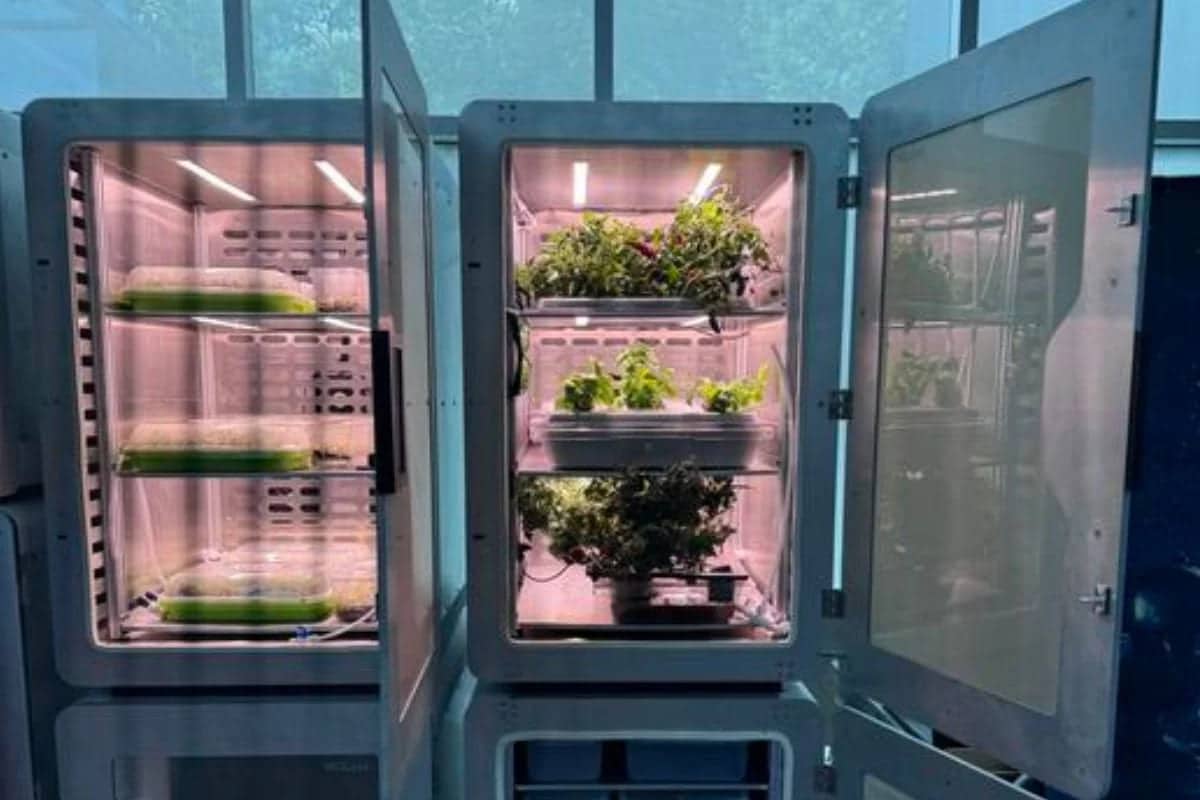
For centuries, humanity has wrestled with the challenge of feeding an ever-growing population. Today, as global numbers surpass 8.2 billion and projections suggest nearly 9.6 billion by 2050, the pressure is mounting to find sustainable food production methods. Enter electro-agriculture, a groundbreaking technology that could reshape the way we grow food, dramatically reducing environmental impact while scaling up production to levels once thought impossible.
Amazon co-founder MacKenzie Scott has donated over $19 billion to charity in just five years
Diamond batteries powered by nuclear waste promise 28,000 years of clean energy
What Is Electro-Agriculture?
Electro-agriculture represents a revolutionary shift in farming by replacing the traditional process of photosynthesis with a far more efficient method. Plants naturally convert just 1% of absorbed sunlight into usable chemical energy. Electro-agriculture bypasses this inefficiency by using solar panels to power a chemical reaction between carbon dioxide (CO₂) and water, producing acetate. This molecule serves as a direct energy source for plants, removing the need for sunlight altogether.
Boosting Efficiency While Minimizing Land Use
The implications of electro-agriculture are staggering. By harnessing this process, it’s estimated that up to 94% of agricultural land could be freed for other uses. Imagine millions of hectares previously dedicated to farming being transformed into natural habitats or spaces for urban development. Crops could be grown in vertical farms, where stacked levels maximize space and resources, creating a food production system that’s both more sustainable and less vulnerable to climate fluctuations.
To put this into perspective, the potential productivity of electro-agriculture could theoretically feed a global population of 136 billion—a figure that seems almost unfathomable. Such efficiency offers hope not just for meeting today’s needs but for sustaining humanity in the long term.
The Role of Acetate: A Game-Changer in Plant Growth
Acetate is the linchpin of electro-agriculture. This simple molecule provides plants with the energy they need, bypassing their reliance on sunlight. Genetically engineered plants can metabolize acetate directly, mimicking how seeds rely on stored nutrients during germination. By “reawakening” these dormant metabolic pathways, scientists have enabled plants to grow in darkness, sustained entirely by acetate.

Beyond Theory: Real-World Applications
Research has already shown that plants like tomatoes and lettuce can thrive using acetate as their primary energy source. These early successes pave the way for expanding the method to staple crops such as cassava, sweet potatoes, and grains. The ability to grow these essential foods indoors, free from the constraints of sunlight, has the potential to revolutionize agriculture, especially in regions with limited arable land or sunlight.
Environmental Benefits and Future Implications
The environmental advantages of electro-agriculture could be profound. By moving food production into controlled environments, the reliance on fertilizers, pesticides, and vast amounts of water could be significantly reduced. This shift would also lower agriculture’s carbon footprint, helping mitigate the effects of climate change.
Moreover, this innovation isn’t limited to plants. Fungi, yeast, and algae—organisms that naturally use acetate as an energy source—could also play a role in reshaping food systems. This opens doors to new commercial applications, from sustainable protein production to biofuel development.
NASA warns China could slow Earth’s rotation with one simple move
This dog endured 27 hours of labor and gave birth to a record-breaking number of puppies
The Future of Farming
Electro-agriculture isn’t just a theoretical concept; it’s a vision for a more sustainable and efficient future. By combining solar power, biotechnology, and genetic engineering, it addresses two of the most pressing global challenges: feeding a growing population and protecting the environment.
While questions remain about scaling the technology and its economic viability, the potential is undeniable. Electro-agriculture could be as transformative as the invention of synthetic fertilizers, fundamentally altering how we produce and consume food. With continued innovation, this breakthrough might not just solve today’s food crisis—it could redefine humanity’s relationship with agriculture for generations to come.