
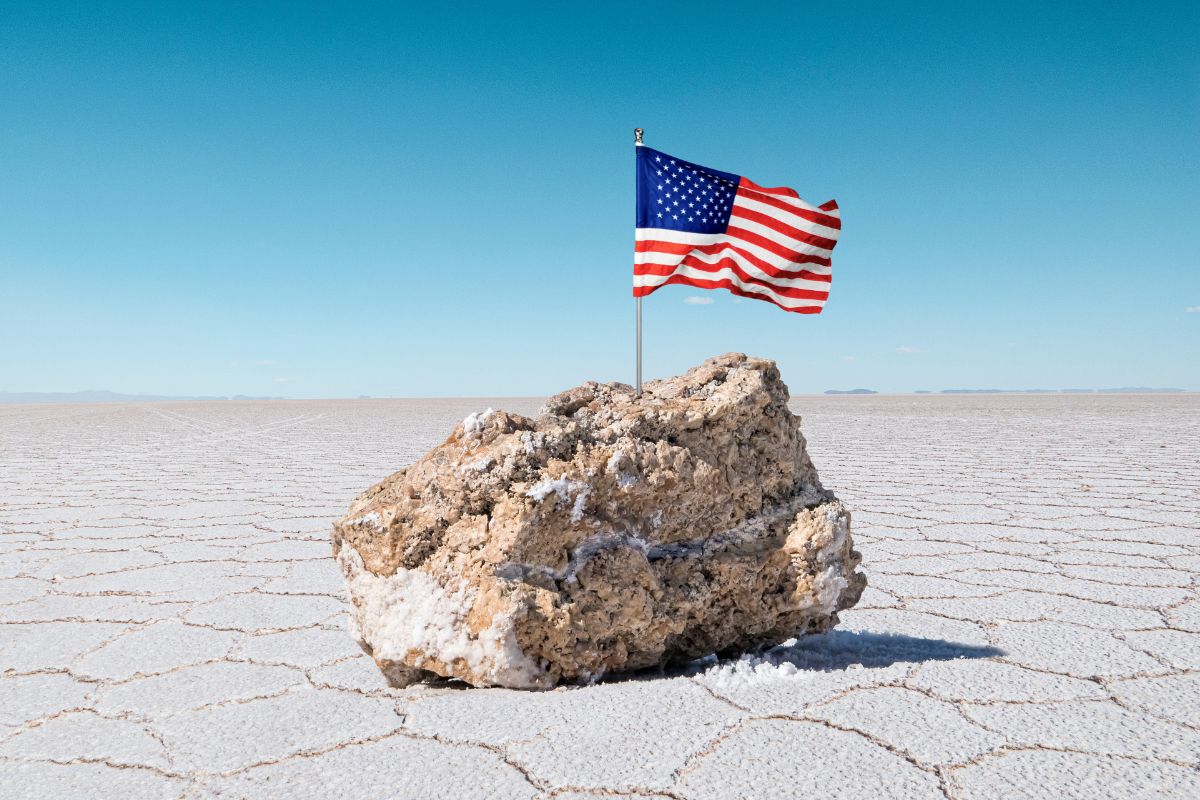
In a major turn of events, a recent breakthrough in the United States could dramatically shift the global balance of power in the race for lithium—a resource critical for the energy storage and electric vehicle (EV) industries. American scientists have developed an innovative electrochemical reactor that extracts lithium from natural brines with an impressive 97.5% efficiency. This discovery not only reduces America’s reliance on China but could also propel the U.S. to the forefront of the global lithium market.
Amazon co-founder MacKenzie Scott has donated over $19 billion to charity in just five years
Diamond batteries powered by nuclear waste promise 28,000 years of clean energy
U.S. Lithium Imports and the Growing Dependence on China
As demand for electric vehicles and renewable energy storage surges, the need for domestic lithium sources has become more pressing. In 2023, the U.S. imported over 3,400 tons of lithium, with approximately 60% of that being refined by China, according to Statista. This has raised concerns within the U.S. government about its dependency on its geopolitical rival for such a crucial resource.
It’s a situation that’s been on the radar for years, and the U.S. has been actively seeking ways to reduce or eliminate its reliance on Chinese-refined lithium. This is especially important as lithium is essential in developing the rechargeable batteries that power everything from electric vehicles to renewable energy storage systems.
The Revolutionary Electrochemical Reactor
Enter the electrochemical reactor, a groundbreaking technology that could change the way lithium is extracted from natural brines. Traditional lithium extraction methods are energy-intensive and often difficult to manage, but this new system promises a much more efficient and sustainable alternative.
The reactor works by harnessing the power of natural brines—saltwater found in geothermal environments—offering a more sustainable and cost-effective solution for lithium extraction. With abundant access to briny water sources, this new technology could significantly streamline the extraction process, helping to meet the growing global demand for lithium.
Innovations in the Electrochemical Reactor Design
This new reactor utilizes a three-chamber approach that enhances the selectivity and efficiency of lithium extraction. It operates with a solid porous electrolyte in the central chamber, which carefully controls the flow of ions as the brine moves through the system. This innovative design prevents unwanted reactions and ensures that the extraction process remains smooth and highly effective.
NASA warns China could slow Earth’s rotation with one simple move
This dog endured 27 hours of labor and gave birth to a record-breaking number of puppies
Additionally, a cation-exchange membrane blocks chloride ions from reaching the electrode zones, which prevents the formation of toxic chlorine gas, reducing harmful byproducts in the process. With a 97.5% purity rate for the extracted lithium, this technology offers a crucial advantage in producing high-quality lithium hydroxide, a key material used in batteries for electric vehicles and energy storage.
The Role of the LICGC Membrane in the Process
At the heart of this breakthrough is the LICGC membrane, a ceramic glass lithium-ion conductive membrane. This membrane is designed to only allow lithium ions to pass through, while blocking other interfering ions. This selectivity is essential in maintaining the efficiency and purity of the extracted lithium, minimizing contamination from other elements in the brine. Thanks to the LICGC membrane, this new electrochemical reactor has achieved an impressive lithium extraction rate, positioning it as a viable solution for the future of lithium mining.
Challenges Remain but Solutions Are on the Horizon
While this discovery is a promising leap forward, there are still hurdles to overcome before the reactor can be fully deployed on a commercial scale. For example, the accumulation of sodium ions could hinder lithium transport and raise energy consumption. However, researchers have already identified strategies to mitigate these issues, such as optimizing the current flow or exploring techniques like surface coatings or current pulsation to improve the reactor’s performance.
Despite these challenges, the potential for efficient and sustainable lithium extraction from natural brines is enormous, especially in light of the growing global demand for clean energy solutions.
A Game-Changer for the Global Lithium Market
This innovation doesn’t just impact the U.S.—it could shake up the entire global lithium supply chain. With this new electrochemical reactor, the U.S. could significantly reduce its dependence on Chinese-refined lithium, positioning itself as a leader in the lithium extraction market. The technology also paves the way for other countries to adopt similar methods, potentially changing how lithium is sourced on a global scale.
This breakthrough is a significant step in the quest for clean energy solutions and positions the U.S. as a key player in securing the materials necessary for the transition to a green economy. As nations worldwide rush to meet energy demands, this discovery could give the U.S. a competitive edge in the global race for lithium—a critical material for the future of sustainable energy.