
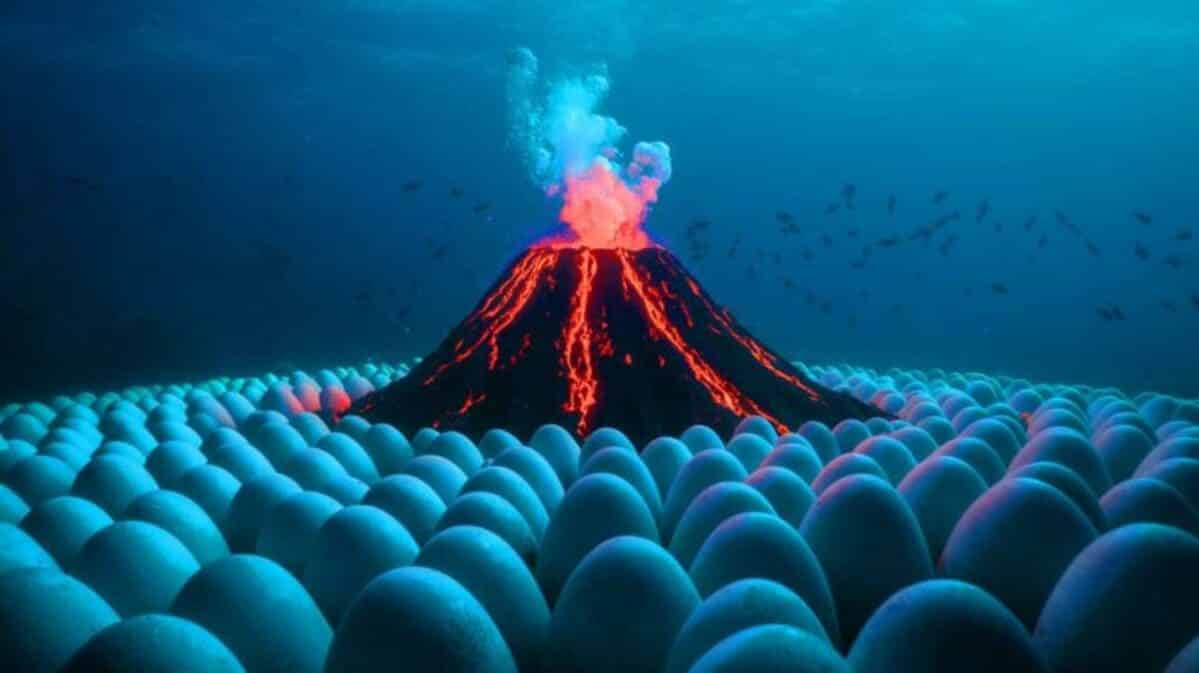
A shocking and incredible discovery beneath the waves off Vancouver Island has unveiled thousands of giant eggs, revealing an unknown side of marine ecosystems. This finding has the potential to reshape how we understand the deep-sea world.
Amazon co-founder MacKenzie Scott has donated over $19 billion to charity in just five years
Diamond batteries powered by nuclear waste promise 28,000 years of clean energy
The Astonishing Revelation of an Active Underwater Volcano
In 2019, a team of marine biologists led by Cherisse Du Preez embarked on an expedition to investigate an underwater volcano off the coast of Vancouver Island. Previously thought to be dormant, the volcano revealed a stunning secret—thousands of giant eggs belonging to the Pacific white skate. These eggs, often referred to as “mermaid’s purses,” are typically hidden from the public eye, but their exposure has opened a window into the complex ecosystems of the deep sea.
Rising approximately 3,600 feet from the ocean floor, this underwater volcano emits warm, mineral-rich waters that create an unusual marine environment. This geothermal heat plays a key role in nurturing the eggs of the Pacific white skate, which measure between 18 to 20 inches in diameter. The volcanic warmth acts as a natural incubator, speeding up the gestation period and offering these young creatures a head start in life.
Unique Traits of the Pacific White Skate
The Pacific white skate, a remarkable species known scientifically as Bathyraja spinosissima, is a master of surviving in the cold, deep waters of the Pacific Ocean. These skates, which can grow up to 6.5 feet long, thrive in depths ranging from 2,600 to 9,500 feet. Females of the species lay exceptionally large eggs, providing ample nutrients for their young—an adaptation known as marine gigantism.
The warmth generated by the volcano creates an ideal breeding ground, with Du Preez describing the area as “almost a coral garden and a safe nursery for juveniles.” This warm, volcanic environment supports the early life stages of skates, offering a safe haven before they journey deeper into the ocean. This phenomenon mirrors a similar discovery in 2018, where eggs near hydrothermal vents were found to be over four inches in size, supporting the idea that volcanic heat is vital for incubation for various marine species.
Implications for Marine Research and Biodiversity
This discovery has profound implications for our understanding of marine ecosystems and the role volcanic activity plays in sustaining marine life. The eggs found in this active volcano suggest that underwater volcanic environments are far more influential in marine life cycles than previously understood. These volcanic areas act as natural nurseries, supporting a variety of marine life, including the Pacific white skate.
In 2023, a follow-up expedition confirmed the significance of the site, observing a Pacific white skate laying an egg directly in the volcano’s warm waters. This sighting revealed even more about the reproductive behaviors of this elusive species. The evidence indicates that multiple species are using this unique volcanic site for breeding, further emphasizing its ecological importance.
The Future of Oceanic Exploration and Conservation
As climate change continues to impact the ocean’s ecosystems, the importance of preserving volcanic habitats like this becomes more critical. This discovery highlights the need for marine conservation efforts, as these geothermal ecosystems could be essential to sustaining biodiversity in the face of environmental challenges.
NASA warns China could slow Earth’s rotation with one simple move
This dog endured 27 hours of labor and gave birth to a record-breaking number of puppies
Researchers and conservationists must work together to safeguard these fragile environments, which are vital for the survival of various species. This discovery raises questions about what other secrets the ocean may hold, urging us to explore and protect the depths of our seas more than ever before. What other marine mysteries are waiting to be uncovered beneath the waves?